NASA will send seismic sensors to check whether a Moon pit opens into a cave
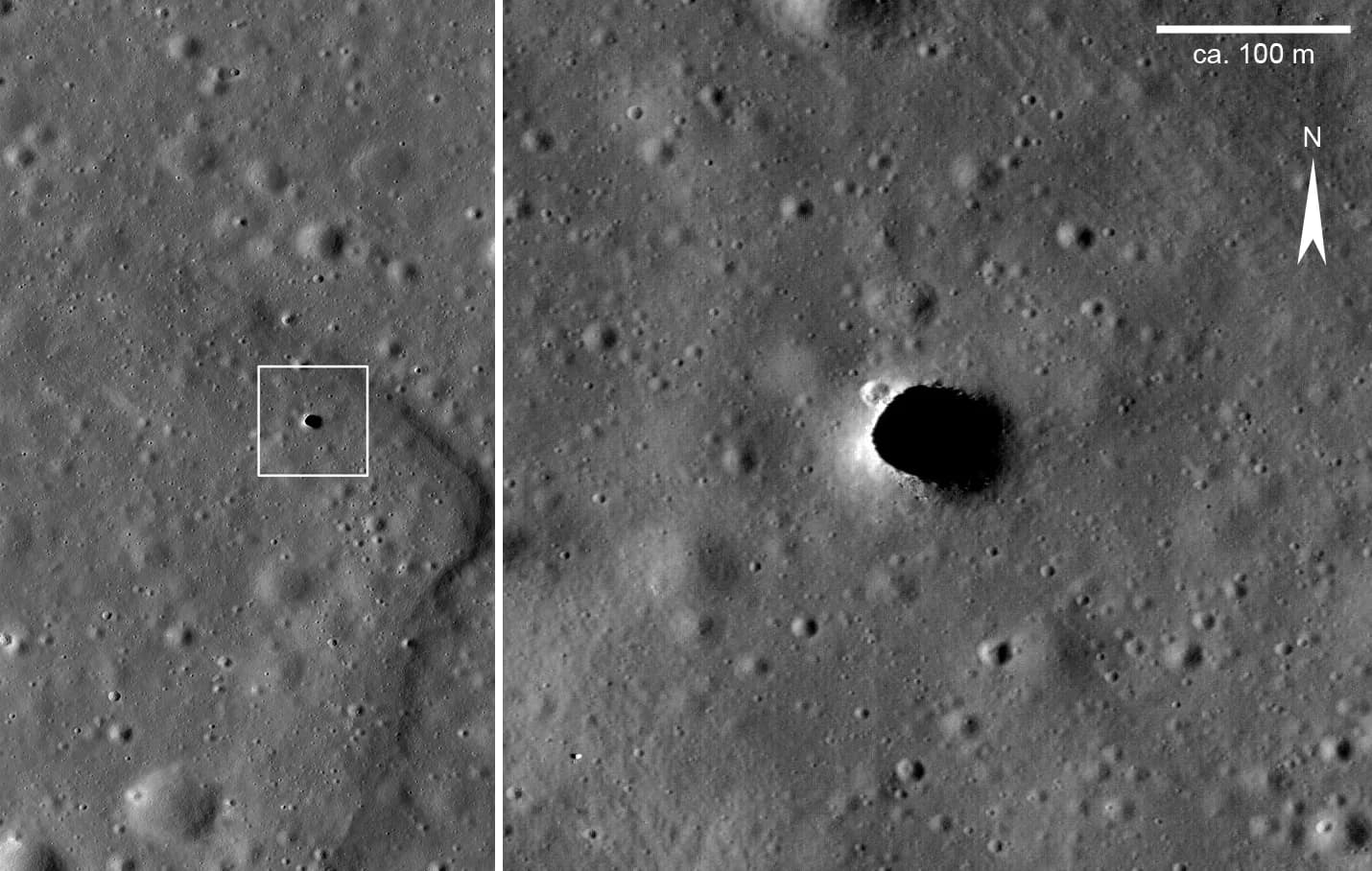
A Planetary Science Institute team will use radar, gravity and active seismic surveys to look for a lava tube running beneath the Marius Hills pit.
OddBrief EditorialAI-assisted, human-reviewed
 Science
Key facts
- Who
- Planetary Science Institute, led by Than Putzig
- What
- GIMLI, a radar, seismic and gravity survey of the Marius Hills pit
- Partners
- Honeybee Robotics and the Norwegian Space Agency
- Unknown
- launch date, lander and budget
NASA has picked a Planetary Science Institute (PSI) proposal to find out whether the Marius Hills pit, a hole in the lunar surface, leads into a larger underground cave, the institute said on October 2. If such a lava tube exists, it could one day give astronauts shelter from radiation and from the Moon's extreme swings in temperature.
Listening for a hollow
The project is called GIMLI, short for Geophysical Instruments for Marius Lunar pit Investigation. It is funded through NASA's PRISM program, which puts science instruments on landers flown by companies in the Commercial Lunar Payload Services initiative. GIMLI's instruments will travel on a lander and a rover.
The kit combines ground-penetrating radar, seismic sensors with their own sound source, a gravimeter and cameras for the surface and the pit walls. The goal is to detect any empty space running away from the pit and, if one is there, to estimate how big it is.
Principal investigator Than Putzig said the seismic part revives a technique planetary scientists have hardly used since the Apollo crews made the first seismic measurements on the lunar surface.
Who is building it
Honeybee Robotics, a Blue Origin company, will build the seismic source, the gravimeter and the cameras, and will integrate all the instruments onto the lander and rover. The Norwegian Space Agency is providing the radar. Co-investigators come from Boise State University, Johns Hopkins University, the Lunar and Planetary Institute and the University of Oslo.
Worth it even without a cave
The Marius Hills region is one of the most volcanically varied places on the Moon, and the pit walls expose layers of lava and regolith that are normally buried. Studying them could show how lava flowed there and whether long pauses separated eruptions, according to PSI. The measurements should also help explain how the pit formed, whether or not a tube is found.
Deputy principal investigator Gareth Morgan noted that lava tubes are common in basaltic volcanism on Earth, so confirming one on the Moon would let scientists apply what they know about caves here to lunar history.
The announcement does not give a launch date, a lander or a budget for GIMLI.
Sources
- PSI-led team selected for NASA PRISM program to explore potential lunar cavePlanetary Science Instituteprimary source
- Pits Atlas: Marius Hills PitLROC, Arizona State University