Swift can chase cosmic flashes again, just before its orbit runs out
NASA restored the observatory’s gamma-ray trigger and automated pointing. The return to fuller science brings a faster descent, with observations possibly ending in October.
OddBrief EditorialAI-assisted, human-reviewed
 Science
Key facts
- Fact 1
- Swift's Burst Alert Telescope was calibrated by September 18
- Fact 2
- Automatic gamma-ray-triggered slewing resumed September 21
- Fact 3
- NASA says Swift is near 325 kilometers altitude
- Fact 4
- Science may cease at about 300 kilometers in early to mid-October
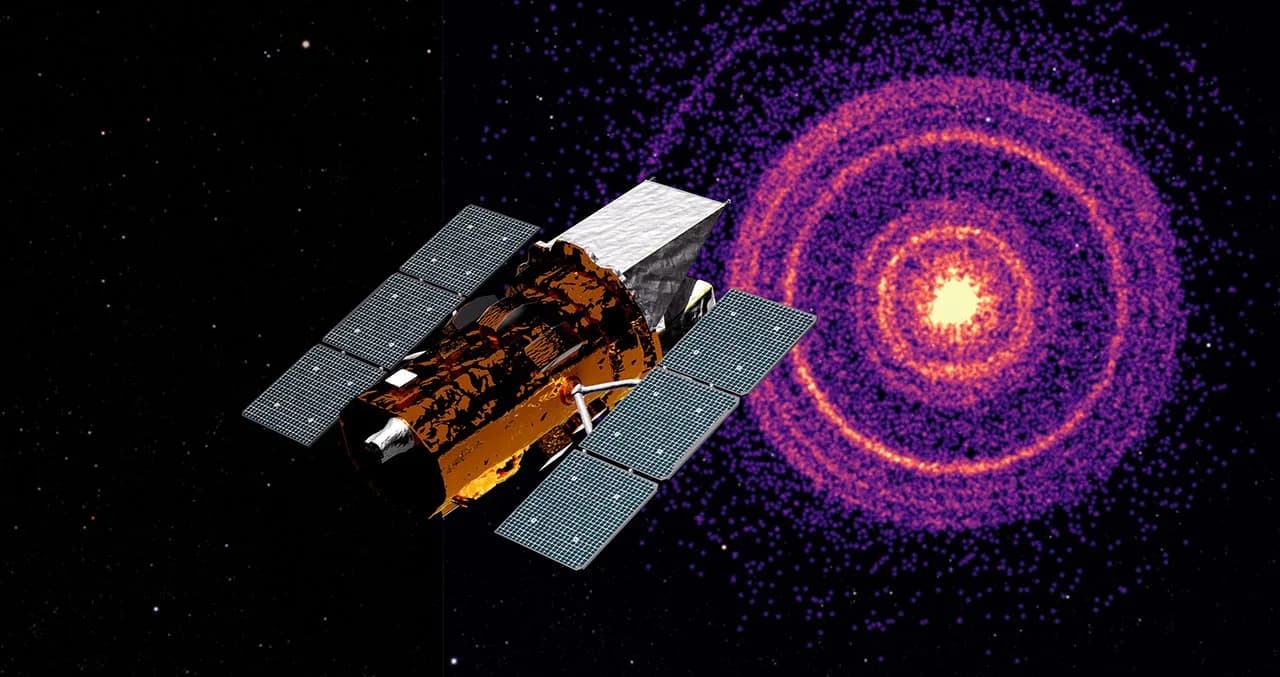
NASA's Swift observatory has regained the ability to detect a gamma-ray burst and turn its other telescopes toward it automatically. The September 25 update sounds like a routine recovery until the orbital clock appears: the spacecraft is descending, and NASA estimates science observations may cease in early to mid-October.
An instrument back online
Swift studies some of the most energetic flashes in the universe. Its Burst Alert Telescope watches a broad patch of sky for gamma rays. When it detects a promising event, Swift can interrupt its planned schedule and point its ultraviolet, optical and X-ray instruments at the outburst. Speed is the point, because these flashes change quickly.
NASA says the gamma-ray telescope was confirmed calibrated and detecting gamma rays on September 18. Operators resumed automatic repointing on September 21. They had stopped using the burst instrument in April to save power and position Swift's solar panels to reduce atmospheric drag. By February, the observing plan had already shifted fully toward targets that kept drag down, eliminating those automatic detection slews.
That compromise was part of an effort to keep Swift aloft until a proposed commercial boost mission could lift it to a safer altitude. NASA says the boost effort has been scaled back. With the full science system active again, Swift is sinking more quickly.
The cost of looking around
Swift is now about 325 kilometers above Earth, NASA reports. Below about 300 kilometers, operations become harder and science observations will likely stop. The agency estimates the observatory will reach that threshold in early to mid-October, though an exact date depends on conditions and operations.
The observatory's renewed reflex gives astronomers a short opportunity to catch new transients with all three instruments working together. It does not amount to a rescued mission. Atmospheric drag, orbit prediction and available power still define the remaining window. The September update also does not promise that Swift will observe a major burst before the threshold arrives.
There is an odd trade-off in the decision. Keeping the panels and telescope pointed to minimize drag helped preserve the spacecraft, but it restricted the rapid follow-up that made Swift valuable. Restoring that behavior may shorten the time left while making the remaining time more scientifically useful.
NASA's next updates will clarify how long Swift can operate and whether another orbit-raising option exists. For now, the instrument is functioning again, the automatic slews are back, and a decades-old observatory is doing its signature job against a very near deadline.
Sources
- NASA's Swift powers on third instrument and restarts automated slewingNASAprimary source