Hubble is waiting for the same supernova to appear again
A galaxy cluster bends light from supernova Athena into different paths, giving astronomers a chance to time a cosmic repeat.
OddBrief EditorialAI-assisted, human-reviewed
 Science
Key facts
- Observatory
- NASA/ESA Hubble Space Telescope
- Target
- galaxy cluster MACS J0417
- Predicted event
- another image of supernova Athena by early March 2027
- Milestone
- Hubble's 200,000th Earth orbit on September 19
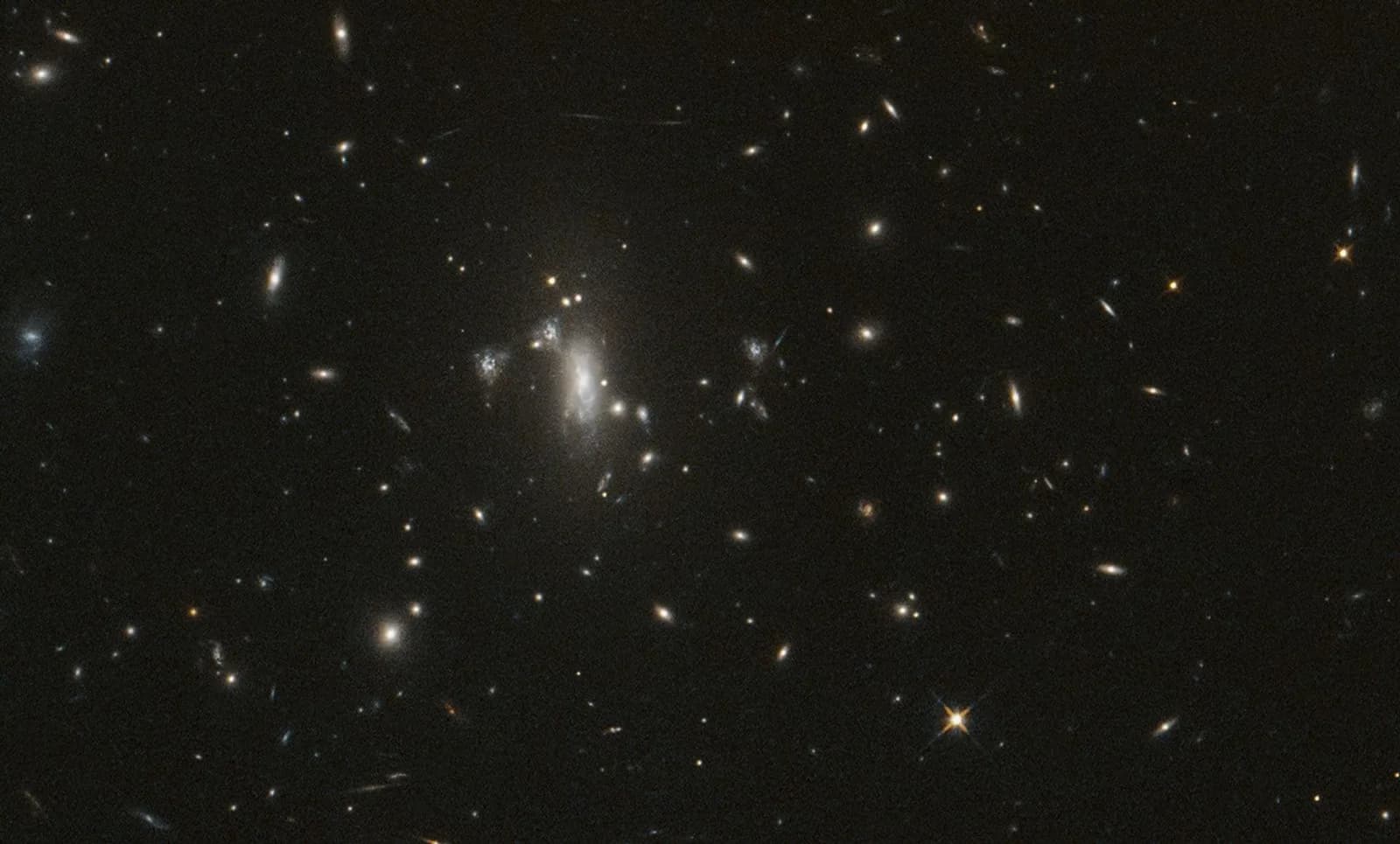
NASA said on September 23 that Hubble is repeatedly observing galaxy cluster MACS J0417 to catch a predicted reappearance of supernova Athena. The light would come from the same explosion already seen by the James Webb Space Telescope, rerouted by gravity rather than from a second star blowing up.
How an explosion gets a replay
A massive galaxy cluster bends the light of more distant objects behind it. This gravitational lens can send light from one event along different routes toward Earth. Because those paths have different lengths and cross different regions of the cluster's gravity, the resulting images can arrive at different times.
Athena was found in Webb observations in 2025. Astronomers now predict that another lensed image could appear between the September 2026 observation window and early March 2027. Hubble's job is to keep watching the cluster so the team can identify the event if the forecast is right and measure when its light arrives.
This is not time travel in the sense of the universe repeating an event. The underlying supernova happened once. The lens creates multiple delayed views of that single explosion. The difference between predicted and observed arrival times is scientifically useful because it constrains the distribution of mass, including matter that does not shine, in the foreground cluster.
A clock inside a cosmic lens
NASA says the timing can help researchers map MACS J0417 and refine measurements tied to the universe's expansion. That is a demanding inference. Researchers need a model of the lens and careful measurements of the images before the arrival time can become a useful cosmological constraint.
The date is therefore a forecast, not an appointment. A non-detection by a particular day would not mean Hubble had disproved gravitational lensing. It could indicate a different lens model, a faint image or other observational limitations. The value of continued monitoring is that it turns a model's prediction into a test with a measurable outcome.
NASA released a Hubble image of the cluster taken on September 19. The agency also said that Hubble completed its 200,000th orbit around Earth that day. The orbit count is a spacecraft milestone; the science story is the long surveillance of a small patch of sky for a transient light signal.
What observers need next
If the predicted image appears, astronomers can compare its brightness, position and arrival time with earlier views. If it does not, they can revisit the assumptions about the lens and expected visibility. Either outcome is informative only with the monitoring record and a clear account of detection limits.
For now, Athena has not been reported as having returned in Hubble's latest observation. The notable fact is that a telescope more than three decades into its mission is being used to wait for a scheduled echo of a stellar death.
Sources
- NASA's Hubble Telescope Reaches Milestone, Looks for Elusive SupernovaNASAprimary source