NASA's X-59 hit Mach 1.53, faster than the speed it was built to cruise at
The quiet supersonic jet flew six times in one week and set a new top speed of about 1,010 mph. It is now grounded for three weeks of maintenance.
OddBrief EditorialAI-assisted, human-reviewed
 Science
Key facts
- Who
- NASA's X-59 quiet supersonic research aircraft, part of the Quesst mission
- What
- six flights on September 22, 24 and 25, 2026, and a new top speed of Mach 1.53 (about 1,010 mph)
- Context
- planned cruise speed is Mach 1.4; the aircraft now has 38 test flights
- Next
- about three weeks of scheduled maintenance, then a systems review
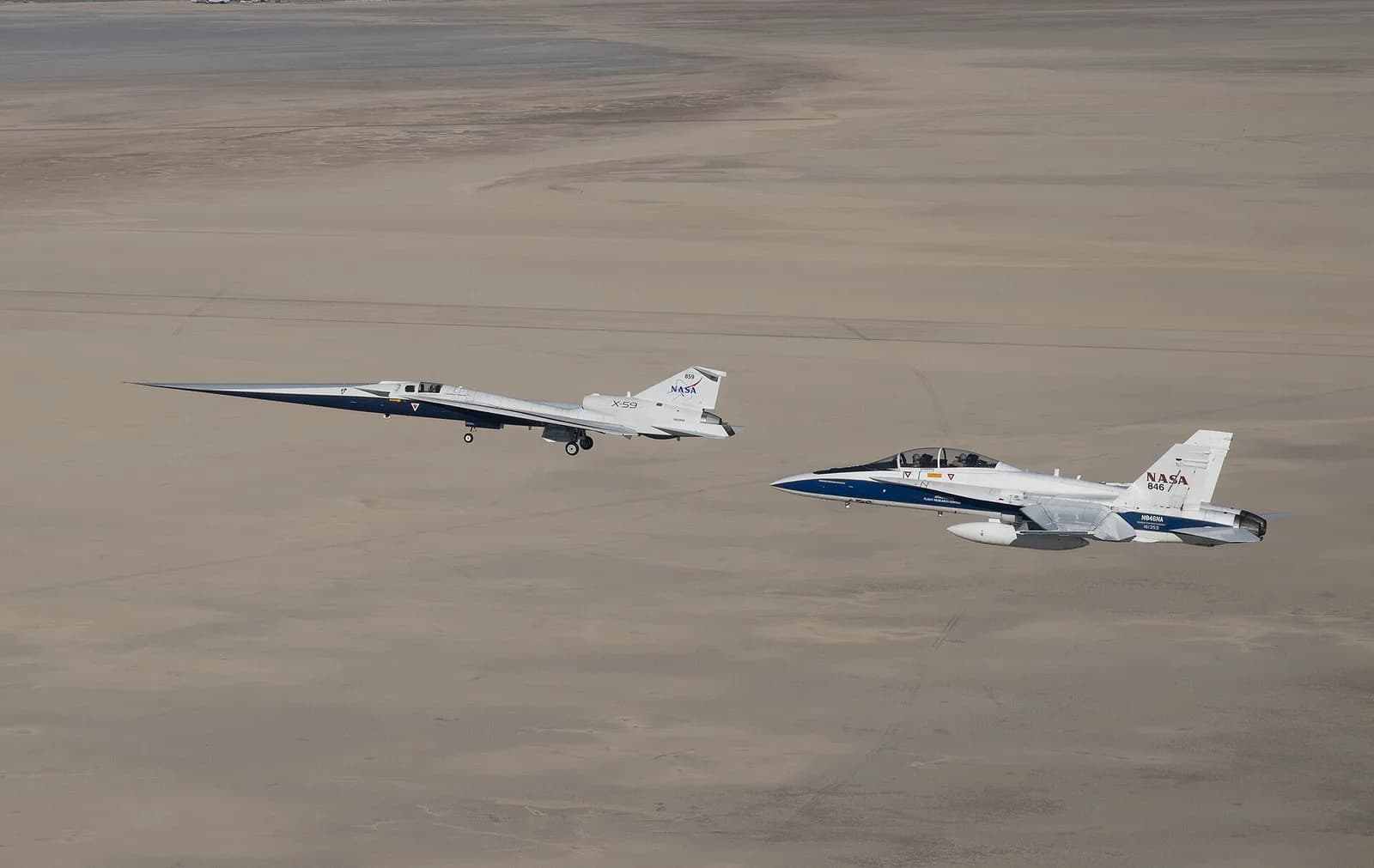
NASA's X-59, the experimental jet designed to fly supersonic without a loud boom, reached Mach 1.53 during the week of September 21, about 1,010 mph and well above the Mach 1.4 it is meant to cruise at. The same week it flew six times, two more than its previous weekly best, NASA said on October 2.
The six flights bring the aircraft to 38 test flights in total. It has now been parked for scheduled maintenance that NASA expects to last roughly three weeks.
Three days, six flights
The week's flying was packed into three days. The X-59 went up twice on September 22, twice on September 24 and twice on September 25.
That pace is a sharp change from the start of the summer. NASA's earlier updates show the aircraft made its 25th flight on August 21. Getting from 25 to 38 means 13 flights in about five weeks.
The agency describes the current phase as envelope expansion: checking how the aircraft handles across the speeds, altitudes and maneuvers it will be expected to fly. NASA did not say which of the six flights set the speed mark or at what altitude.
Faster than its own mission speed
The new top speed stands out because the X-59's research flights are planned for a lower number. When the aircraft eventually flies over U.S. communities to measure how people react to its sound, the plan calls for Mach 1.4 at an altitude of 55,000 feet.
It only reached those conditions for the first time on June 12, a week after it first went supersonic on June 5 at Mach 1.1. After that first supersonic flight, test pilot Jim Less told NASA, "The plane wants to go faster."
NASA's post does not explain why the team pushed past the cruise figure. Test programs commonly explore beyond normal operating conditions, but the agency gave no specific reason here.
Nobody has heard the thump yet
For all the speed, the mission's central question remains open. The X-59 is shaped so that people on the ground hear a quiet thump in place of a sonic boom. In NASA's updates through early September, every test flight had been shadowed by a conventional chase jet, and that jet's own booms drown out whatever sound the X-59 makes.
Measuring that sound is the job of the next phase, called acoustic validation, which NASA said in September it expects to begin later this year. Community overflights come after that, under the agency's Quesst mission, which aims to demonstrate quieter supersonic flight and help enable commercial supersonic travel over land.
Once the maintenance period ends, the aircraft will go through a regular systems review before returning to the air. NASA has not given a date for the next flight.
Sources
- NASA's X-59 Completes Record Six Flights in One WeekNASAprimary source