Voyager 1 went silent for 48 hours, then came back before NASA sent a command
NASA says a thruster switch likely tied to fault protection came just before Voyager 1 reaches one light-day from Earth on November 18.
OddBrief EditorialAI-assisted, human-reviewed
 Science
Key facts
- Who
- NASA's Voyager team at the Jet Propulsion Laboratory
- What
- Voyager 1 missed contacts on October 18 and 19, and its signal returned on October 20 without commands
- Cause
- one thruster group went offline and backups turned on; the root cause is still under investigation
- Next
- Voyager 1 reaches one light-day from Earth on November 18
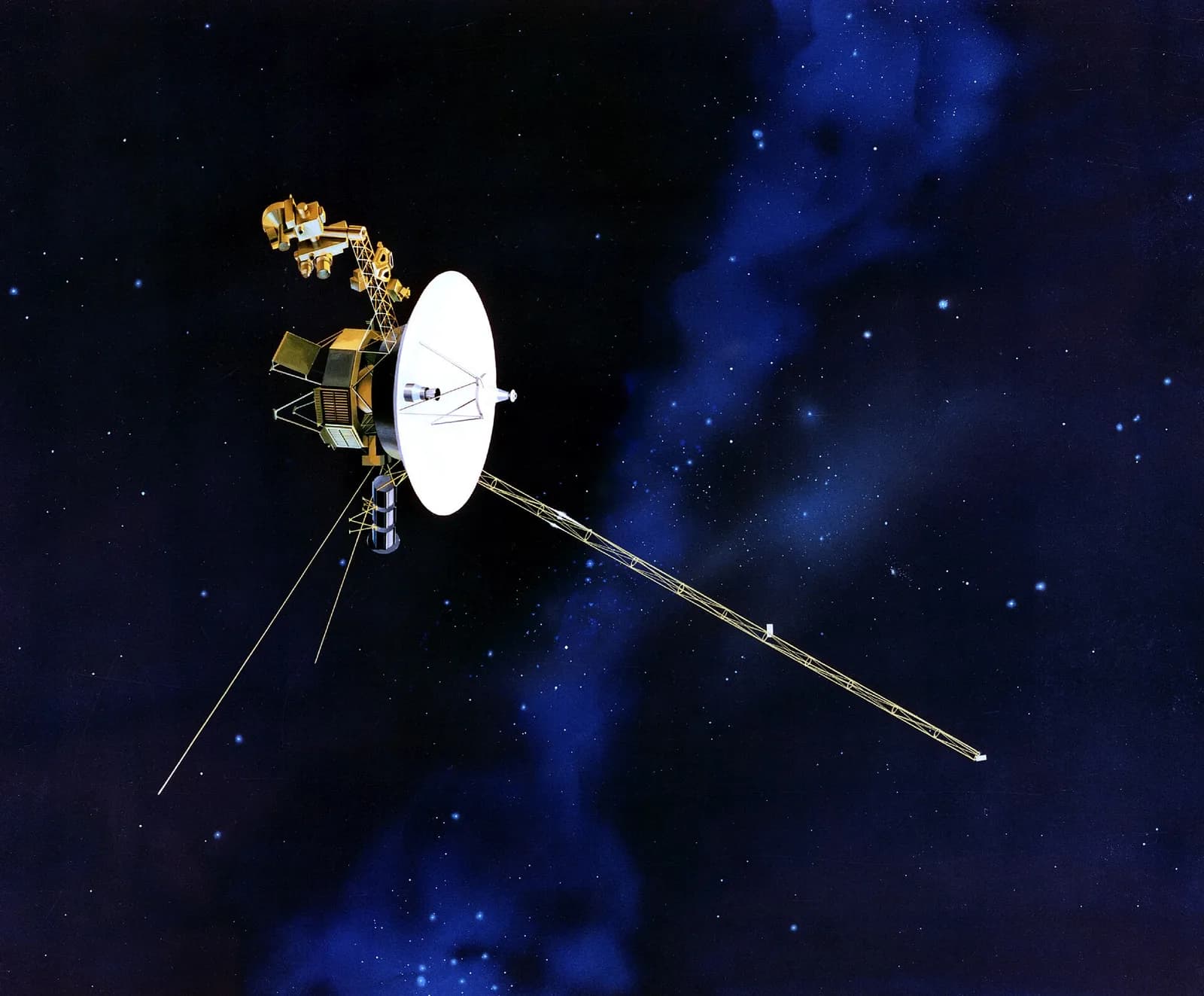
NASA's Voyager 1 missed two scheduled contacts on October 18 and 19, and its signal returned on October 20 before engineers had sent any commands to troubleshoot, the agency said on October 29. So far the team has traced the event to a set of thrusters that shut down, with backups taking over, and mission manager Kareem Badaruddin said it is the first time they have seen the spacecraft do this.
A switch made without anyone asking
The Deep Space Network listened at both scheduled times, 24 hours apart, and heard nothing. Another 24 hours later the probe was back, and contact has held since.
Thruster swaps of this kind are programmed to happen on their own when the onboard computers detect a problem with the active set. That automatic response, called fault protection, puts the spacecraft into a safe configuration and pauses normal operations so that engineers have time to work out what went wrong.
The root cause is still unknown. At this point in the mission, "we have to expect the unexpected," Badaruddin said.
The power swap that preceded it
The scare followed a success. In early September, engineers replaced three devices on Voyager 1 with three lower-power alternatives, about six weeks after doing the same on Voyager 2. The team nicknamed the work the "Big Bang."
The unusual part was timing. All three swaps had to happen at once, because the six devices involved also help keep the spacecraft warm. Only a complete exchange would cut power use while still spreading heat properly around the probe.
The pressure comes from the plutonium supply, which shrinks steadily and costs each Voyager about 4 watts a year. Without the change, NASA said, another instrument on Voyager 1 would have had to go dark as early as summer 2027. Two science instruments have already been switched off in recent years because of the dwindling power.
NASA has not linked the October pause to the September swap, and says only that it is still investigating.
One light-day, and nothing will change
Voyager 1, launched in 1977 and now about 16 billion miles from Earth, is moving at 38,000 mph. On November 18 it will be 25.89 billion kilometers (16.09 billion miles) away, the distance light covers in one day.
That makes every exchange a two-day wait: 24 hours for a radio message to arrive and 24 hours for the reply to return. "You send your message and then you go home and you wait two days before you finally get a response," said project manager Suzanne Dodd.
The spacecraft itself will notice nothing at the milestone. Its importance is symbolic, NASA said, a marker of how far the most distant human-made object has traveled. The more practical question is whether engineers can explain the thruster switch, a task that gets no faster when each question takes two days to answer.
Sources
- NASA's Voyager 1 Conserves Power, Resolves Brief Communications PauseNASAprimary source
- Voyager missionNASA