Colorado shale is three times as erodible as harder rock, a Science Advances study finds
A new way to measure beryllium-10 in fine-grained rock suggests that gentle slopes, not steep peaks, may erode fastest and could release more CO2.
OddBrief EditorialAI-assisted, human-reviewed
 Science
Key facts
- Who
- Eyal Marder and colleagues at the University of Massachusetts Amherst
- What
- shale's erodibility is three times that of harder rocks in Colorado's East River Watershed
- Method
- a new way to extract beryllium-10 from fine-grained rock
- Caveat
- one 465-square-kilometer watershed, with no CO2 total given
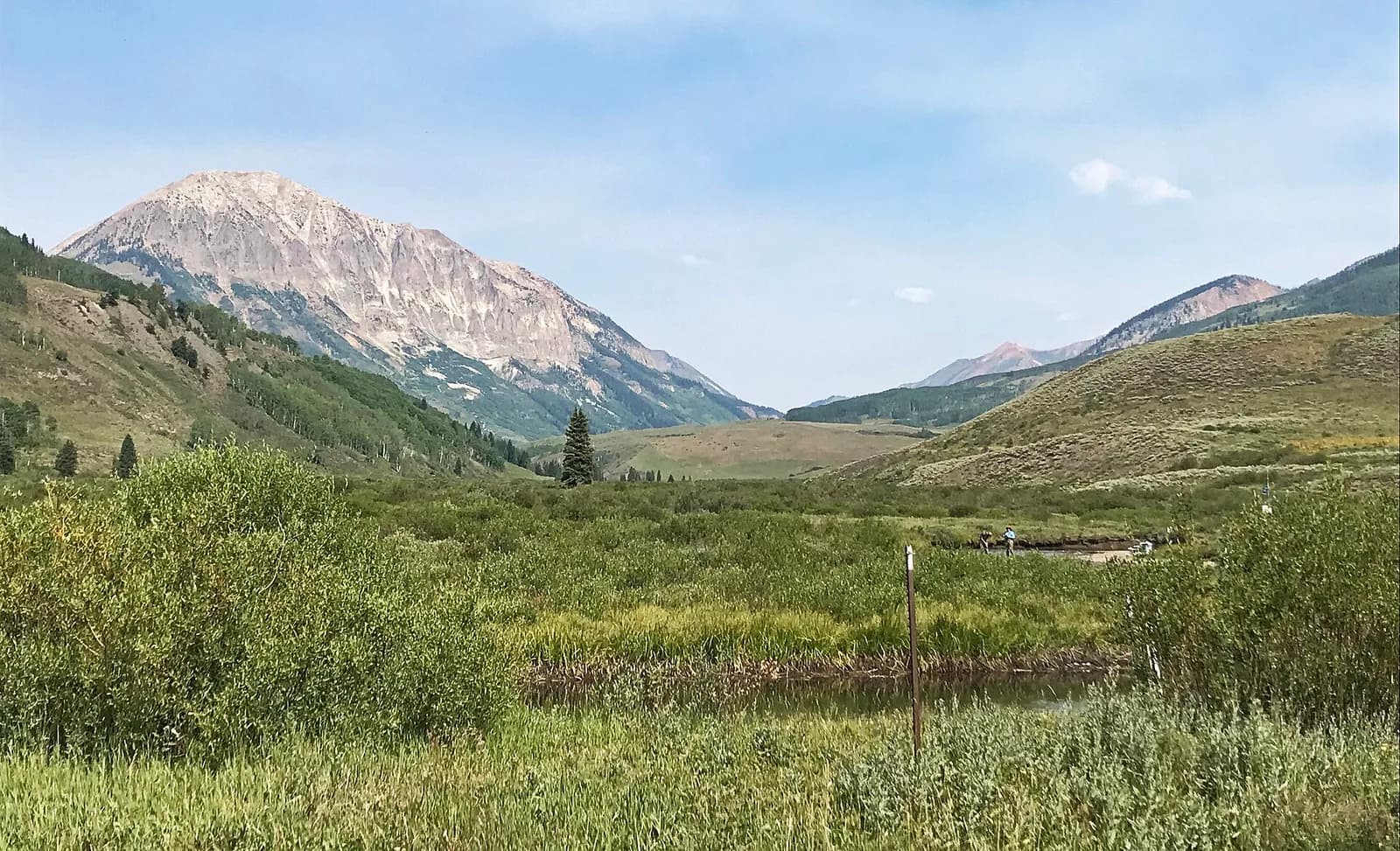
Shale in Colorado's East River Watershed is three times as erodible as the harder rocks around it, according to a University of Massachusetts Amherst study published in Science Advances. The finding comes from a new way of measuring erosion in fine-grained rock, and it suggests that low, gentle sedimentary slopes may be wearing away faster than the steep peaks above them.
A measurement that used to fail on shale
Geologists often estimate erosion by measuring beryllium-10, an isotope that forms when cosmic rays strike quartz at the surface. The technique works well in rocks with comparatively large quartz grains, such as granite and sandstone.
It had not worked in fine-grained rocks like shale, which left a gap in comparisons between rock types. Lead researcher Eyal Marder, a postdoctoral researcher at UMass Amherst, and his colleagues developed a way to extract the isotope from those rocks.
They applied it in the East River Watershed, about 465 square kilometers draining the southern Elk and West Elk mountains near Crested Butte. Marder collected sediment there to compare weak sedimentary rock with harder igneous rock.
The surprise was the size of the gap
That weak rock wears away faster than hard rock was expected. What stood out was the margin. "Shale's erodibility is three times that of the harder rocks in the East River Watershed," Marder said.
That changes how a landscape can be read by eye. Steep terrain looks like the place where the ground is being lost fastest, but according to the release the fastest erosion may be on lower, rounder sedimentary slopes.
The authors argue that whether a landscape has reached equilibrium should be judged by measuring beryllium-10 in stream sediment, not by its steepness. Contrasting rates between rock types can also keep a landscape eroding unevenly for millions of years, the release says. "When we look at landscapes, we are only seeing a snapshot in time," Marder said.
Why the rock type matters for carbon
The climate link comes from chemistry. As it weathers, shale releases carbon dioxide, while intrusive igneous rocks absorb it. If the CO2-emitting rock is also the one wearing away fastest, mountains may contribute more CO2 than geologists and atmospheric scientists have estimated, the release says.
That claim comes with limits. The work covers one watershed, and the release presents the wider effect as a possibility rather than a measured total. It gives no figure for the extra carbon and no absolute erosion rates. Marder said that scaling the work up globally would affect how researchers understand biogeochemical cycles and climate change.
The next test is whether the same contrast appears in other mountain ranges with similar rock, now that fine-grained rock can be measured at all.
Sources
- Hidden erosion: Study reveals soft mountain rock erodes three times faster than hard rock, with climate implicationsUniversity of Massachusetts Amherst via EurekAlertprimary source