Hawaii's 'akiapōlāʻau drills wood from its ankles up, not with its neck like woodpeckers
A Field Museum-affiliated study of museum specimens found a large ankle tendon that lets the endangered bird hammer with its whole body.
OddBrief EditorialAI-assisted, human-reviewed
 Science
Key facts
- Who
- Alexander Clark (University of Chicago, Field Museum) and co-authors including Paul Banko
- Where
- the journal Ornithology
- Finding
- a proportionally large ankle-flexing tendon drives whole-body drilling
- Status
- fewer than 2,000 birds, all on one mountain slope on the island of Hawaii
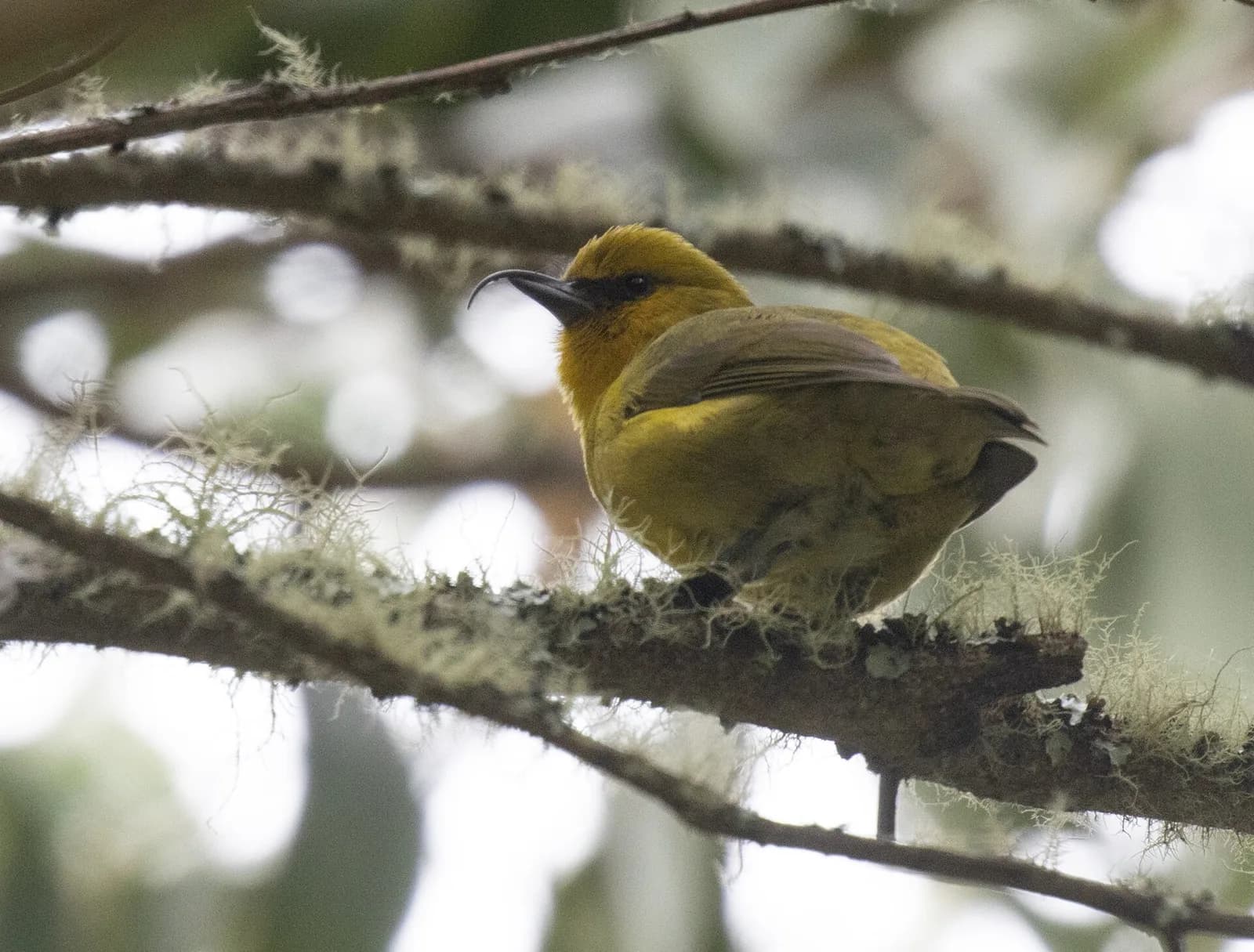
The 'akiapōlāʻau, a critically endangered Hawaiian honeycreeper, drills into branches by swinging its whole body down from the ankles, a new anatomical study finds. Woodpeckers, which never reached Hawaii, drive their drilling mainly with neck muscles, according to the Field Museum, which announced the study on November 5, 2026.
The work, published in the journal Ornithology, is described by the museum as the most detailed look yet at the bird's skeleton. Its lead author is Alexander Clark, a PhD candidate at the University of Chicago and a Field Museum affiliate.
Two beaks in one
The bird is known for a bill that looks like it came from two species. The upper half is long, slender and flexible, suited to probing grubs and caterpillars out of holes. The lower half is short and stout, used to gouge into wood. Together they let the bird fill the niche woodpeckers occupy elsewhere.
The study adds a twist to that picture. The bony core of the upper bill turned out to be substantially shorter than the bill's outer structure, according to the museum.
The ankle does the work
The most significant finding, the museum says, concerns the foot and ankle. An ankle-flexing muscle in the bird ends in an unusually large tendon for its size, which lets it bring its body down quickly and with force.
Clark compared it to splitting a log. "You're elevating yourself, you're almost on your tippy toes and then coming down," he said in the release. The researchers also found proportionally shorter wings than in mainland relatives and a shorter femur, a trait that parallels the unrelated woodpeckers.
All of the measurements came from historical museum specimens held at three institutions: the UC Berkeley Museum of Vertebrate Zoology, the Burke Museum at the University of Washington and the Field Museum.
A study done while the bird still exists
Experts estimate fewer than 2,000 'akiapōlāʻau remain in the wild, all on the northeastern slope of a single mountain on the island of Hawaii, according to the Field Museum. Native land species across the archipelago have been declining for centuries, with extinctions speeding up in recent decades.
"It's really cool to study this species while it's still alive," said Clark, who usually describes fossil birds. Because the bird can still be watched in the field, the anatomical findings can be checked against its real behavior rather than inferred from bones alone. The museum did not say whether follow-up field observations are planned.
Sources
- This endangered Hawaiian bird with a "Swiss army beak" uses its whole body to drill for foodField Museumprimary source