Great Unconformity model: mantle currents lifted continents, then glaciers did the erasing
A Nature study from Wollongong says mantle-driven uplift and later sinking explain the gap of up to a billion years in Earth's rock record.
OddBrief EditorialAI-assisted, human-reviewed
 Science
Key facts
- Who
- Santosh Dhungana and Nicolas Flament, University of Wollongong
- What
- mantle-driven uplift, then subsidence, formed and preserved the Great Unconformity
- Gap
- from about 200 million to well over 1 billion years of missing rock
- Published
- Nature, November 4, 2026
A University of Wollongong model published in Nature on November 4, 2026 argues that slow currents in Earth's mantle lifted whole continents for hundreds of millions of years and then let them sink, which is what created and preserved the Great Unconformity. The model does not throw out the older idea that glaciers did the erasing: it says the uplift is what put the land in their way.
The Great Unconformity is the place where Cambrian sedimentary rock, around 540 million years old, sits directly on crystalline rock that can be more than a billion years older. Depending on the location, the missing stretch of time is anywhere from roughly 200 million years to more than a billion.
Several explanations, none tested until now
Geologists have proposed a list of causes over the years: glacial erosion during the Snowball Earth episodes, rifting and mantle plumes, a fall in sea level, and changes in surface height driven by the mantle. According to the paper's abstract, the dynamics of these processes "have not been tested."
Lead author Santosh Dhungana, a PhD candidate, and his supervisor, Associate Professor Nicolas Flament, ran computer models of long-wavelength dynamic topography, the broad rise and fall of the surface caused by convection deep below.
Held high, then slowly sunk
The models predict that during the Neoproterozoic, roughly 1 billion to 540 million years ago, mantle flow held the continental cores of Laurentia (ancient North America), Baltica (northern Europe) and North China high for a very long time. Through the Phanerozoic, the last 540 million years, the same regions slowly subsided, letting seas flood in and bury the worn-down surface under new sediment.
That sequence is what the authors call ideal: a long period of exposure to wear it down, then a long period of burial to protect the gap from being worn away in turn. The predicted uplift and subsidence line up with the regions where the unconformity is best documented.
The glaciers still matter in this version. The abstract says the prolonged uplift during the Cryogenian period would have led to heavy erosion by glaciers. In other words, the mantle raised the land and the ice did much of the cutting.
Why the Grand Canyon shows it best
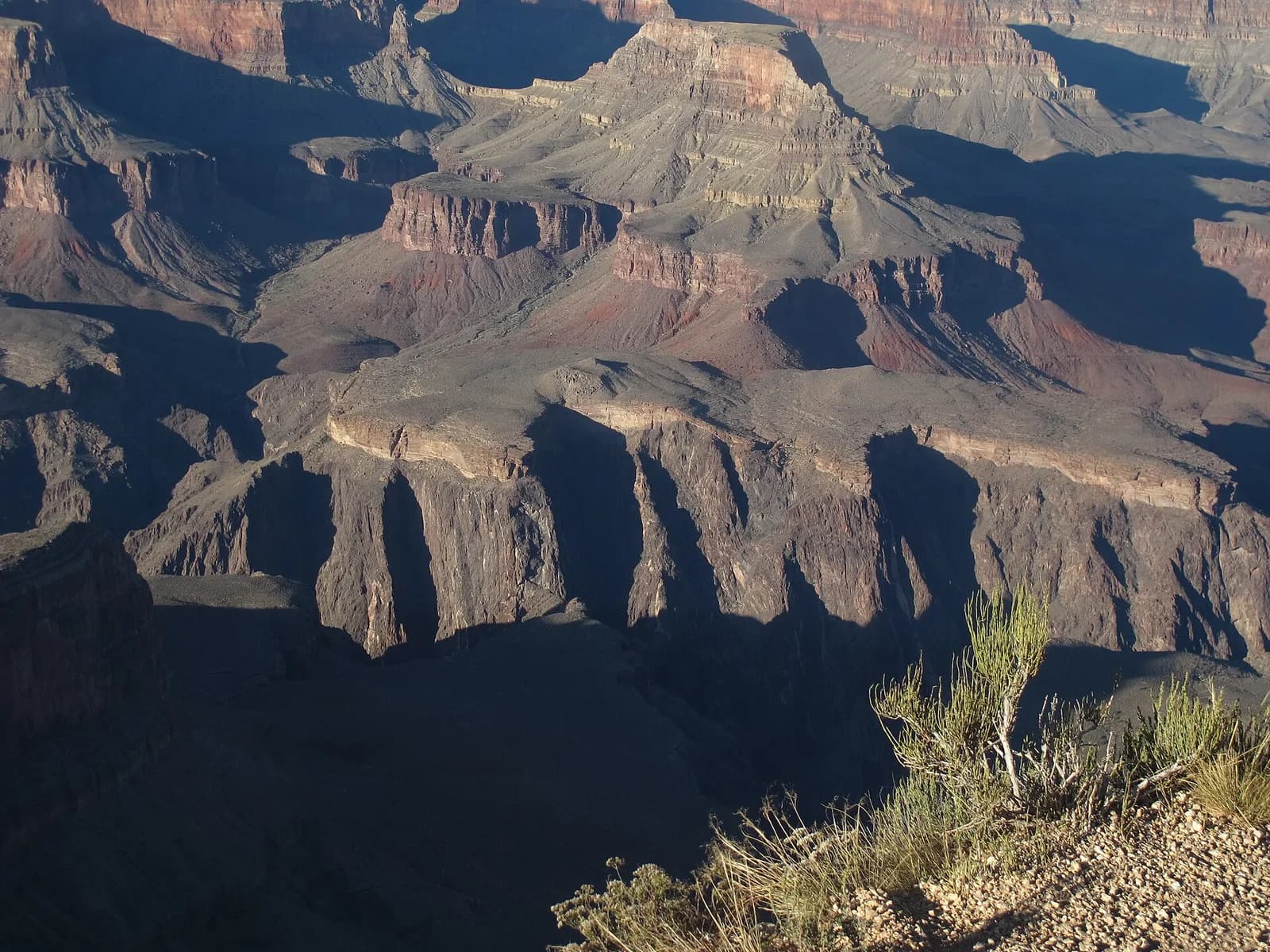
The study also offers a reason the Great Unconformity is so famous in North America, where the Grand Canyon exposes it in a single cliff. Laurentia was large and its margins were only lightly deformed, according to the paper, so the eroded surface survived there more completely than elsewhere. The feature has also been recorded in Europe, Australia, Africa and Asia.
"Sometimes what is missing can tell us more about the story of Earth than what we can see," Flament said in the university's release.
The authors say their predicted cycles of rise and fall broadly match how much sediment is preserved across continents, and that the approach could help reconstruct the environments in which Cambrian animals diversified. The study was funded by the Australian Research Council.
Sources
- Earth's geological record is missing hundreds of millions of years. UOW scientists think they know whyUniversity of Wollongong via EurekAlert!primary source