UMD links VR focus-conflict cybersickness to drops in frontal and occipital brainwaves
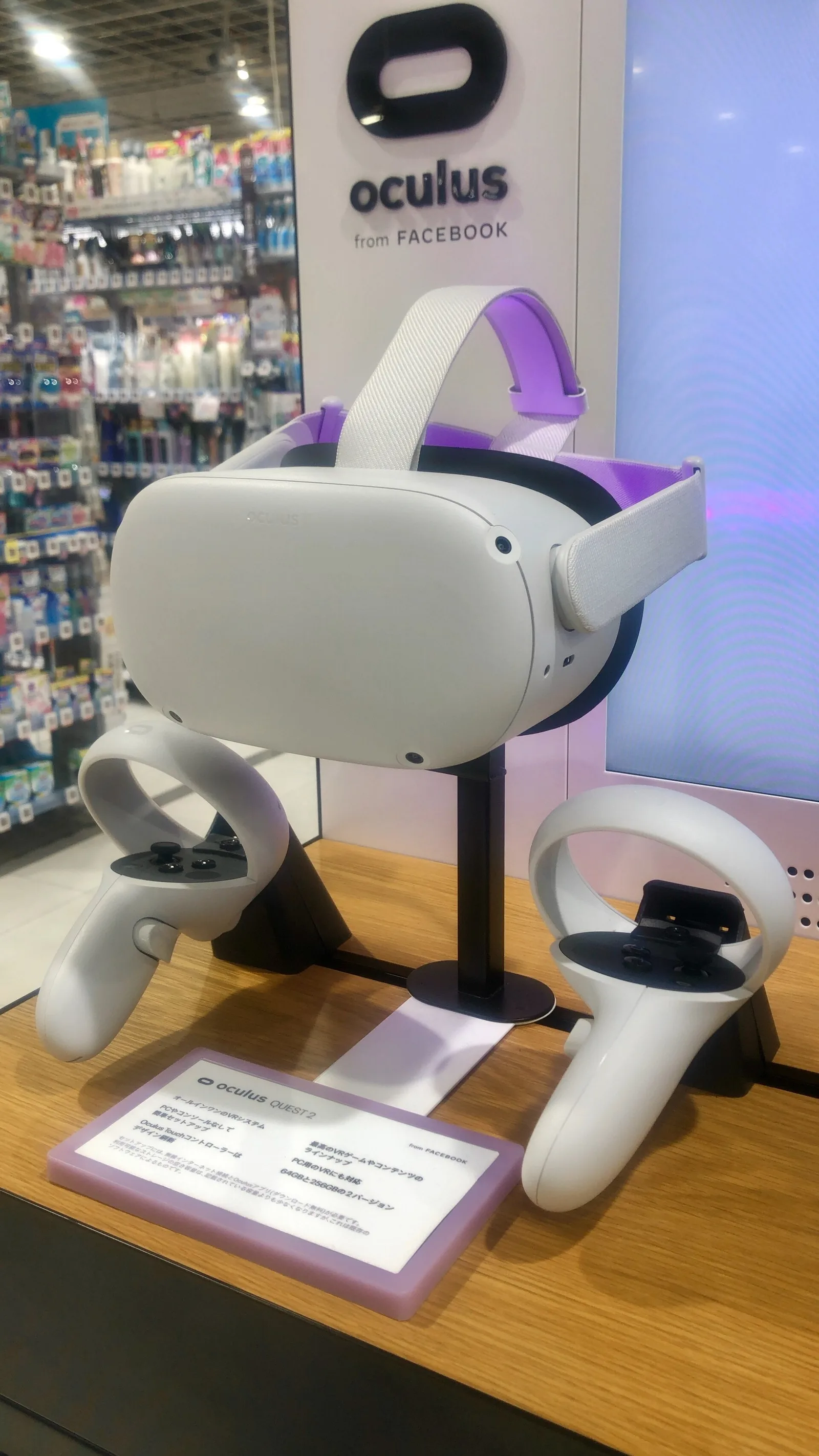
40 Quest 2 users wore 64-electrode EEG caps in a scene built to strain eye focus. Their sickness tracked falling power in specific brainwave bands.
OddBrief EditorialAI-assisted, human-reviewed
 Tech
Key facts
- Who
- University of Maryland, with the FDA and Sony Group Corporation
- Setup
- 40 participants, Meta Quest 2, 64-electrode EEG
- Finding
- lower frontal high-frequency and occipital low-frequency activity during cybersickness
- Limit
- one headset, one cause of cybersickness, real-time use not yet tested
University of Maryland researchers have tied one specific kind of VR sickness to measurable changes in brain activity, according to a study in Virtual Reality publicized on October 23. When 40 people used a Meta Quest 2 in a scene built to confuse their eye focus, EEG showed a significant drop in high frequencies over the frontal lobe and in low frequencies over the occipital lobe.
The team, led by computer science professor Amitabh Varshney with first author Mattie Johnson, says such signals could one day let a headset spot discomfort and adjust in real time.
The problem with where your eyes focus
The study targets the vergence-accommodation conflict. In a headset, your eyes turn inward or outward to meet a virtual object at one apparent distance, while the lens focuses on a screen at a fixed distance. In daily life those two cues agree. In VR they often do not.
Participants viewed an environment designed to provoke that mismatch while a 64-electrode EEG system recorded their brain activity. Afterward they filled in the Simulator Sickness Questionnaire, a 16-question survey first developed in 1993 for US military fighter pilots, so the team could match symptoms against the signals. The work was done with the US Food and Drug Administration and Sony Group Corporation.
A different signature from Maryland's 2021 study
The same lab studied cybersickness in 2021, but caused by motion: a fast virtual fly-through with drops and turns. That paper reported increases in delta, theta and alpha waves, all low-frequency bands, as people felt sick.
The new study, on a different trigger, reports a decrease in low frequencies over the occipital lobe and in high frequencies over the frontal lobe. Read side by side, the two papers point in opposite directions for the low-frequency bands. They measured different triggers with different setups, and the researchers do not compare them in their announcement.
"Our results show that EEG could complement traditional symptom questionnaires," the researchers said in the university's release.
What is still missing
The release cites earlier work finding that 65.2% of VR users reported cybersickness and 23.9% reported severe symptoms. The new study covers only the focus-conflict type, one headset model and 40 people, and the release gives no effect sizes.
The ideas of a headset that pulls content closer to its focal plane when it detects trouble, or a combined "cybersickness index", are proposals, not tested features. Next, the team plans to analyze eye-tracking data, partly to separate brain signals from eye-movement noise.
Sources
- UMD researchers identify brain signals linked to cybersickness in immersive environmentsUniversity of Maryland via EurekAlert!primary source
- Researchers Record Brain Waves to Measure 'Cybersickness' (2021)University of Maryland