New heart attack centers were linked to fewer deaths only where none was 30 minutes away
In 590,282 California heart attack cases, a nearby new PCI center helped underserved towns and did almost nothing where one already existed.
OddBrief EditorialAI-assisted, human-reviewed
 Society
Key facts
- Who
- UC San Francisco and the Naval Postgraduate School, in JAMA Network Open
- Data
- 590,282 California heart attack hospitalizations, 2011 to 2022
- Underserved areas
- 30-day deaths fell 1.8 points, one-year deaths 2.8 points
- Already served areas
- no change in mortality
Opening a hospital that can clear blocked heart arteries was linked to fewer heart attack deaths only in California communities that had no such hospital within a 30-minute drive, according to a study published on October 12 in JAMA Network Open. Where one already existed, the new facility brought small changes in care and no change in mortality.
The study, by Renee Hsia of UC San Francisco and Yu-Chu Shen of the Naval Postgraduate School, followed 590,282 heart attack hospitalizations from 2011 to 2022.
Two very different results from the same kind of opening
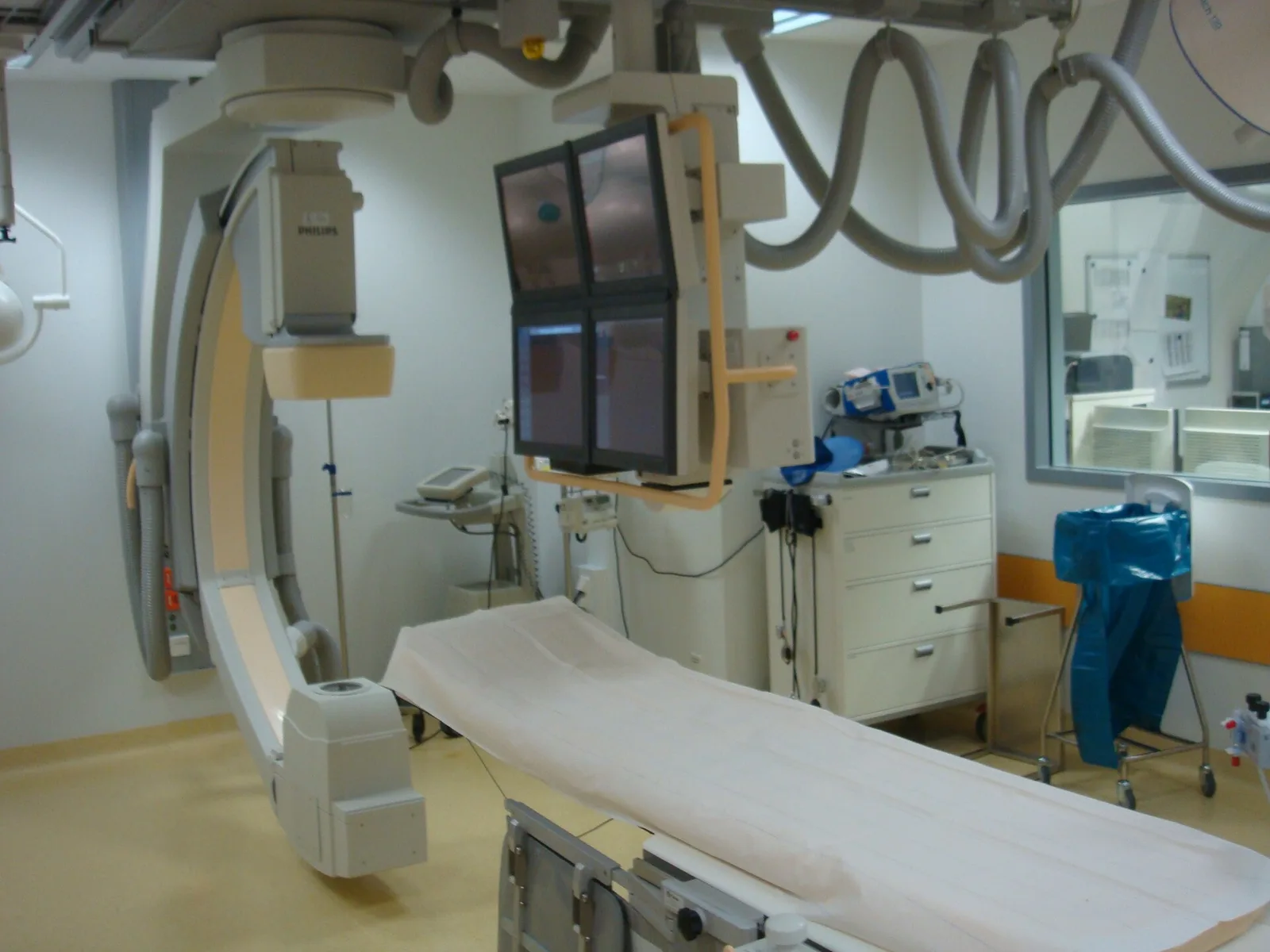
The hospitals in question offer percutaneous coronary intervention, or PCI, the catheter procedure that reopens a blocked artery. Speed matters, so the researchers sorted every California zip code by whether it had a PCI-capable hospital within 30 minutes in 2011.
Most patients, 85%, already lived within that range. Of the 89,504 who did not, 18,805 saw a new facility open nearby during the study.
For those underserved communities, the change was large. Admission to a PCI-capable hospital rose by 30 percentage points, use of the procedure rose by 5.1 points, 30-day mortality fell by 1.8 points and one-year mortality fell by 2.8 points. UCSF describes the mortality drops as 20% and 15% in relative terms.
In communities that were already covered, a new center raised admissions to PCI hospitals by 1.5 points and procedures by 1 point. Unplanned return visits within 30 days dipped slightly, but mortality did not change at 30 days or at one year.
Why new centers do not go where they help most
Hsia compared it to building another gas station on a corner that already has one. "Americans tend to think more is better, but where you put these services really matters," she said in the UCSF release.
The researchers note that hospitals decide where to add services based on market demand, procedure volume and expected return, and those signals may not point to the places that lack care. Among rural patients in the data, 81% lived more than 30 minutes from a PCI hospital at the start.
What the study cannot say
This is an observational study of one state, so it shows associations rather than proof that each opening caused the change. Results held when the analysis was limited to centers doing at least 50 procedures a year.
The authors conclude that expansion should target underserved regions instead of duplicating services in places that are already well served.
Sources
- Percutaneous Coronary Intervention Facility Access and Clinical Outcomes Among Patients With Acute Myocardial InfarctionJAMA Network Openprimary source
- When it comes to health care access, more isn't always betterUC San Francisco via EurekAlert!