Home brain stimulation for depression proved feasible but did not beat a sham
In a three-country trial, 109 adults used tDCS plus a training game at home. Both groups improved, and the sham group's average gain was slightly larger.
OddBrief EditorialAI-assisted, human-reviewed
 Society
Key facts
- Who
- DiSCoVeR consortium led by the Hebrew University of Jerusalem, with sites in Israel, Latvia and Germany
- What
- home tDCS plus a cognitive training game vs sham stimulation and a look-alike game
- Result
- 78.9% completed at least 20 of 30 sessions; depression fell 7.3 vs 8.2 points, no significant difference
- Published
- JAMA Network Open, October 19, 2026
Adults with depression can manage weak brain stimulation at home, but pairing it with a brain-training video game worked no better than a sham version, according to a randomized trial published October 19 in JAMA Network Open. The trial met its main goal, feasibility, while the efficacy result left an open question about why both groups got better.
The DiSCoVeR trial was led by Prof. Mor Nahum of the Hebrew University of Jerusalem and run at university hospitals in Israel, Latvia and Germany between June 2021 and August 2024.
What participants did at home
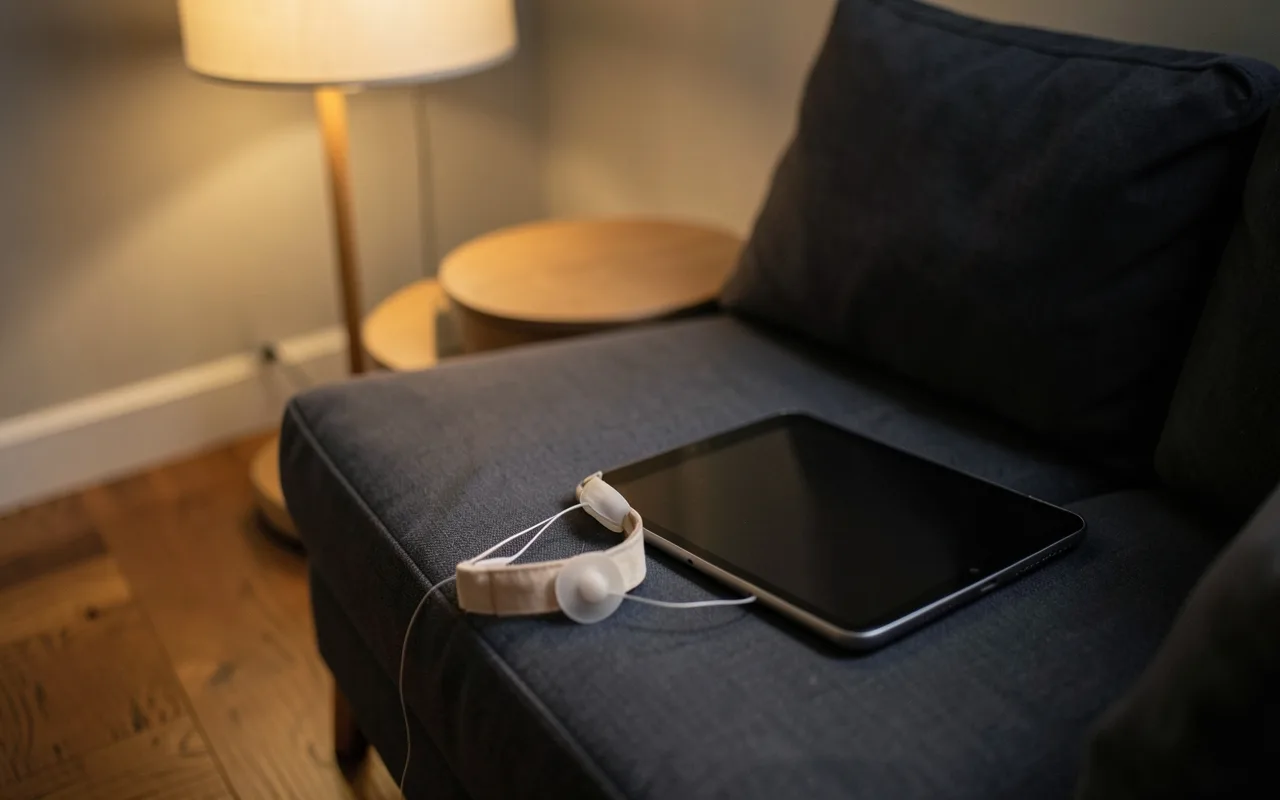
The study analysed 109 adults aged 18 to 65 with major depressive disorder: 55 in the active group and 54 in the control group. After instruction visits at a clinic, they were asked to complete 30 sessions of 30 minutes each over six weeks, mostly at home, with software helping them place the electrodes.
The active group received transcranial direct current stimulation (tDCS), a weak 2 mA current through the scalp, while playing a game designed to train cognitive control. The control group got sham stimulation and a look-alike game without the training exercises.
Feasibility was defined as completing at least 20 of the 30 sessions. According to the paper, 86 people, or 78.9%, did so, and adverse events were balanced between the groups.
Both groups improved
Depression scores on the Montgomery-Åsberg scale fell significantly in both groups by week 6. According to the university, the active group improved by an average of 7.3 points and the control group by 8.2 points.
The paper reports no meaningful difference between the two (P = .44), and results were similar at the week 10 follow-up. In the authors' words, the combination "did not demonstrate superior efficacy over the control condition."
What belief had to do with it
The trial also asked participants which treatment they thought they were getting. Those who believed they had the control version tended to improve less, whatever group they were really in, according to the university.
The authors warn that this does not mean belief cures depression or that expectations drove recovery. Nahum said in the release that "both groups improved substantially," calling it the finding she keeps returning to.
The researchers also say the result does not show brain stimulation is ineffective for depression in general. It is still unclear whether the control group's improvement came from the routine of daily sessions, ongoing care, natural changes in symptoms or simply being in a study. They suggest future work should test different stimulation settings, exercises and patient groups.
Sources
- Home-based brain stimulation passes major feasibility test, while depression results raise new questionsThe Hebrew University of Jerusalem via EurekAlertprimary source