Young giant manta rays stay in coastal refuges, then lose legal protection as adults
Seven years of tracking in Central America showed juvenile mantas never left shallow nearshore waters, while adults migrated along the shelf edge outside reserves.
OddBrief EditorialAI-assisted, human-reviewed
 Science
Key facts
- Who
- Jeffry Madrigal-Mesén of Mantas Costa Rica and colleagues
- What
- juvenile giant mantas stayed in shallow coastal refuges; nine adults migrated along the shelf break
- Data
- 59 rays with acoustic tags, 12 with satellite tags, over 12,000 detections, 2018 to 2025
- Published
- Frontiers in Fish Science, October 22, 2026
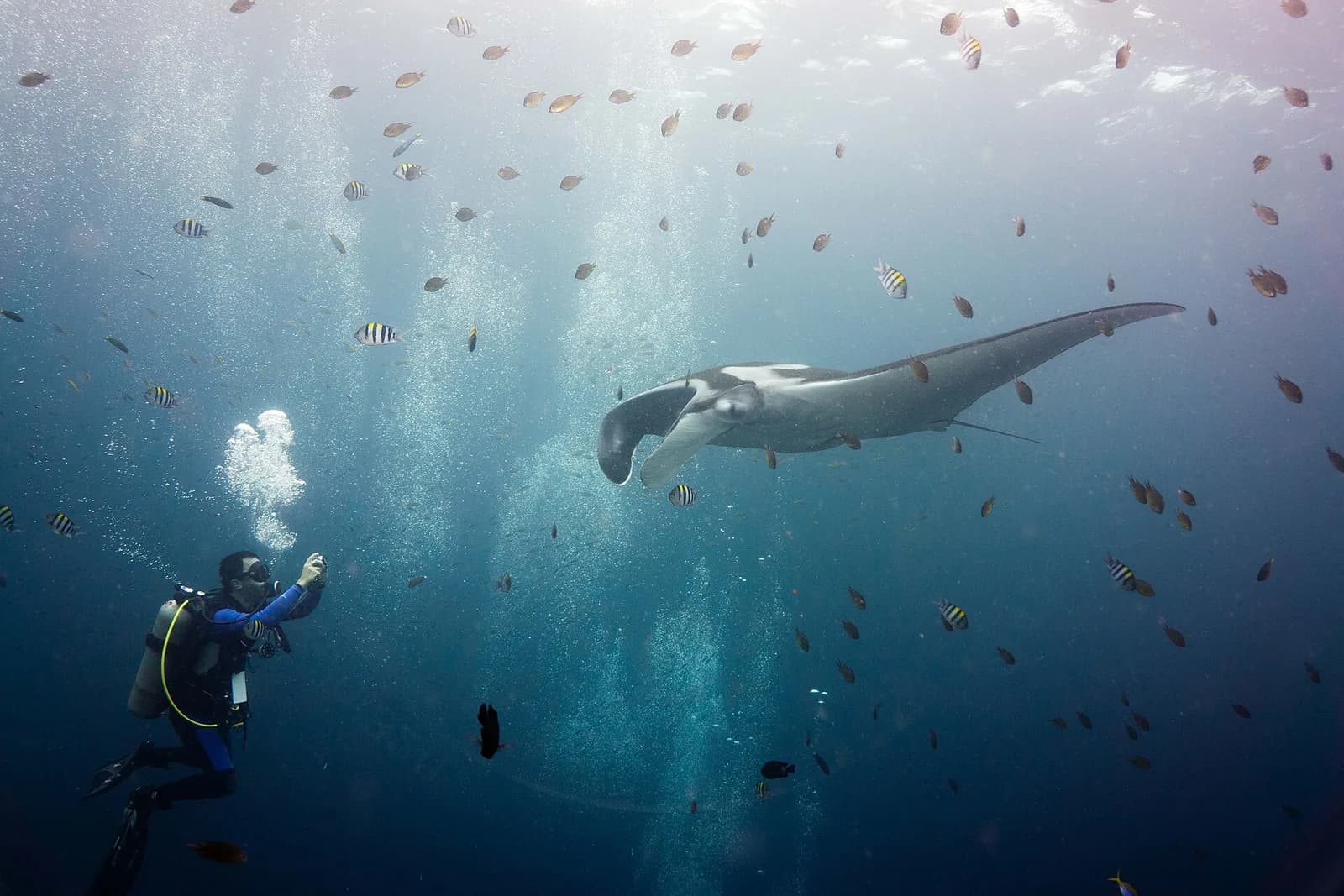
Young giant manta rays in Central America stay in shallow waters close to the coast until they are big enough to face open-ocean predators, according to a study published on October 22 in Frontiers in Fish Science. The catch, the authors say, is that once the rays grow up and swim out of marine reserves, the legal protection that covered them as juveniles disappears.
Tracking ran from 2018 to 2025 across five sites, and the team now proposes cross-border "conservation swimways" linking the nursery coasts with the migration routes adults use.
Seven years of pings
The work was led by Jeffry Madrigal-Mesén of Mantas Costa Rica. The researchers combined three methods: acoustic receivers that log tagged animals swimming past (59 individuals), satellite tags that follow large movements (12 individuals) and photo identification from each ray's unique belly markings. Together they logged more than 12,000 detections.
Juveniles, with a disc width of roughly 3 metres or less, stayed in nearshore refuges. The release describes them as remaining "strictly within" shallow coastal waters, where food and shelter are close and sharks and orcas are less of a threat.
Adults behaved very differently. Nine mature mantas made long migrations along the continental shelf break, the edge where shallow coastal seabed drops into deep ocean.
The ray that came back
One male, nicknamed Mickey Mouse, was detected 462 times in 2020 at El Secreto, a coastal hub in the study area. In 2023 he was back on that stretch of shelf, where he lingered for 38 days, a hint that adults may keep using specific coastal sites even after years away.
Giant mantas, Mobula birostris, are slow to grow up. They reach maturity at around 8 to 10 years old and can grow to about 7 metres across and up to 2,000 kilograms, which leaves a long stretch of life spent moving between habitats.
Where protection runs out
According to the authors, the danger shifts with age. Pups face natural predators, while adults moving through unprotected international corridors face industrial fishing that does not select its catch and collisions with vessels.
"As soon as these rays move beyond isolated marine reserves, their legal protection drops to zero," Madrigal-Mesén said in the release.
The proposed swimways would join national coastal refuges to the shelf-edge corridors so that a manta stays covered from birth to adulthood. The release does not say which governments have been approached or name the other four study sites.
Sources
- Baby manta rays hunker down close to coasts before facing the open ocean's dangersFrontiers via EurekAlertprimary source
- Frontiers in Fish Science paperFrontiers in Fish Science