Wheat grown at 546 ppm CO2 lost protein in nine of ten varieties, and one gained
A Leibniz-LSB@TUM field study found extra CO2 cut gluten and baking quality in most wheat cultivars, while proteins tied to wheat sensitivity went up.
OddBrief EditorialAI-assisted, human-reviewed
 Science
Key facts
- Who
- Leibniz-LSB@TUM with KIT, the Bavarian State Research Center for Agriculture and Forschungszentrum Jülich
- What
- ten winter wheat cultivars grown at 546 ppm CO2 and at current levels
- Result
- grain protein fell 1.9% to 10.3% in nine cultivars and rose 2.7% in Hyvega
- Health
- celiac-active peptides fell, amylase/trypsin inhibitors rose
Winter wheat grown at a carbon dioxide level of 546 ppm, well above today's roughly 425 ppm, lost grain protein in nine of the ten cultivars tested, falling by 1.9% to 10.3%, while one cultivar, Hyvega, gained 2.7%, according to a study led by the Leibniz Institute for Food Systems Biology at the Technical University of Munich.
The work, published in Food Chemistry and announced on October 16, found that elevated CO2 also shifted which proteins the grain made, in ways that matter both for bakers and for people who react badly to wheat.
Less gluten, weaker dough
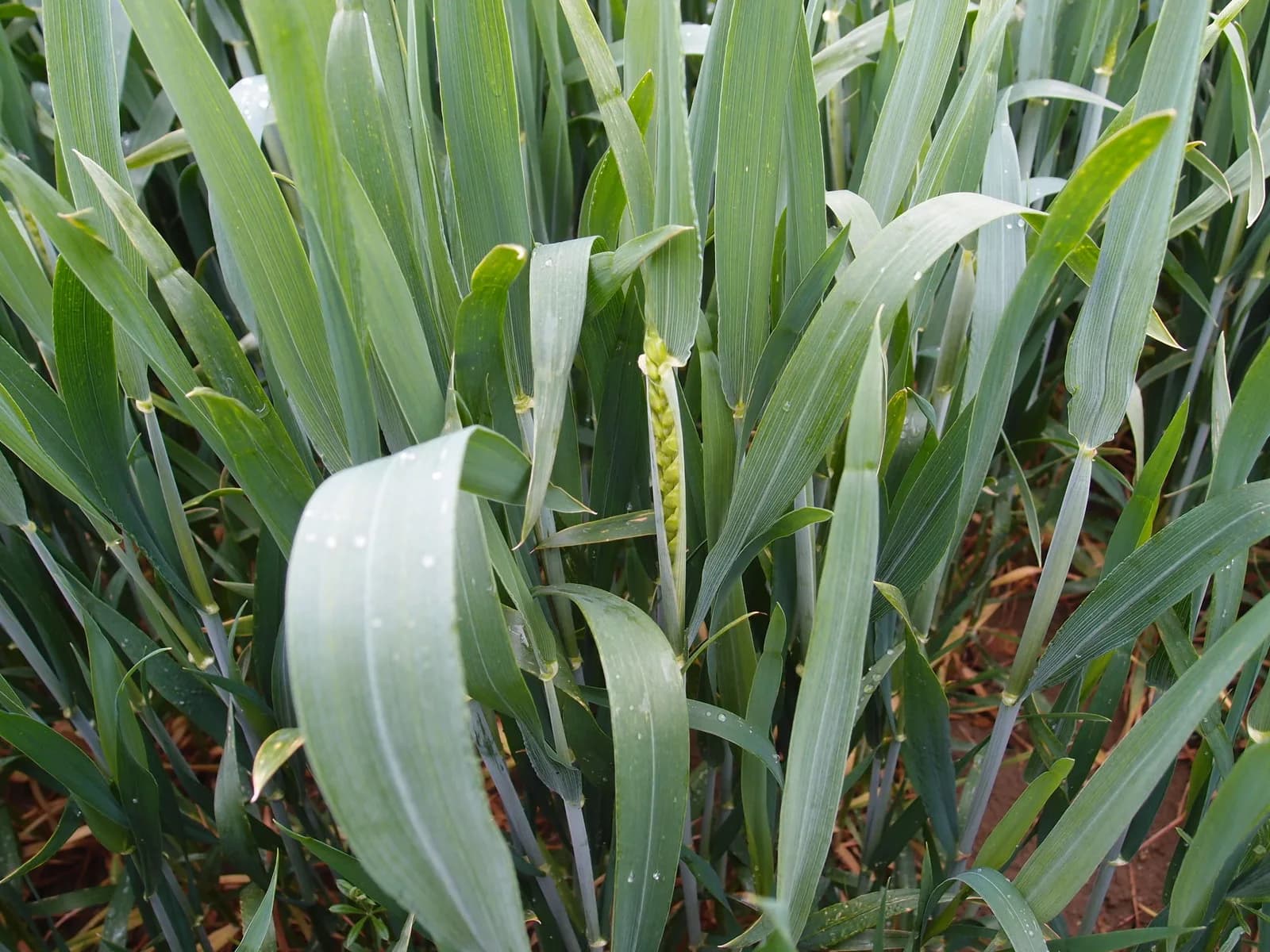
The team grew the ten varieties under what the institute calls realistic growing and environmental conditions, some at 546 ppm and the rest at current levels. After harvest it used a high-resolution mass spectrometry method it developed to measure several groups of proteins.
Gluten proteins, which give dough its structure, generally went down under the higher CO2. So did puroindolines, which largely set how hard the kernel is. The researchers report that lower gluten levels went along with poorer baking quality.
How much any of this happened depended heavily on the variety. Asory, Campesino, LG Initial and Moschus were sensitive across every measure the team looked at, while Apostel and KWS Emerick held up comparatively well. The other varieties were Foxx, Informer and RGT Reform, along with Hyvega.
A mixed picture for wheat-related disorders
The protein shifts did not all point in the same direction for health. Certain peptides known to be active in celiac disease decreased, in line with the drop in gluten, which is where they come from during digestion.
At the same time, amylase/trypsin inhibitors generally increased. These proteins help the plant fend off insects, and according to the institute they are under suspicion as a cause of allergies and as a factor in non-celiac wheat sensitivity.
Katharina Scherf, who heads the institute's food biopolymer chemistry group, said the shifts may matter for wheat-related diseases over the long run, but that further studies are needed to work out what they mean biologically and immunologically.
Why the variety list matters
Atmospheric CO2 has risen from about 340 ppm in 1980, and the institute notes it could reach about 600 ppm by 2050 depending on how societies develop. The study's message is less about a single average effect than about the spread between cultivars: the same CO2 level left some varieties nearly unchanged and pushed others down on every measure.
The authors argue that breeders should look for wheat that keeps its baking quality as CO2 rises while carrying as few potentially problematic proteins as possible. The release does not say where the plots were grown or over how many seasons, and it does not report yield.
Sources
- Climate change affects the quality of one of the world's most important staple foodsLeibniz Institute for Food Systems Biology at the Technical University of Munich (EurekAlert!)primary source