The Atlantic has gone longer without a hurricane than ever recorded
Five named storms have formed in 2026, but none became hurricanes by September 12, setting a satellite-era record for lateness.
OddBrief EditorialAI-assisted, human-reviewed
 Science
Key facts
- Record
- No Atlantic hurricane by September 12, 2026
- Storms
- 5 named storms, all below hurricane strength
- ACE
- 4.4, or 93% below the 1991-2020 normal
- Season end
- November 30
The 2026 Atlantic hurricane season reached September 12 without producing a single hurricane, the latest first-hurricane date in the satellite era. The quiet arrived during what is normally the busiest part of the season, making the absence itself a weather record.
The National Hurricane Center counted five named storms through 03:00 UTC on September 12. All remained tropical storms, and the basin's accumulated cyclone energy, or ACE, stood at 4.4, 93 percent below the 1991 to 2020 normal for that point in the season.
Five storms, zero hurricanes
A tropical storm becomes a hurricane when its sustained winds reach 74 miles per hour, or 119 kilometers per hour. None of this year's Atlantic storms crossed that threshold.
The five systems were also relatively brief and weak. NOAA's season table showed zero direct deaths and no recorded US damage from them as of September 12. That does not mean the rest of the season is guaranteed to stay quiet, but it makes the opening stretch highly unusual.
Associated Press reported that September 12 set the record for the latest start to an Atlantic season without a hurricane in the modern satellite era. Earlier records are less reliable because storms that remained far offshore could have escaped observation before satellites routinely watched the basin.
El Niño is acting like a storm shredder
Warm Atlantic water is only one ingredient for a hurricane. Tropical cyclones also need a favorable atmosphere, and the large El Niño in the Pacific has been producing stronger upper-level winds over the Atlantic.
That wind shear can tilt or tear apart the vertical structure of a developing storm before it organizes. The result is a season that can have warm water and still struggle to turn tropical disturbances into hurricanes.
The contrast is especially striking because the statistical peak of Atlantic hurricane activity falls around September 10. In 2026, the basin reached that date with no hurricane at all.
Quiet so far is not a season forecast
Atlantic hurricane season officially continues through November 30. Late-season systems can still form in the Caribbean, Gulf and western Atlantic, so a record-slow start does not remove the need for coastal preparation.
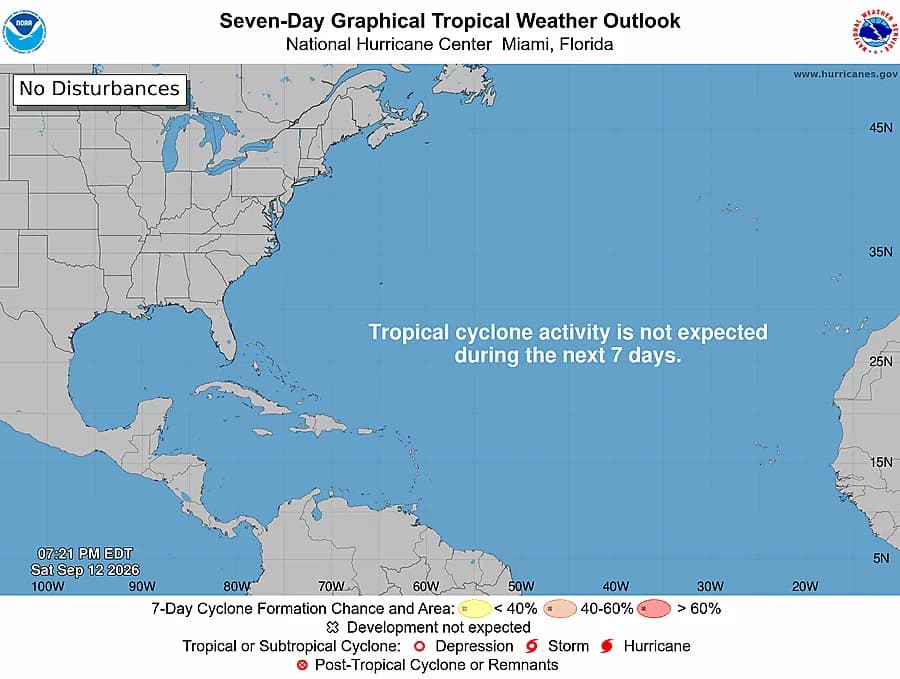
The National Hurricane Center's seven-day outlook on September 12 showed no Atlantic cyclone formation expected. The next measurable milestone is therefore simple: when, or whether, the basin finally produces its first hurricane of 2026.
Sources
- 2026 Atlantic Hurricane SeasonNational Hurricane Centerprimary source
- Where have all the Atlantic hurricanes gone?Associated Press