Rüppell's vultures use 16 call types, and their chicks start calling two days before hatching
A Utrecht study of a bird long assumed to be quiet found a graded vocal repertoire, and a detail that matters for zoo incubators.
OddBrief EditorialAI-assisted, human-reviewed
 Science
Key facts
- Who
- Utrecht University's Vulture Cognition Lab, led by Jorg Massen; first author Connor Proudfoot
- Data
- 150 hours of recordings and about 2,500 vocalisations from two Dutch zoo colonies
- Finding
- 16 call types, some graded into each other; chicks call from the egg about two days before hatching
- Published
- PLOS One, October 21, 2026
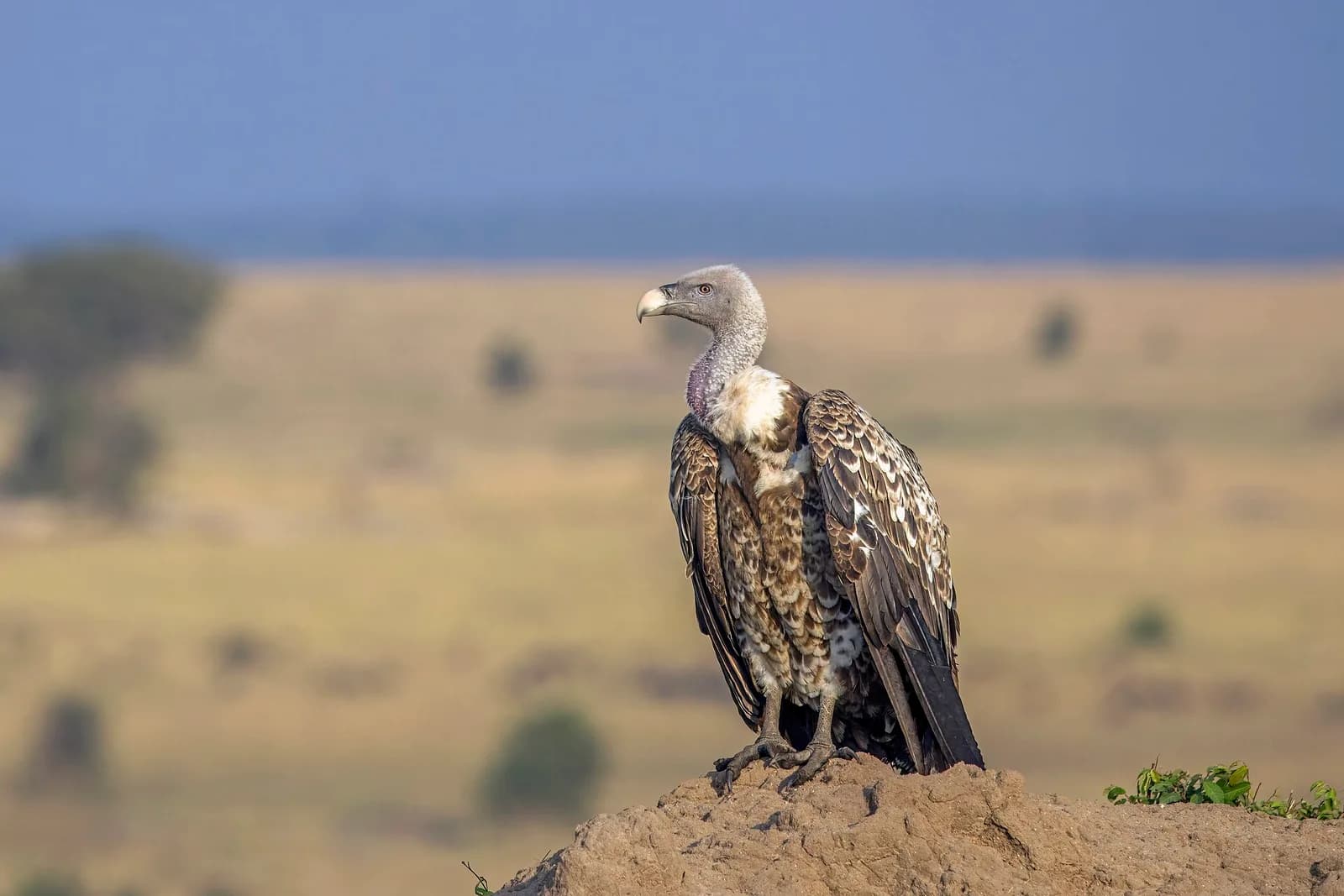
Rüppell's vultures, a critically endangered African species long thought to make only a few simple sounds, use at least 16 distinct call types, according to a study from Utrecht University published on October 21 in PLOS One. The researchers also found that chicks begin calling from inside the egg about two days before they hatch, which zoo parents often never hear.
That second finding is the one with a practical edge. In many zoos the eggs are incubated artificially, away from the adults.
150 hours of listening in two Dutch colonies
The study began as Connor Proudfoot's master's project, carried out in the Vulture Cognition Lab run by Jorg Massen. Proudfoot spent 150 hours recording captive birds at Rotterdam's Diergaarde Blijdorp zoo and at the Avifauna bird park in Alphen aan den Rijn.
Blijdorp incubates its vulture eggs artificially, which turned out to be useful: the team could record the eggs and the young chicks directly. Across both sites they gathered about 2,500 vocalisations and measured each one for length, pitch and the number of separate notes it contained.
Sorting those measurements produced 16 call types. Some stood clearly apart. Others shaded into one another, which the authors read as flexibility rather than noise. "They can convey not just that they are excited, but also how excited they are," Proudfoot said in the university's release.
More calls than the average bird
For comparison, the team points to a survey of more than 800 bird species that found an average of six to eight calls per species. By that yardstick a vulture that most people picture sitting silently on a branch sits well above the norm.
The species has reasons to talk. Rüppell's vultures live in the Sahel and East Africa in loose social groups with a ranking order, breed in colonies of up to about 1,000 birds, and crowd around carcasses with dozens of competitors. Proudfoot said the way they communicate resembles that of macaques and other monkeys.
What a silent incubator might cost
Because zoo eggs are often moved to incubators, parent birds may miss the calls their chicks make before hatching and be less ready when the chick arrives, the researchers suggest. They think more chicks might be reared successfully if the parents could hear those sounds, but the study did not test this.
They also propose playing recordings of mating pairs through speakers to encourage other pairs to breed. That idea is also untested.
Next, if PhD funding comes through, Proudfoot plans to hide a speaker in a 3D-printed egg to work out why chicks call before hatching, and to process larger sets of recordings with AI.
Sources
- 'Silent' vultures turn out to use a wide range of sounds to communicateUtrecht Universityprimary source