Deep Gulf fish fell 64% after Deepwater Horizon while temperature and oxygen held steady
Thirteen years of net samples show the Gulf of Mexico's midwater animals never recovered, and the usual natural explanations did not change.
OddBrief EditorialAI-assisted, human-reviewed
 Science
Key facts
- Who
- researchers at Nova Southeastern University and Florida International University
- Data
- more than 2,000 net samples from 2011 to 2023, plus acoustic surveys
- Declines
- fishes 64%, large crustaceans 62%, cephalopods 60%, krill nearly 73%
- Caveat
- the study does not establish direct causation
Fish living in the deep open waters of the Gulf of Mexico declined 64% after the 2010 Deepwater Horizon spill and have not recovered, according to a study published in PNAS on October 19. Over the same years, the researchers saw no shift in the water's temperature, oxygen levels or food supply that could account for it.
The team, led by Tracey Sutton of Nova Southeastern University with co-authors at Florida International University, analyzed more than 2,000 net samples collected between 2011 and 2023, alongside acoustic surveys.
The animals almost nobody counts
The losses span the water column from the surface down to the deep-pelagic zone, between about 600 and 5,000 feet. That includes the deep scattering layer, a dense band of small fish, squid and crustaceans. This habitat makes up more than 90% of the Gulf's volume, according to the researchers.
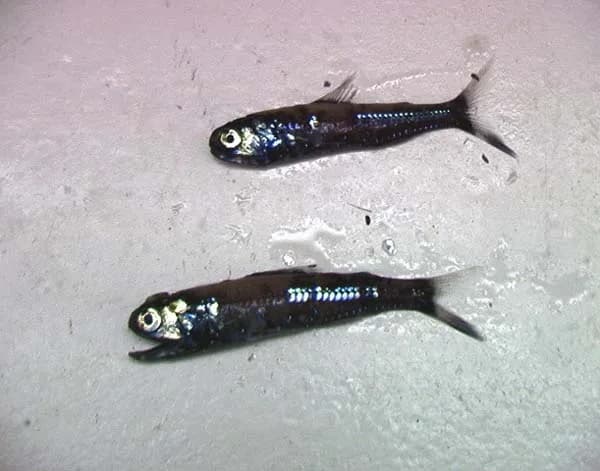
Large crustaceans fell 62% and small squid and other cephalopods 60%. Among the groups that feed larger predators, krill dropped nearly 73%, bristlemouth fishes 69% and lanternfishes 63%. The thick prey swarms seen in 2011 had all but vanished.
Many of these species were considered abundant and widespread, not vulnerable. FIU's Pedro Peres said the result shows that "even species that appear abundant can experience substantial changes that may go unnoticed without monitoring."
What the study does and does not prove
The paper does not establish direct causation. The authors say they used consistent sampling methods, accounted for different water masses and checked for shifts in temperature, oxygen and food, and found none that matched. Of the explanations left, they name the spill and the response to it as the most plausible reason the decline came when it did and was so large.
The spill released an estimated 4 million to 4.9 million barrels of oil, and roughly 770,000 gallons of dispersant went into the water at the wellhead. Traces of oil compounds later turned up in deep-water fish eggs and in cephalopod tissue. The authors say such contamination can cause deaths, developmental damage and lower fitness, and may dull the sense of smell fish use to find mates in the dark.
Why a midwater collapse matters at the surface
These small animals feed whales, dolphins, tuna, sharks and seabirds. They also carry carbon from the upper ocean down to the depths as they migrate up and down each day, so their loss may weaken food webs and the ocean's ability to store carbon.
The team also examined genetic diversity in three lanternfish species, though the public summary does not detail what it found. In the authors' view, the Gulf may now be stuck in a lasting depleted state, and nobody can yet say when it will recover.
Sources
- Life in the deep Gulf plummeted after Deepwater HorizonFlorida International University via EurekAlert!primary source