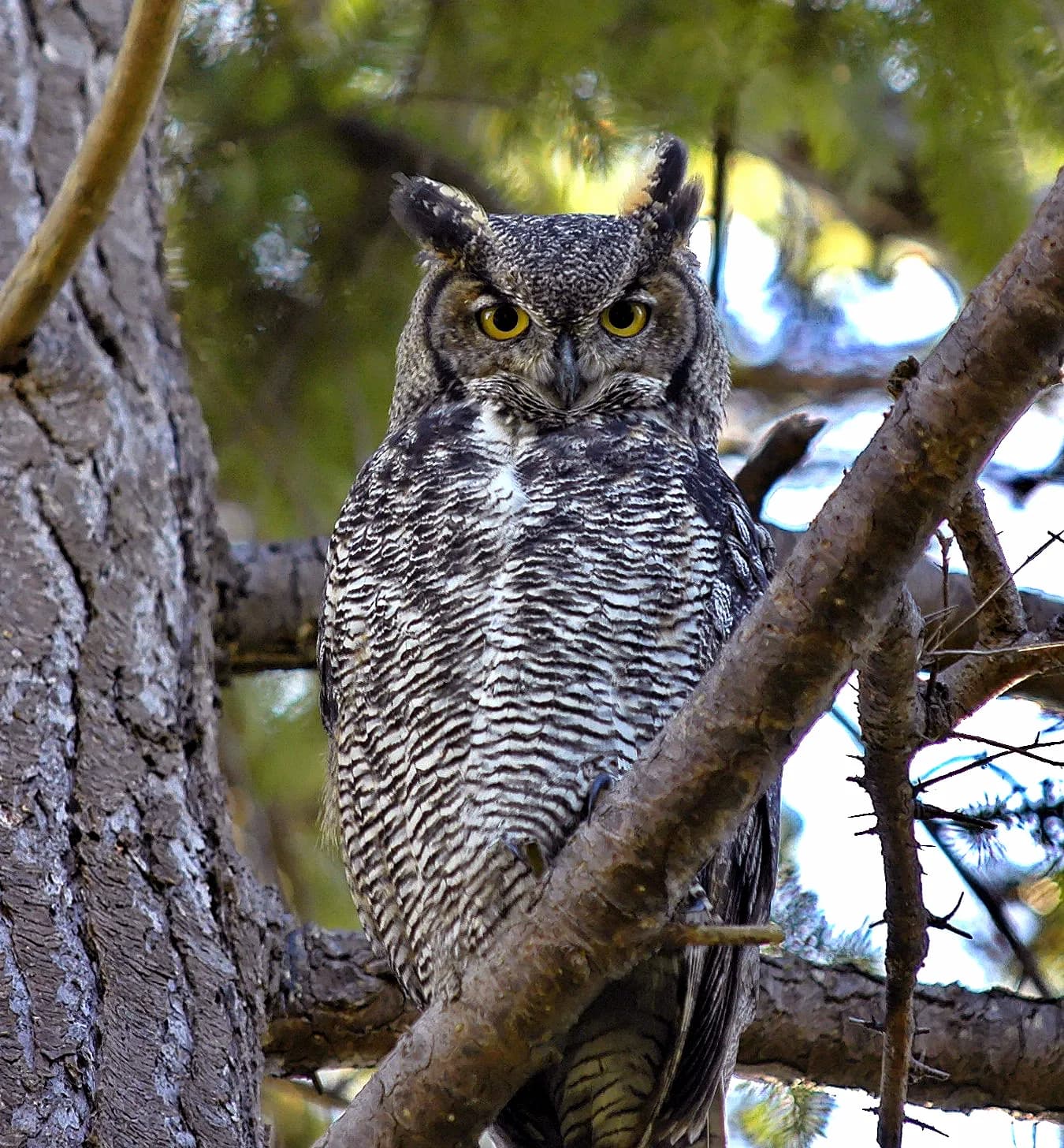
AOS splits the Great Horned Owl into four and gives Guatemala its first endemic bird
The 67th update to the North American bird checklist redraws owls, egrets, willets and whimbrels, and one split was proposed by a Stanford undergraduate.
OddBrief EditorialAI-assisted, human-reviewed
 Science
Key facts
- Who
- the American Ornithological Society's North American Classification Committee
- What
- 67th Supplement to the Check-list of North American Birds, published October 20, 2026
- Biggest change
- Great Horned Owl split into four species, three endemic to South America
- First
- the Guatemalan Motmot, found only in the Río Motagua valley, is Guatemala's first endemic bird
The American Ornithological Society has split the Great Horned Owl into four species and, by dividing the Russet-crowned Motmot, given Guatemala its first bird found nowhere else. The changes are part of the 67th Supplement to the society's Check-list of North American Birds, published on October 20 in the journal Ornithology.
The checklist is the reference most North American field guides, bird apps and birders' life lists follow, so each yearly supplement quietly changes what people can count.
A motmot that lives in one dry valley
The split behind the headline concerns Momotus mexicanus, the Russet-crowned Motmot. One of the two resulting species, M. castaneiceps, now called the Guatemalan Motmot, lives solely in the arid Río Motagua valley, the society said. That makes it Guatemala's first endemic bird species.
A bird restricted to a single valley is a different conservation question from a widespread one. The supplement itself does not discuss the motmot's population or threats.
One owl becomes four
The Great Horned Owl, Bubo virginianus, is now treated as four species. Three of them occur only in South America: the Paramo Horned Owl, the Tropical Horned Owl and the Magellanic Horned Owl. North American birders keep their familiar Great Horned Owl, but the species is now much smaller in range than it was on paper.
The Great Egret was also divided along geographic lines. The scientific name Ardea alba stays with the Old World bird, which becomes the Great White Egret, while the egret of the Americas becomes the American Egret, A. egretta.
Other splits divide the Willet into a Saltmarsh Willet in the east and a Prairie Willet in the west, the Marsh Wren into eastern and western species that differ mainly in song, and the Red-legged Thrush into eastern and western Caribbean species. The Willet case had already been considered in 2017, the society said.
A rejected split, revived by a student
The Whimbrel is now two species: the Hudsonian Whimbrel, which breeds in Canada and Alaska, and the Eurasian Whimbrel, which keeps the name Numenius phaeopus. The split had been considered and failed in 2022, according to the society. This time the proposal came from Martin Freeland, an undergraduate at Stanford University, citing differences in courtship and aggressive displays, body shape and genetics.
Freeland was later invited to join the committee's Early Career Systematics Group, the society said.
The supplement also adds the Pearly-eyed Thrasher to the list of birds known from the United States, based on a spring 2024 record from Key West, Florida, and reshuffles the wren family again, adding the genus Nannus for the Winter and Pacific wrens.
Field guides and apps usually take months to adopt a new supplement, so the new names will appear gradually rather than all at once.
Sources
- Split Decisions, With a First for GuatemalaAmerican Ornithological Societyprimary source
- Split decisions, with a first for GuatemalaEurekAlert!