NASA trained an open AI model on two million pieces of the Moon
The NASA-IBM Lunar Foundation Model can map craters, flag young volcanic features and estimate where polar ice may remain stable.
OddBrief EditorialAI-assisted, human-reviewed
 Science
Key facts
- Model
- NASA-IBM Lunar Foundation Model
- Training data
- roughly 2 million lunar image tiles
- Resolution
- over 1 million tiles at 1 meter and nearly 964,000 at 100 meters
- Access
- model, code, datasets and benchmarks are open
NASA and IBM have released an open-source artificial intelligence model trained on roughly two million image tiles of the Moon. The Lunar Foundation Model is designed as a reusable starting point for mapping craters, finding unusual volcanic features and estimating where ice may remain stable near the lunar poles.
NASA announced the model on September 10 and made it publicly available through Hugging Face, with its code on GitHub. Researchers can adapt it to a specific lunar task using a smaller set of labeled examples instead of training a new system from scratch.
The Moon became a training dataset
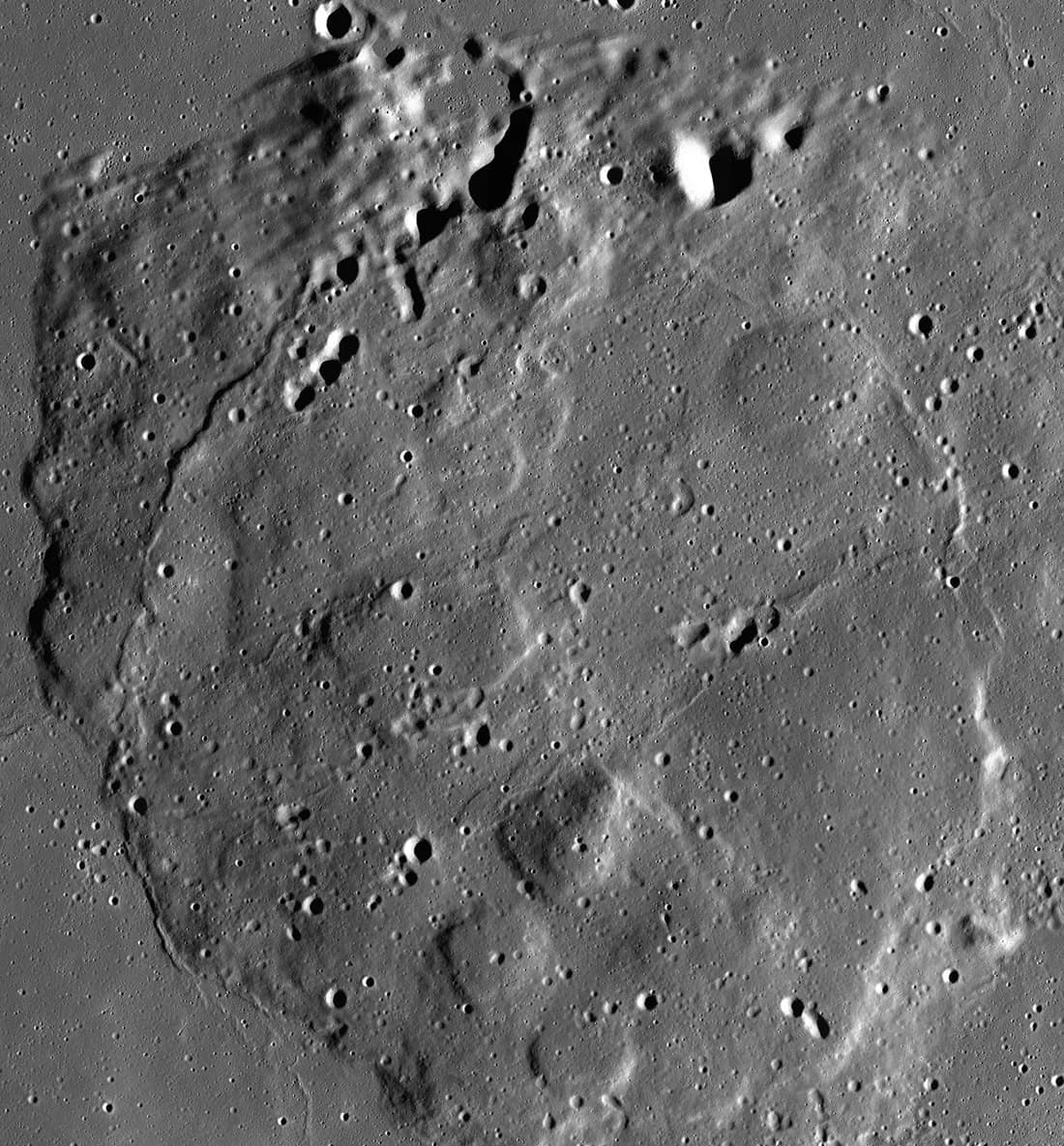
Most of the material came from 17 years of observations by NASA's Lunar Reconnaissance Orbiter. NASA says the spacecraft's dataset is larger than that of all its other planetary missions combined and covers nearly the entire lunar surface at high resolution.
The training collection contains more than one million camera tiles at 1-meter resolution and nearly 964,000 multispectral tiles at 100-meter resolution. Data from NASA's GRAIL and Lunar Prospector missions and Japan's SELENE mission added information about terrain and other physical properties.
A foundation model learns broad patterns from an unlabeled collection before being tuned for a narrower job. In this case, the shared visual language is lunar geology rather than everyday photographs or internet text.
It found a crater it had not seen before
NASA tested the model on images of the area near Einstein crater taken before and after a SpaceX rocket body struck the Moon. The post-impact image had been excluded from pretraining.
After fine-tuning, the model outlined existing craters and highlighted the newly formed impact site. NASA says the test shows how the system could help identify fresh impacts or other surface changes across collections too large to compare manually.
Lighting remains a complication. The angle of sunlight changes between lunar orbits, which can make small craters appear or disappear and potentially confuse automated comparisons.
Ice may be the most practical target
Permanently shadowed regions near the lunar poles can stay cold enough to preserve ice for billions of years. Mapping where that ice is likely to remain stable matters to scientists studying lunar history and to planners considering water and other resources for future exploration.
Across NASA's evaluations, the model matched or exceeded several strong baselines. It performed comparably on crater mapping and irregular mare patch segmentation, while showing a clearer advantage in estimates of polar ice stability.
NASA also released training datasets and benchmarks so researchers can reproduce and compare results. The model is not a finished map of lunar resources. It is an open tool that other teams can test, challenge and adapt before its predictions influence a scientific or exploration decision.
Sources
- NASA, IBM Launch AI Foundation Model for Lunar ScienceNASAprimary source
- NASA-IBM Lunar Foundation ModelHugging Face