London Register: record 43.6 Mt of CO2 stored in 2024, 82% of total linked to oil recovery
Imperial College's CO2 storage register hit a yearly record, yet most of the carbon on its books went into projects that also pump oil.
OddBrief EditorialAI-assisted, human-reviewed
 Science
Key facts
- Record
- 43.6 million tonnes of CO2 stored underground in 2024
- Catch
- 82.3% of cumulative storage is in projects with oil recovery
- Biggest project
- Petrobras Santos Basin, 14.2 million tonnes in 2024
- Revision
- the 2023 figure is now 41.7 million tonnes, not 45.2
Geological storage of carbon dioxide set a new yearly high in 2024 at 43.6 million tonnes, according to the 2026 annual report of the London Register of Subsurface CO2 Storage, published by Imperial College London on October 25. The less flattering detail sits further down: 82.3% of the cumulative CO2 on the register was stored in projects classed as storage with oil recovery, a category the report says is mostly about extending the life of existing oilfields.
The register now tracks 70 projects in 17 countries on six continents, and puts cumulative storage from 1996 through 2025 at 421.7 million tonnes.
One oilfield carries a third of the year
The single largest contributor was Petrobras's Santos Basin Pre-Salt Oil Field off Brazil, which stored 14.2 million tonnes in 2024. That is roughly one third of the world's annual figure from one project.
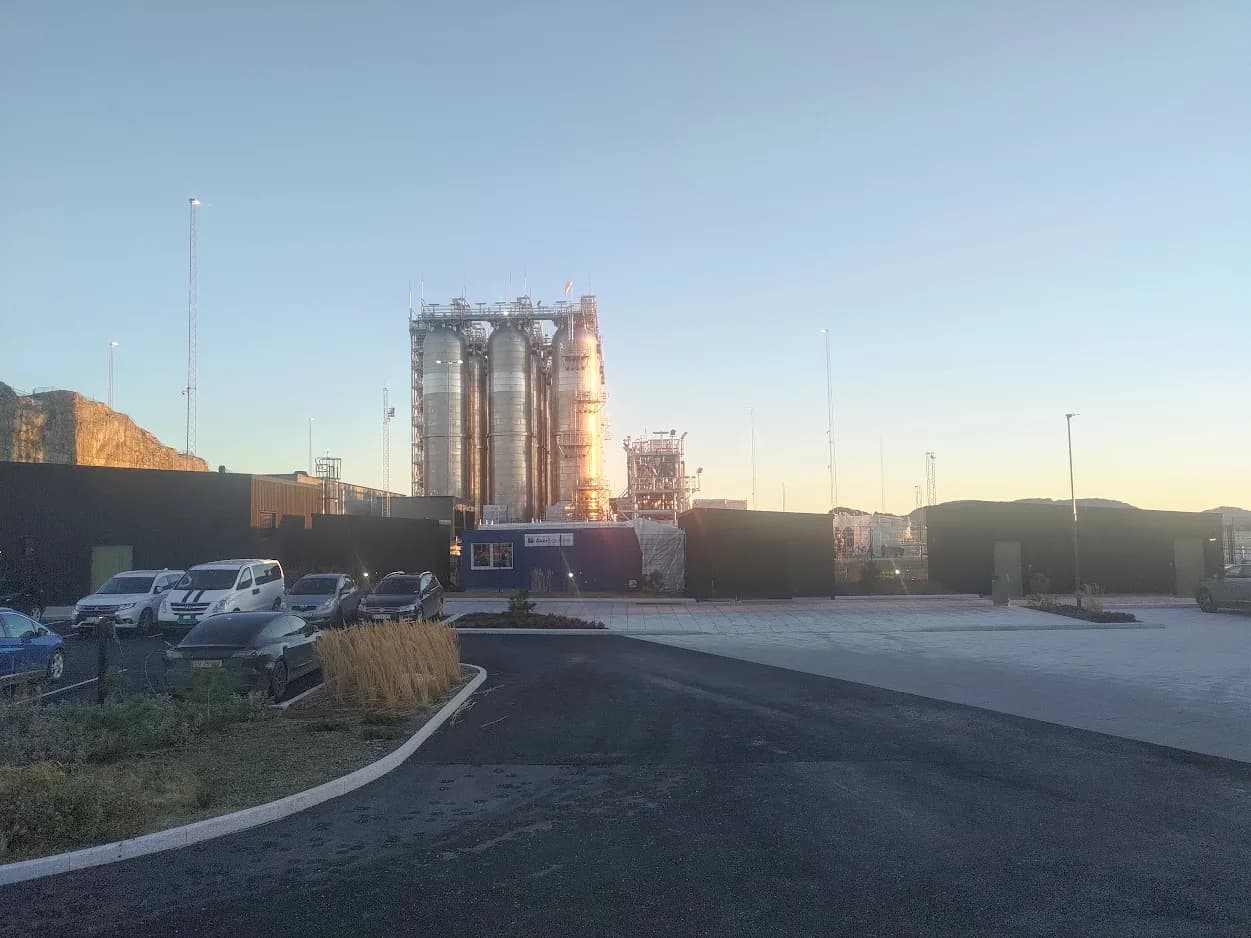
The United States had the most projects, 23, which together reported 20.2 million tonnes. China and Australia each reported 1.7 million tonnes. New Zealand and Italy appear in the register for the first time, and Norway's Northern Lights project began injecting in August 2025.
Annual storage has roughly doubled since 2016, when the register counts 21.0 million tonnes.
The numbers went down before they went up
The report also corrects its own past. Its 2023 number is now 41.7 million tonnes, down from the 45.2 it reported a year ago, and the running total up to the end of 2023 shrank by 2.7%, to 342.0 million tonnes from 351.4. One revision, for the North Burbank Unit in the US, was made to account for CO2 that is recycled and reinjected.
That recycling problem has not gone away. According to the report, 112.5 million tonnes in the oil recovery category, which it describes as 32.4% of the cumulative total, is recorded only as "injected". The authors note that such figures may not subtract CO2 that comes back to the surface with oil and is pumped down again.
The 2025 figure of 36.2 million tonnes looks like a drop, but it covers only 29 projects in 12 countries. The authors caution that it is incomplete and should not be read as a full-year global total.
How far from the target
Samuel Krevor, the register's director and a professor in Imperial's Department of Earth Science and Engineering, said geological storage "must scale up to one billion tonnes of CO2 storage or more per year by 2050" to fit the Paris Agreement's 1.5°C goal. On the 2024 record, the world is at about 4% of that rate.
Executive director Xiaowei Gao framed the corrections as the point of the exercise, saying transparency matters if storage is to win the confidence of policymakers and investors.
The consortium behind the register includes more than 30 experts from groups including Stanford, MIT, the Global CCS Institute, IEAGHG and CSIRO. How much of the 2025 gap will be filled, and whether dedicated storage will catch up with oil-linked projects, are questions for next year's edition.
Sources
- Global underground CO2 storage hits record 43.6 million tonnes as London Register expands reachImperial College Londonprimary source
- The London Register of Subsurface CO2 StorageImperial College London