ESA and ISRO extend space cooperation to 2032, adding space weather and exploration
The renewed framework broadens a two-decade partnership, but the agencies have not announced a specific new mission or budget.
OddBrief EditorialAI-assisted, human-reviewed
 Science
Key facts
- Agencies
- ESA and ISRO
- Agreement
- Extended to January 8, 2032
- Signature
- September 10, 2026, in Paris
- New scope
- Space weather, human and robotic exploration, space sustainability
- Caveat
- No specific new mission or budget announced
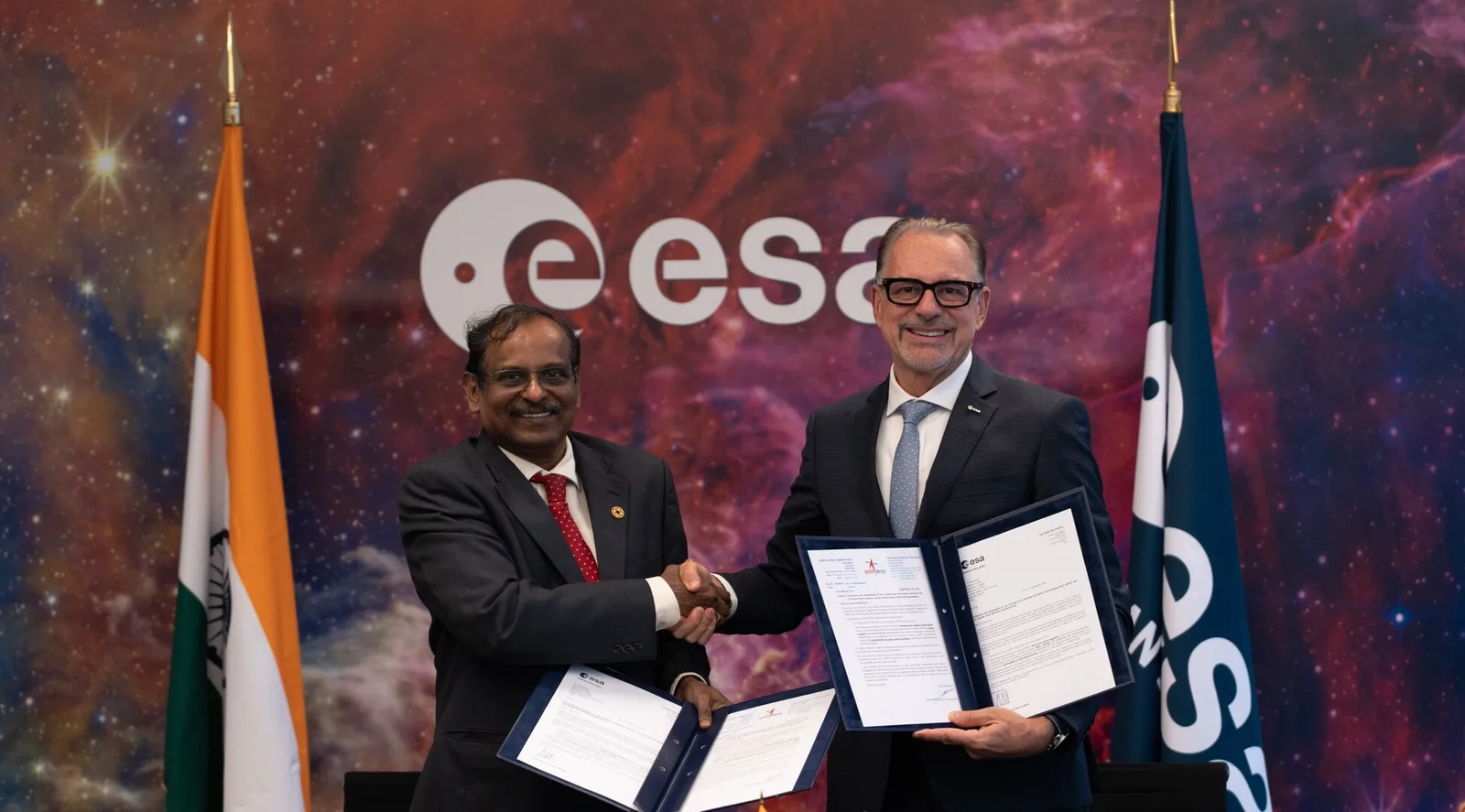
The European Space Agency and the Indian Space Research Organisation have extended their cooperation agreement until January 8, 2032, and widened its scope to include space weather, human and robotic exploration, and the sustainability of activities in orbit. ESA announced the exchange of letters on September 21, after the agencies signed it in Paris on September 10. It is a framework for future work, not the announcement of a funded joint mission.
A partnership extended for five years
ESA says the underlying agreement entered into force in January 2002. The agencies have since worked across Earth observation, satellite navigation, space science and support for mission operations. The new exchange keeps that relationship in place for another five years and updates the areas they can pursue together.
The timing matters because Europe and India are both expanding their ambitions beyond individual satellite programmes. Shared standards, data and mission support can reduce duplication and help each side use the other's capabilities. But a cooperation agreement is broad by design. The announcement does not specify a new spacecraft, a budget, a launch date or binding milestones for any particular project.
Space weather and exploration join the scope
The revised scope adds space weather, the changing conditions driven by the Sun that can affect satellites, communications and other infrastructure. It also names human and robotic exploration and recognizes the growing importance of sustainable space activity. Those subjects sit alongside existing cooperation in science, navigation and observing Earth.
ESA and ISRO signed a separate statement of intent on human exploration last year. The latest exchange does not replace that statement or turn it into a mission plan. It creates room for the agencies to develop proposals, technical work and future agreements if they choose.
ESA Director General Josef Aschbacher and ISRO Chairman V. Narayanan described the renewal as a way to build on a trusted partnership. Their statements signal institutional support, but the practical outcomes will depend on specific projects and resources that have not yet been detailed publicly.
What to watch next
A useful measure of this deal will be whether ESA and ISRO announce concrete joint experiments, data-sharing arrangements or operations support within the expanded fields. Space weather is one obvious area for complementary observations, while exploration could involve mission services or research. The current announcement does not say which path will come first.
The agreement therefore marks continuity with a wider menu of possible cooperation. Its significance is in what the agencies can now pursue together through 2032. The next evidence of impact will come from named programmes, schedules and results, rather than the signature itself.
Sources
- ESA and ISRO extend and broaden cooperation agreementEuropean Space Agencyprimary source