Electron pairs keep a ghostly pattern after superconductivity is gone
Illinois physicists saw Cooper pairs arranged in waves in uranium ditelluride even above the temperature where superconductivity vanishes.
OddBrief EditorialAI-assisted, human-reviewed
 Science
Key facts
- Who
- University of Illinois Urbana-Champaign, led by Eduardo Fradkin and Vidya Madhavan
- What
- pair density waves observed above the superconducting critical temperature
- Material
- uranium ditelluride, critical temperature below 2 kelvins
- Published
- PNAS, July 15, 2026; release dated October 2
Physicists at the University of Illinois Urbana-Champaign report that electron pairs can keep a wave-like pattern even after the material stops superconducting. According to the team, it is the first direct evidence of a behavior theorists had predicted but nobody had observed.
The grin without the cat
In a superconductor, electrons form Cooper pairs, composite units that let current flow without resistance. Below a critical temperature the pairs act together. The Illinois team studied what happens just above that temperature, where superconductivity should be gone.
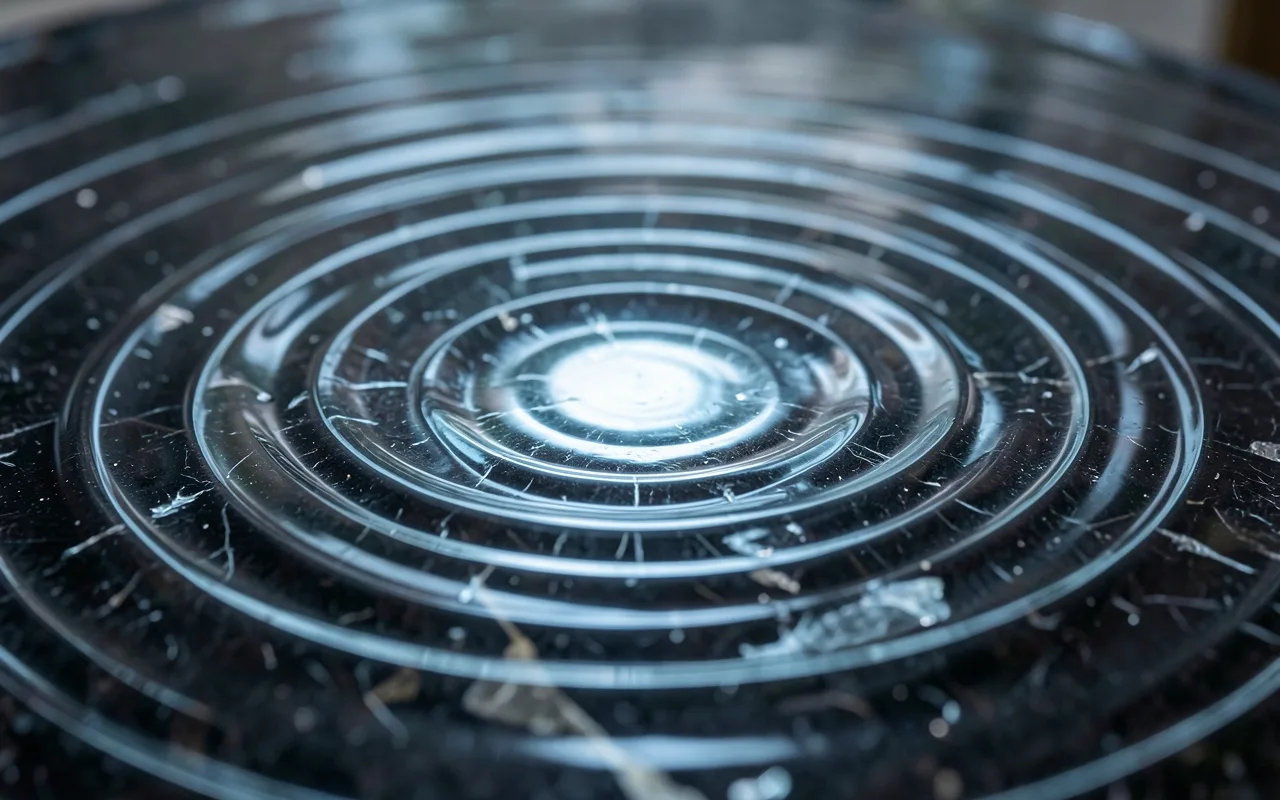
They found that the pairs do not simply scatter. They stay organized in a nonuniform pattern called a pair density wave. Project co-lead Eduardo Fradkin offered a comparison from Alice in Wonderland: "Pair density waves are the Cheshire Cat's grin of superconductivity. They are the vestige that remains once the phase itself has disappeared."
A material with a very low threshold
The material was uranium ditelluride, a triplet-pair superconductor whose critical temperature is below 2 kelvins, colder than anything in a normal freezer.
The researchers used high-quality crystal samples and vector magnetic field scanning tunneling microscopy. The technique maps the electronic structure of a surface atom by atom while the magnetic field is varied. By changing the temperature and the field, the team watched charge density waves and pair density waves respond.
The work was led by Fradkin and Vidya Madhavan, with Zhen Zhu and Julian May-Mann. The Department of Energy's science office paid for the work, and it was published in PNAS on July 15, 2026.
Why a leftover pattern matters
The finding is a statement about how superconductivity ends. Instead of switching off cleanly, the system seems to leave behind an ordered remnant, one that is not itself superconducting but remembers the pairing.
The release does not describe any device or application. It also covers a single material, and uranium ditelluride is an unusual one.
What remains open is whether other superconductors, especially the better-known ones, leave the same grin behind. That is the test that would show how general the effect is.
Sources
- PNAS paper (DOI 10.1073/pnas.2602117123)Proceedings of the National Academy of Sciencesprimary source
- The Cheshire Cat's grin: Cooper pairs found above superconducting critical temperatureEurekAlert / Grainger College of Engineering