The NSF opened a data network that links 43 knowledge graphs
The public system connects tens of billions of facts across fields. Its promise is answering questions that no single database can handle, though practical results still need scrutiny.
OddBrief EditorialAI-assisted, human-reviewed
 Tech
TechKey facts
- Fact 1
- NSF says the Open Knowledge Network is publicly available
- Fact 2
- It connects 43 knowledge graphs and tens of billions of facts
- Fact 3
- The original 2023 program involved 18 teams
- Fact 4
- Cross-graph queries are the intended advantage
The U.S. National Science Foundation said on September 25 that its Open Knowledge Network is live and available to the public. The infrastructure links 43 knowledge graphs and tens of billions of connected facts across subjects including health, environment, manufacturing and justice. Its central idea is that information becomes more useful when the relationships between datasets are explicit and traceable.
Beyond a pile of databases
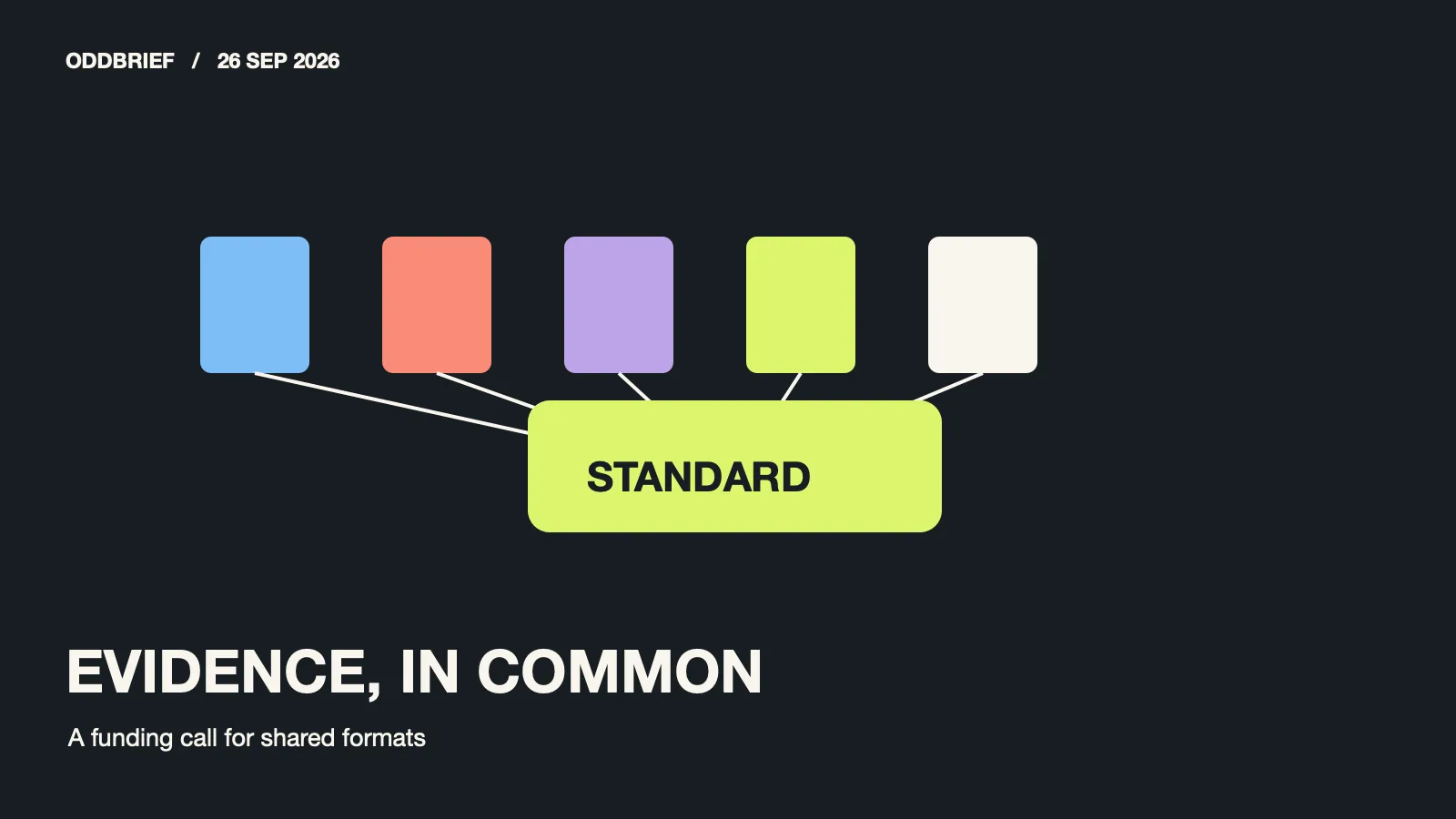
A knowledge graph represents entities and their connections in a form that software can query. The NSF project began as a $26.7 million program with 18 research teams in 2023. Each team built a graph in its own domain, then connected it through a shared technical fabric. Federal agencies and additional teams later joined, producing the 43-graph network announced this week.
The agency says more than a dozen federal bodies and over 90 cross-sector partnerships are engaged. NIH contributed funds to connect ten of its graph efforts, while NASA, NOAA and the U.S. Geological Survey added data products. The structure is federated, so its ambition is to let separate sources remain distinct while still supporting questions across them.
The NSF offers two examples. Supply-chain and manufacturing data can be joined to map cybersecurity exposure across more than 7,000 semiconductor products from 247 companies. Contamination records can be linked with soil-productivity data for environmental and agricultural questions. Those examples illustrate the kind of cross-domain query the system is built for; they are agency descriptions, not independent audits of every underlying record.
Why AI is part of the pitch
The agency presents the network as a grounding layer for AI systems. A model can produce a plausible answer from patterns in text, but a structured source can make it easier to inspect where a claim came from and how concepts were connected. That does not make an answer automatically correct. Data can be incomplete, outdated, biased or joined in ways that need domain expertise to interpret.
Public availability is the concrete news. Whether researchers, caseworkers, companies and communities can easily use the network for consequential decisions is a separate test. Access, documentation, freshness and governance will matter as much as the headline count of facts.
The odd part of the project is its scale: 43 independently built maps of the world are now being asked to answer together. The NSF has demonstrated a common technical fabric. The next measure is whether users can follow those connections back to reliable evidence when an answer matters.
Sources
- NSF launches Open Knowledge NetworkNational Science Foundationprimary source