Microsoft wants robots to leave their AI brains off-board
Microsoft Research found that moving inference to nearby or cloud GPUs can improve some robot tasks and battery life, provided the network keeps up.
OddBrief EditorialAI-assisted, human-reviewed
 Tech
TechKey facts
- Published
- September 23, 2026
- Approach
- offload robot inference to edge or cloud GPUs
- Example
- handover and navigation tasks
- Tooling
- new offload feature in Microsoft's Physical AI Toolchain
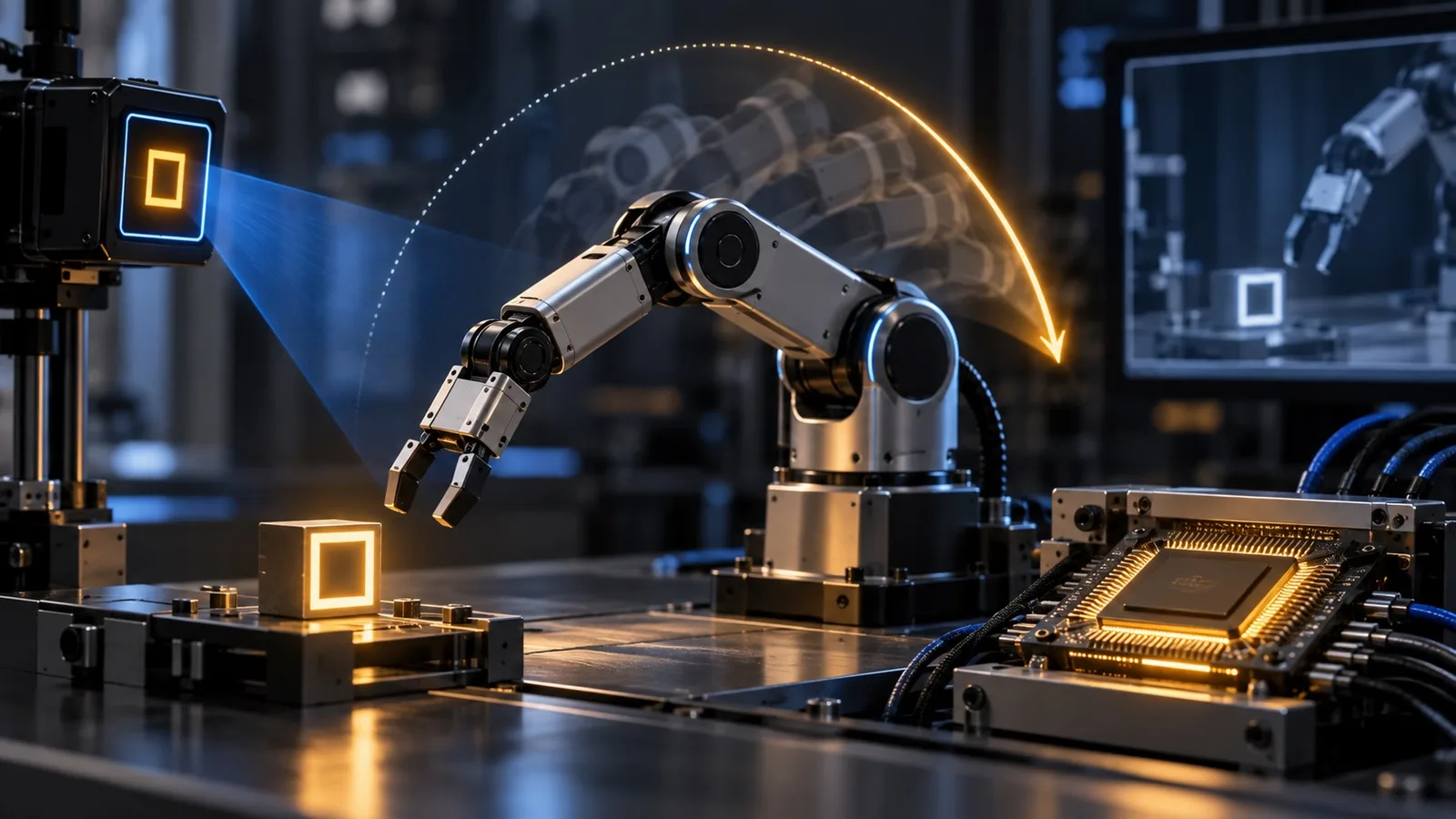
Microsoft Research argued on September 23 that a robot's most demanding AI computation need not live inside the robot. In selected mobile-manipulation tests, moving inference to an edge or cloud GPU improved task success and preserved battery life, though the design depends on fast, reliable connections.
The battery has to carry the brain
Many physical-AI systems place a graphics processor on the machine so it can turn camera and sensor input into actions nearby. That reduces reliance on a network, but larger models also demand more power, memory and cooling. On a mobile robot, every watt and gram used for computing competes with movement and operating time.
Microsoft tested a different division of labor. Sensors and actuators stayed with the robot while heavier inference ran on external hardware. The study examined mapping and planning, navigation and manipulation workloads across onboard, edge and cloud configurations. The researchers say some small GPUs could not accommodate the whole stack at all.
In their comparisons, mapping and planning on certain onboard GPUs slowed by up to 383% against an A100 GPU. Navigation with lighter hardware showed a 30% decline in timely obstacle detection, while slower vision-language-action inference cut accuracy in a tested manipulation setting. These are task- and hardware-specific comparisons, not universal performance ratios for all robots.
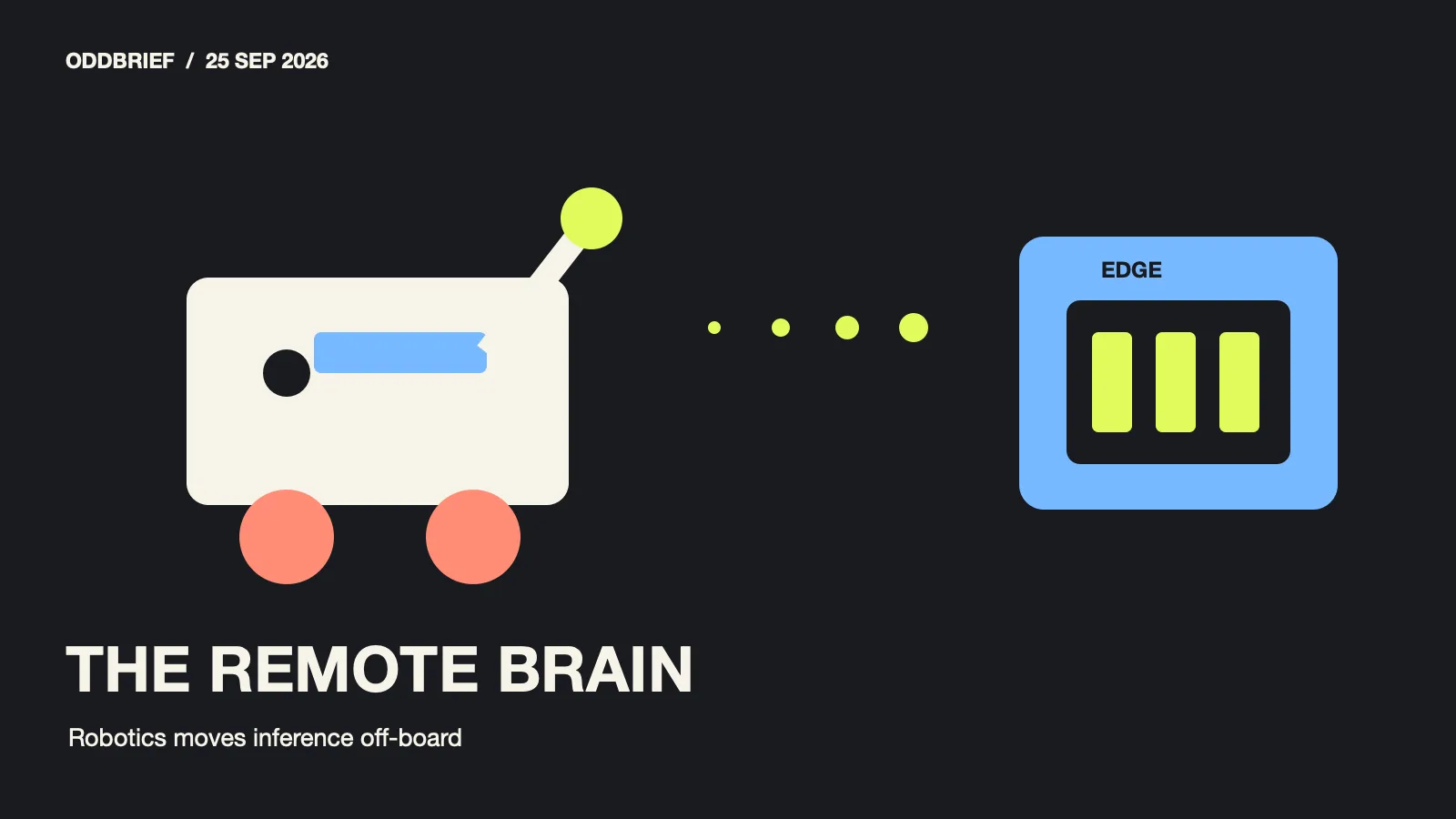
A robot connected to a remote processor
The counterintuitive result is that sending sensor information over a network can sometimes be faster for the task than computing locally on a constrained chip. Microsoft showed handover examples in which the faster inference path helped two arms complete a transfer. It also reports substantially longer operating time when replacing an onboard GPU with lighter computing hardware and moving the model elsewhere.
That trade is conditional. The connection adds its own latency and bandwidth demands. A slow or unavailable network can make a robot late, unresponsive or unsafe, particularly around people and moving obstacles. Microsoft explicitly acknowledges the need to balance model performance, network quality and GPU availability.
To make the architecture easier to try, the company added an offloaded-inference capability to its Physical AI Toolchain. The software uses containers and Kubernetes-based orchestration to place workloads across robots, edge machines and cloud resources. Microsoft says example projects cover SO-101 and UR10e robot setups.
What the study does not settle
This work challenges the assumption that every critical AI model must run on the robot, but it does not remove the need for local safety behavior. Real deployments would need to define what the machine does when a link stalls, how it handles private sensor streams and whether network savings outweigh infrastructure cost.
Microsoft's own tests show an attractive systems option for larger models and limited batteries. The next question is less about peak benchmark speed than predictable response under real factory, home or warehouse conditions. Until those conditions are measured, off-board inference is a promising design choice, not a default answer for every robot.
Sources
- Offloaded inference for real-world physical AI roboticsMicrosoft Researchprimary source
- Physical AI ToolchainMicrosoft