Johns Hopkins millirobots dock in pairs to release antibiotics onto infected heart tissue
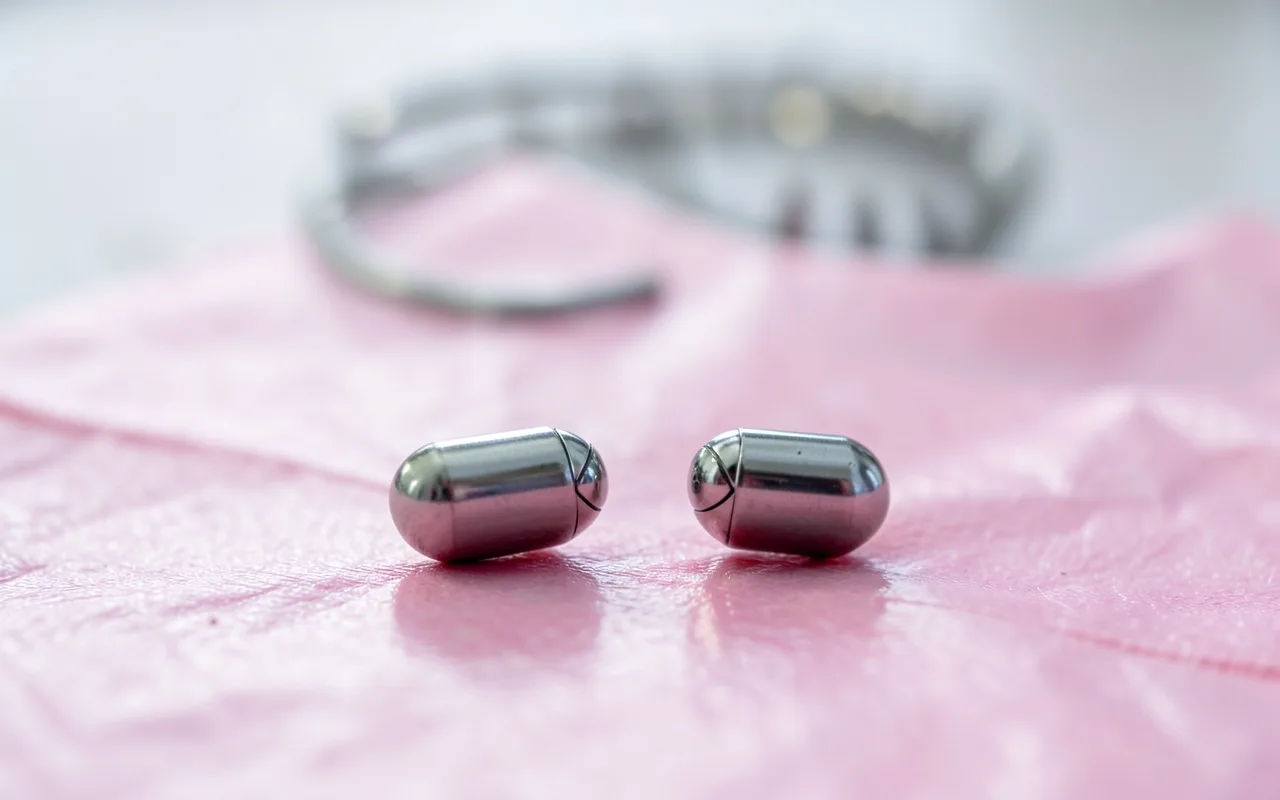
One magnetic robot anchors a needle in the heart wall, a second docks onto it with the drug, and can be swapped out for repeat doses.
OddBrief EditorialAI-assisted, human-reviewed
 Tech
TechKey facts
- Who
- Johns Hopkins University, led by Axel Krieger
- What
- paired magnetic millirobots, a needle anchor and a drug carrier, for heart infections
- Tested
- heart phantoms and pig heart tissue, not a beating heart
- Next
- phantoms with muscle contraction and heart motion
Engineers at Johns Hopkins University have built magnetic robots about the size of a grain of rice that work as a pair to deliver antibiotics straight to infected heart tissue. The work, published in Advanced Materials Technologies and announced on October 12, has so far been tested in heart models and pig heart tissue, not in a living heart.
The target is endocarditis, an infection of the heart's inner tissue. The university puts the number of new US cases at roughly 50,000 a year.
Why antibiotics struggle to reach the heart
The usual treatment is four to six weeks of intravenous antibiotics. According to the university, that approach frequently falls short because the medicine is heavily diluted on its way to the heart, which leaves doctors choosing between toxic high doses and open-heart surgery.
The Hopkins team, led by medical roboticist Axel Krieger, wants to put a concentrated dose exactly where the bacteria are.
A docking station and a delivery robot
The design splits the job in two. A needle module travels to the infection site and latches onto the heart tissue, where it acts as a docking station. A separate drug module then travels to it, docks magnetically and slowly releases the antibiotic.
Each robot is about as wide as a pencil tip. Neither carries a battery or motor. An external electromagnetic coil system, which the team compares to an MRI machine, steers them wirelessly.
The split has two advantages, according to the researchers. Two small robots can get into tighter spaces than one larger one, and the needle can stay anchored while the drug module is replaced, so a patient could receive repeated doses without a new puncture.
From six weeks to a day, if it works
In tests on phantom hearts built to mimic human anatomy and on porcine heart tissue, the robots moved smoothly and autonomously, including against simulated blood flow. The team estimates a treatment could take about 10 minutes, or about an hour for a couple of rounds.
"If everything works well, you go from four to six weeks of treatment to one day or less," said first author Anuruddha Bhattacharjee, now at the University of Alabama at Birmingham.
The conditional matters. The test hearts did not contract or move like a beating heart, and the team says that is the next step: more realistic phantoms with muscle contraction. The release gives no timeline for animal or human trials.
Sources
- Tiny robots speed medicine through body to the heartJohns Hopkins University via EurekAlert!primary source
- Paper in Advanced Materials TechnologiesAdvanced Materials Technologies