Google open-sourced fake freight networks because real ones are too secret
MilleMiglia generates realistic middle-mile logistics benchmarks without exposing the proprietary routes and demand data that keep research locked out.
OddBrief EditorialAI-assisted, human-reviewed
 Tech
TechKey facts
- Project
- MilleMiglia
- Purpose
- Generate realistic middle-mile logistics benchmarks
- Implementation
- Open-source C++ generator
- Problem
- Real network topology and demand data are commercially sensitive
- Caveat
- Synthetic benchmark gains still require validation in live freight networks
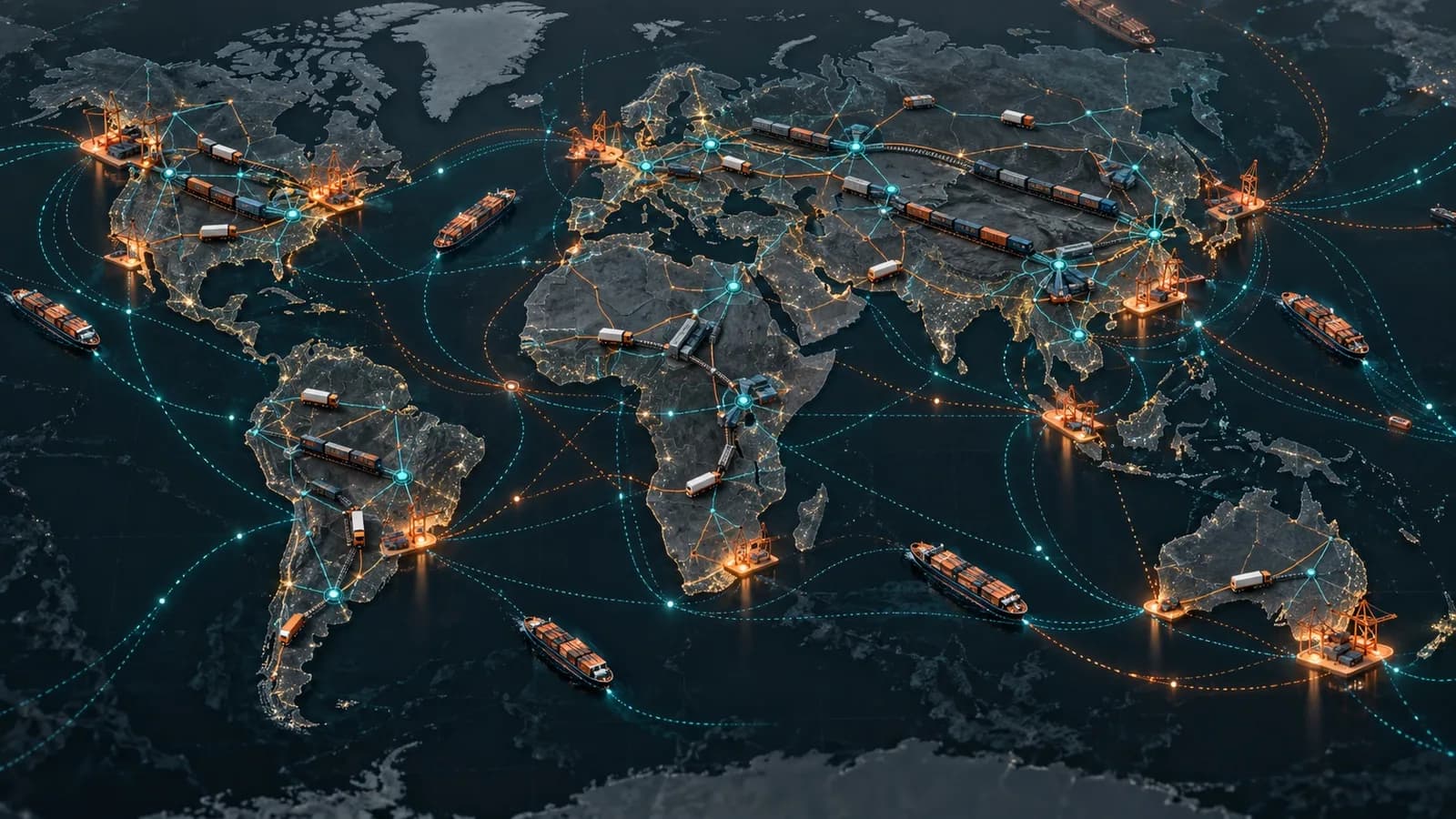
Google Research has released an open-source generator for a part of delivery networks that researchers rarely get to see. MilleMiglia creates realistic middle-mile logistics problems without revealing the routes, schedules and demand volumes that companies treat as commercial secrets.
The middle mile connects regional distribution centers over long distances. It is the relay stage between collecting goods and delivering them to a customer, and it can account for a large share of total logistics cost.
The missing public dataset
First-mile and last-mile routing have long-standing public benchmarks. Researchers can compare algorithms on the same vehicle-routing problems and measure whether a new method actually improves the result.
Middle-mile networks are different. A shipment may pass through several distribution centers and vehicles, with timed connections between them. If one truck arrives late, the cargo may miss its next departure and sit until another scheduled run. Capacity, consolidation and synchronization all interact.
Real operators rarely publish those details. Network topology can reveal commercial strategy, while demand data can expose customers and volumes. The result is a research field where promising algorithms are often tested on small or unrealistic examples.
A simulator for the relay race
MilleMiglia is a C++ instance generator designed to produce benchmark networks with the characteristics of real middle-mile systems. Google says it captures multiple facilities, scheduled vehicle movements, transfer windows and shipments that travel through several legs.
Because the data is generated, researchers can scale experiments and share complete instances without leaking a company's operations. The project includes source code and documentation, along with a paper describing the method.
Synthetic realism is the central challenge. A benchmark can be mathematically complex yet still miss the patterns that dominate real freight. Google presents MilleMiglia as a foundational tool, not proof that algorithms performing well on it will deliver the same savings in production.
Competition needs a common track
A public generator could make middle-mile research easier to reproduce. Teams can test different optimization methods under comparable conditions, vary network size and demand, then publish the exact settings used.
It may also help smaller researchers work on problems previously accessible mainly to large logistics companies. That matters as supply chains face pressure from weather, labor shortages and increasingly strict delivery promises.
The project turns secrecy into a design constraint rather than a dead end. Google cannot open a carrier's private network, so it is publishing a machine that invents networks realistic enough to argue over. The quality of that argument will depend on how closely the generated systems match the ugly details of freight in motion.
Sources
- MilleMiglia: A realistic instance generator for middle-mile logisticsGoogle Researchprimary source