Google Cloud now watches storage bills for four kinds of trouble
Storage Intelligence Advisor is generally available with zero setup, baselining project activity and flagging operational, egress and error anomalies.
OddBrief EditorialAI-assisted, human-reviewed
 Tech
TechKey facts
- Product
- Storage Intelligence Advisor for Google Cloud Storage
- Status
- Generally available
- Setup
- Google says no configuration is required
- Detection
- Four anomaly categories including operations, cross-region egress and errors
- Caveat
- Independent false-positive and recommendation-accuracy data are not published
Google Cloud has turned on a storage watchdog that requires no configuration. Storage Intelligence Advisor is now generally available, automatically learning normal activity across a customer's projects and alerting teams when four kinds of anomalies appear.
The product is aimed at a familiar cloud problem: storage systems can keep working while costs or failures quietly accelerate. A burst of operations, a rise in cross-region egress or an error spike may not look dramatic in isolation, but each can signal a misconfigured workload or an incident that will become expensive.
Baselines replace hand-built thresholds
Traditional monitoring asks operators to decide what counts as abnormal before anything goes wrong. That is difficult for storage fleets whose traffic changes by region, application and time of day. Static thresholds either trigger too often or miss slow-moving problems.
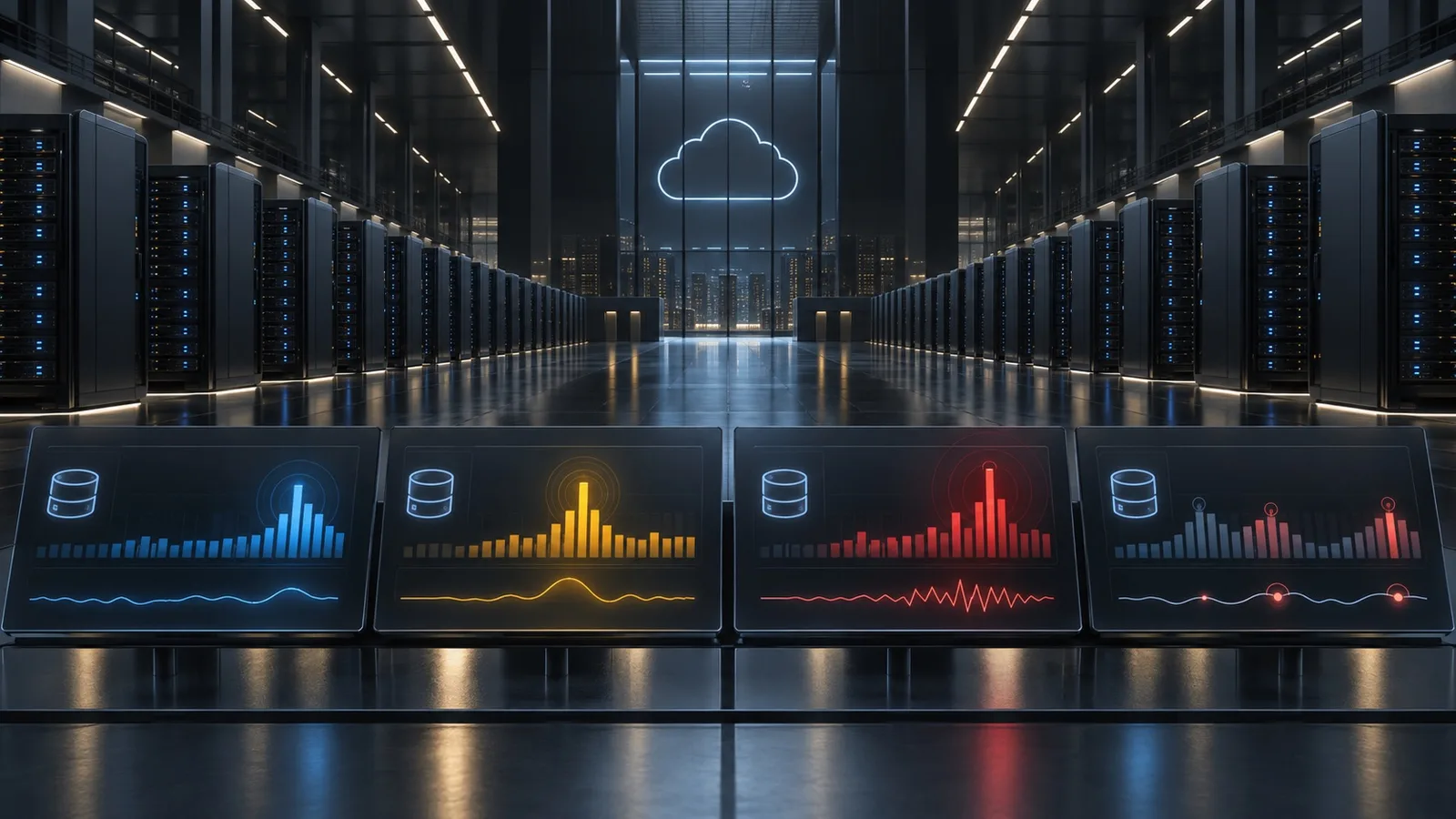
Google says the Advisor builds its own baseline from activity across projects. It then detects four categories of change, including surges in operations, unexpected cross-region data transfer and elevated errors. Each finding includes a drill-down to the resources driving the shift.
The service also provides prescriptive remediation steps. That moves it beyond a dashboard, although Google has not published independent data showing how often the recommendations are correct or how many false alarms customers should expect.
Cost and reliability share the same signal
Cross-region egress is a useful example because it can be both a performance clue and a billing event. An application may begin reading data from the wrong region after a deployment, increasing latency while generating transfer charges. A system that connects the anomaly to the responsible bucket or workload can shorten the investigation.
Operation surges can reveal a runaway job, inefficient retry loop or unexpected demand. Error spikes may point to permissions, quotas or failing clients. The value is not merely seeing a chart move; it is narrowing the search before users notice.
Zero setup still needs human judgment
Google describes the feature as available out of the box with no setup. That lowers the barrier for teams that never built detailed storage monitoring. It also means the service decides what deserves attention before it understands every business context.
Operators will still need to judge whether a change is harmful. A large egress increase may be an approved migration, and a traffic spike may be a successful launch. Automated baselines can identify the unusual, but they cannot determine intent on their own.
Storage Intelligence Advisor reflects a wider shift in cloud operations. Providers are moving from exposing metrics to interpreting them. The next competitive question is whether those interpretations save more money and time than the additional alerts consume.
Sources
- What’s new with Google CloudGoogle Cloudprimary source