Ediacaran fossils may exist because decay microbes had not learned to breathe oxygen yet
Cambridge researchers traced collagen-eating enzymes across 700 bacterial genomes and found they reached oxygen-using microbes right as soft-bodied fossils grew rare.
OddBrief EditorialAI-assisted, human-reviewed
 Science
Key facts
- Who
- University of Cambridge Department of Earth Sciences
- What
- collagen-digesting enzymes spread into oxygen-using bacteria near the Ediacaran to Cambrian boundary
- Data
- collagenase genes in 700 bacterial genomes, mapped onto a dated tree of life
- Published
- Current Biology, October 8, 2026
Soft-bodied animals from more than 540 million years ago fossilized surprisingly often, and a Cambridge-led team now suggests a reason: the microbes best at destroying their collagen could not yet live in oxygen. The study, published in Current Biology on October 8, 2026, links the decline of those fossils to the spread of collagen-digesting enzymes into oxygen-using bacteria.
The idea flips a familiar question. Instead of asking what was special about ancient seas, it asks what was missing from the decay crew.
A fossil window that closed
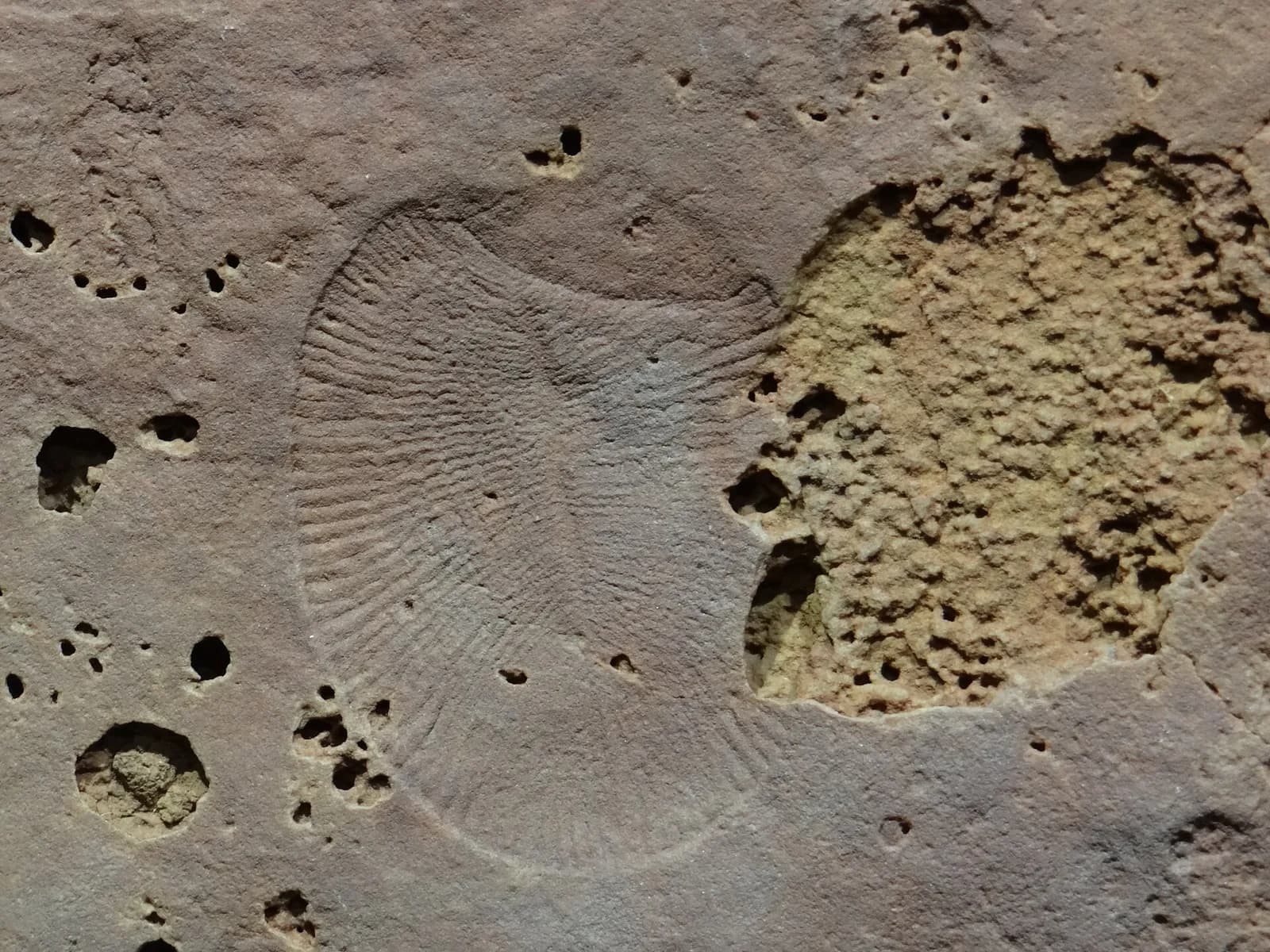
The Ediacaran Period, roughly 579 to 539 million years ago, left behind impressions of squishy creatures such as the quilted, oval Dickinsonia. Animals like these have no shells or bones, yet they were preserved in large numbers.
After the transition into the Cambrian, that kind of soft-tissue preservation became far rarer. Researchers have long proposed explanations, including unusual ocean chemistry, different tissue makeup and protective microbial mats. According to the Cambridge team, none of those accounts works in every location.
Following the enzyme, not the rocks
The researchers focused on collagenases, enzymes that break down collagen, the tough protein that holds animal tissue together. Without such an enzyme, collagen can linger for a long time after death, which gives sediment more time to capture a body's shape.
The team mapped collagenase genes across 700 bacterial genomes and placed them on a dated tree of life. The enzymes turned out to be older than animals themselves, but for most of their history they were found only in anaerobic microbes, which cannot tolerate oxygen.
That matters because Ediacaran bodies often came to rest in oxygenated water. The anaerobic decomposers could only get to work once the oxygen in the surrounding sediment ran out, buying time for fossilization. Around the Ediacaran to Cambrian boundary, the genes appeared in aerobic bacteria, including groups behind decay today, and the drop in soft-bodied fossils lines up with that shift.
"You need an enzyme to break down a biopolymer, or else it will sit around for ages until something comes along that can actually eat it," lead author Philip Vixseboxse said in the university's release.
What the study does not show
The authors frame their conclusion as a possibility. The case rests on genetic dating and timing, not on decay experiments with ancient tissue, and the release gives no detailed figures on how fast the enzymes spread or how sharply fossil numbers fell.
Soft tissue still fossilizes in younger rocks under rare conditions, such as very fast burial. Co-author Alex Liu said the results hint at a broader biological mechanism that may have shaped the soft-tissue fossil record across Earth's history. Testing that against later fossil sites is the obvious next step.
Sources
- Rise of collagen-eating microbes may help explain gaps in the fossil recordUniversity of Cambridge via EurekAlertprimary source
- Microbial Metabolic Innovation: A Constraint On The Early Animal Fossil Record?University of Cambridge Talks