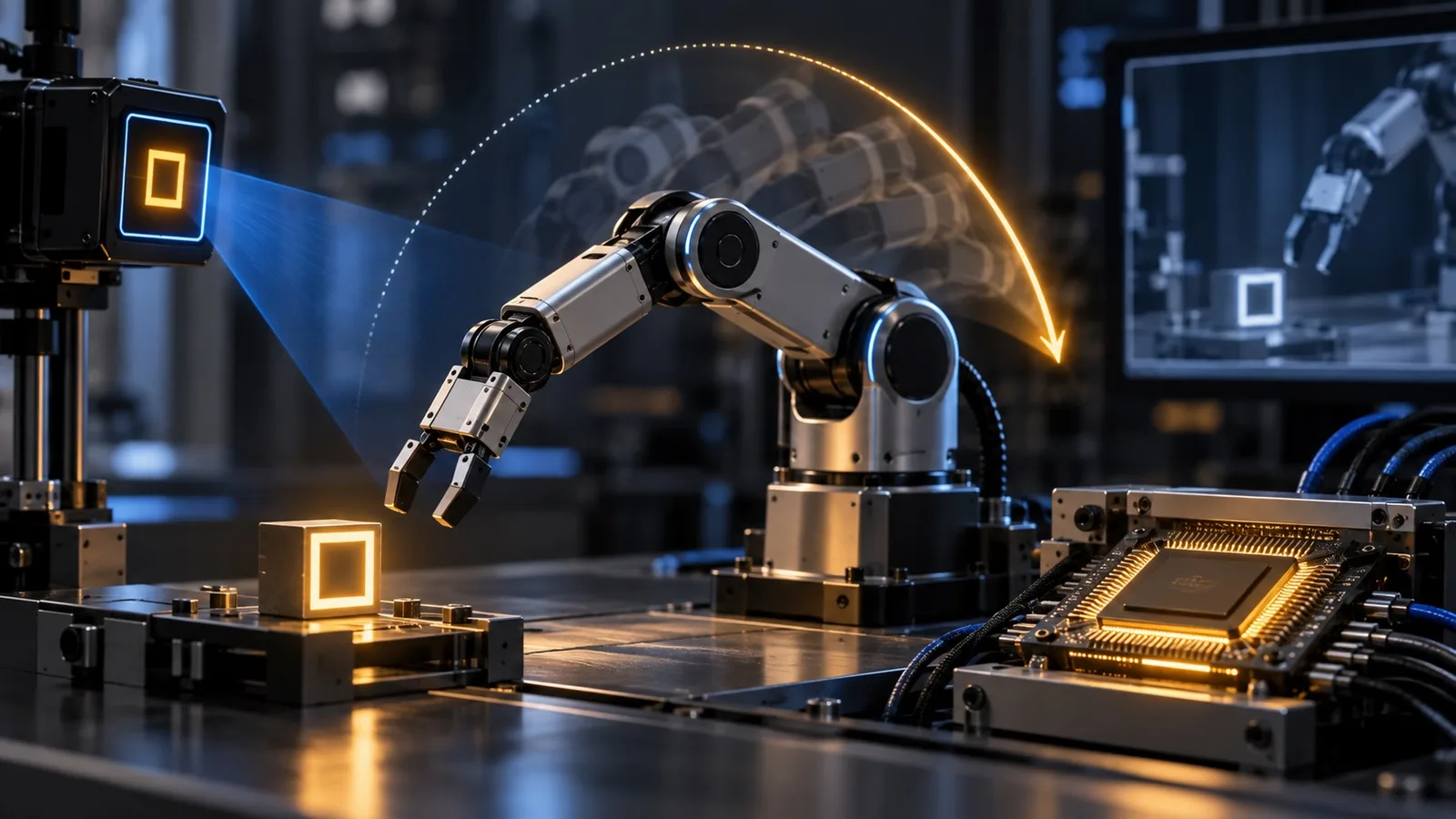
A computer made of self-wiring resistors could learn without a neural network
A Nature Reviews Physics perspective argues that self-organizing memristive networks can turn the dynamics of physical hardware into energy-efficient continual learning.
OddBrief EditorialAI-assisted, human-reviewed
 Science
Key facts
- Concept
- Self-organizing memristive networks
- Mechanism
- Resistive memory components reconfigure with electrical history
- Goal
- Energy-efficient physical and continual learning
- Fields
- Nanotechnology, statistical physics and complex systems
- Caveat
- The publication is a perspective, not a general-purpose hardware demonstration
Some researchers want to move machine learning out of software and into the behavior of the circuit itself. A new perspective in Nature Reviews Physics describes self-organizing memristive networks, webs of resistive memory devices that reconfigure as electrical signals pass through them.
The proposal is not to run a conventional neural network more efficiently. It is to use the network's nonlinear physical dynamics as the learning process.
Resistance that remembers
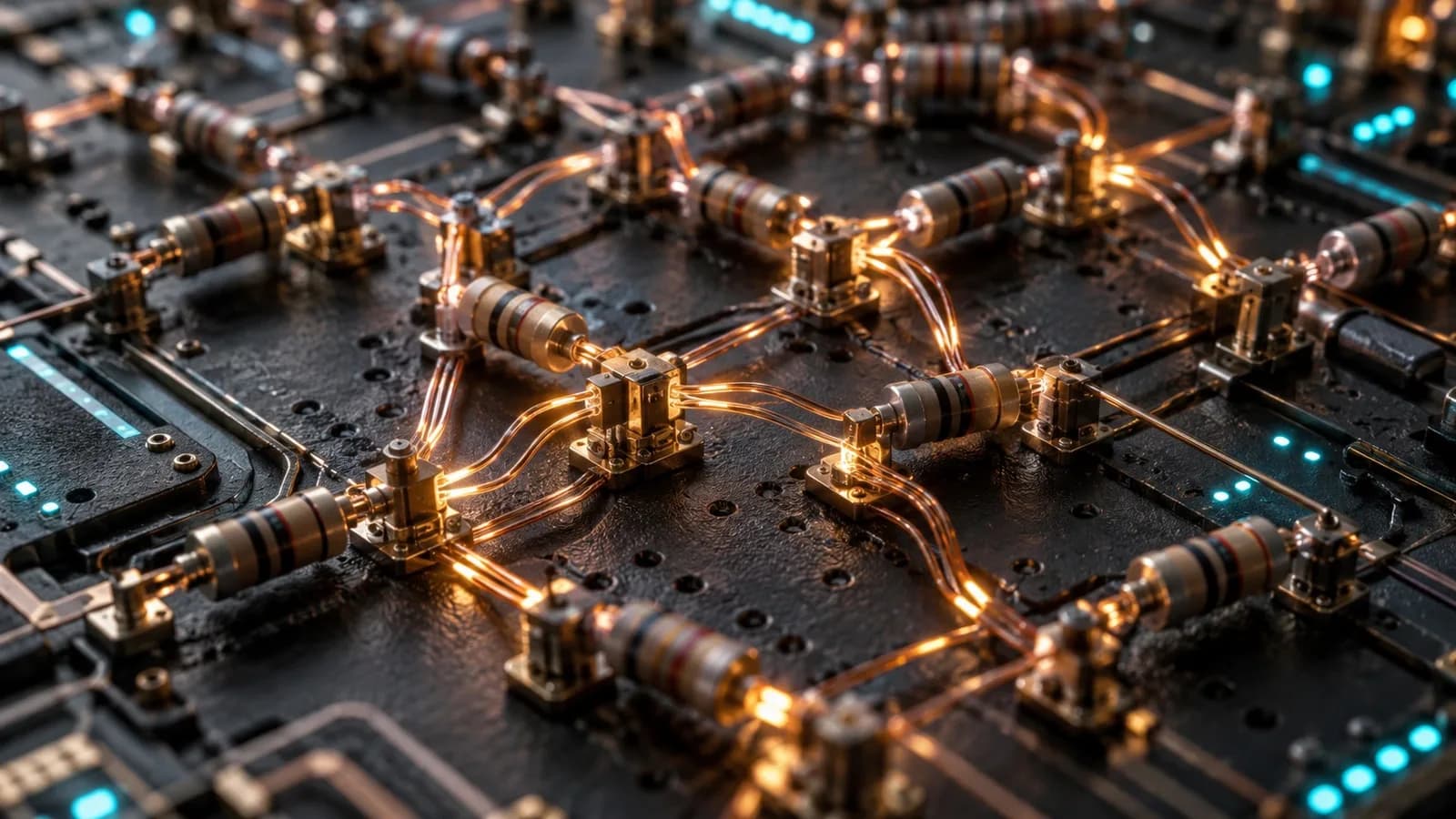
A memristor changes its electrical resistance according to the current that has flowed through it. Unlike an ordinary resistor, it retains part of that history when power changes. Connect many memristive elements and the paths through the circuit adapt together.
Experiments have shown that these networks can form and break conductive pathways, move between distinct states and respond collectively to inputs. Researchers call them self-organizing because no central controller needs to specify every connection.
The perspective brings together results from nanotechnology, statistical physics, graph theory and complex-systems research. It argues that transitions between conductance states can create critical dynamics useful for processing information.
Learning becomes a material event
Today's neural networks are mathematical structures executed on digital chips. Data moves repeatedly between processors and memory, consuming energy. In a physical learning system, storage and computation can happen in the same changing network.
The authors see parallels with plasticity in biological neural systems, where connections strengthen or weaken through activity. A memristive network may support continual adaptation without retraining a large digital model from scratch.
That promise remains early. The paper is a perspective synthesizing existing experiments and theory, not a demonstration of a general-purpose learning machine. Hardware variability, manufacturing scale, control and reproducibility remain substantial barriers.
Edge intelligence without a data center
If the approach matures, it could suit sensors and edge devices that need to learn from local signals under tight power limits. A physical network might detect patterns, adapt to changing conditions or control a small system without sending every observation to a cloud model.
The trade-off is programmability. Digital neural networks are imperfect but can be copied, inspected and updated with familiar tools. A self-organizing circuit may be efficient precisely because its behavior emerges from messy material interactions.
The review's most interesting claim is conceptual: intelligence does not have to be represented as layers of software. It can be a property of matter driven near the right transitions. The engineering challenge is turning that emergence into something reliable enough to ship.
Sources
- Self-organizing memristive networks as physical learning systemsNature Reviews Physicsprimary source