White House Quietly Pulls Its 'Build the Wall' Tetris Clone
Days after unveiling an official 'arcade' page, the White House removed a Tetris ripoff titled 'Build the Wall,' which asked players to stack blocks to stop a 'zombie border siege.' The Tetris Company had already said it was reviewing the matter.
OddBrief EditorialAI-assisted, human-reviewed
 Culture
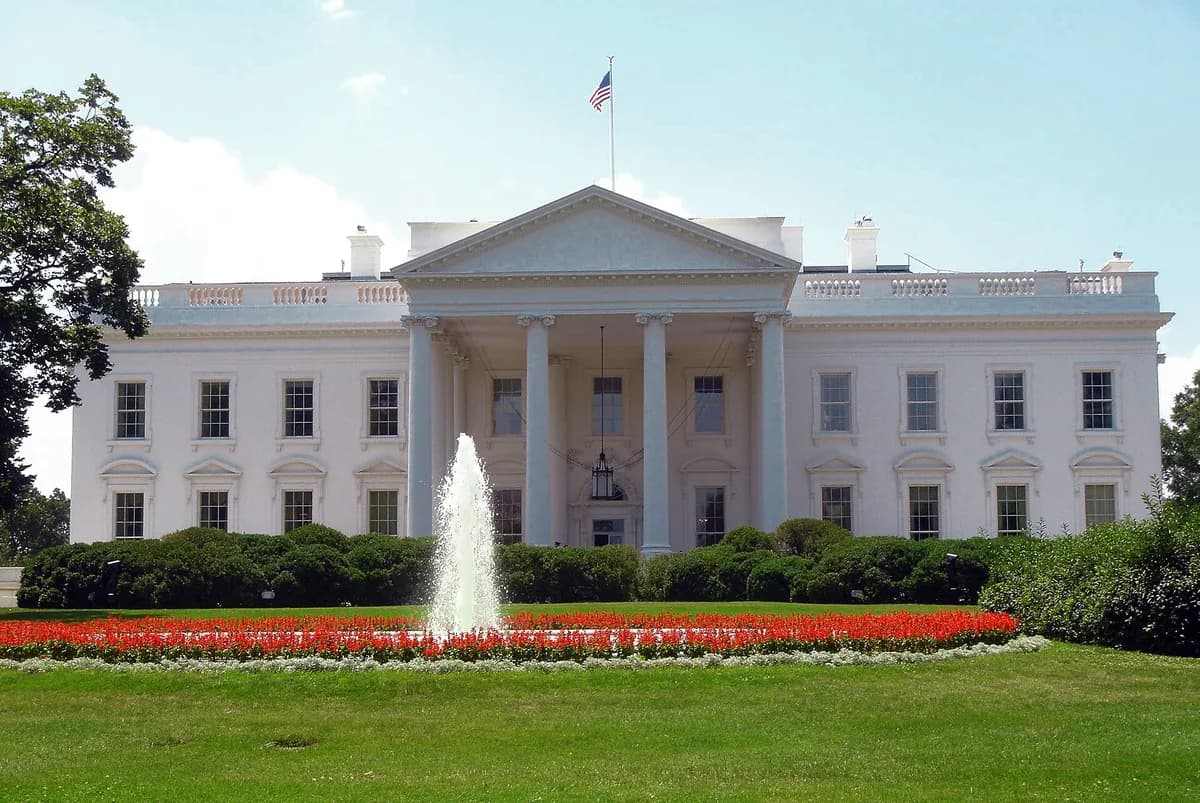
The White House's foray into casual gaming did not last long. Days after launching a website billed as an official 'arcade,' the administration quietly removed one of its featured titles: a Tetris clone called 'Build the Wall.' The game, first flagged by Kotaku and later confirmed by The Verge, asked players to stack falling blocks of varying sizes to hold off what the game itself described as a 'zombie border siege.'
It is worth sitting with that phrase for a moment. A federal government website, presumably vetted through some chain of communications staff, hosted a browser game in which the border was besieged by zombies and the correct civic response was to Tetris your way to safety. Subtlety was not the objective. Neither, apparently, was legal caution.
The Tetris Company, which holds trademark and licensing rights to the actual Tetris brand, had already signaled its discomfort before the removal. In a statement given to The Verge last week, spokesperson Kerri Brusca noted that 'for more than 40 years, Tetris has brought people together across generations and cultures through play and joy,' adding that the game's objective 'has always been to stack with purpose to clear' lines, not, one assumes, to repel an undead horde at a national boundary. The statement stopped short of announcing legal action, but the phrasing carried the unmistakable tone of a company preparing its options.
Why the game vanished is not officially explained. The White House did not issue a statement about the removal, and it is unclear whether the decision came from legal pressure, public backlash, sheer embarrassment, or some combination of all three. Government arcades, it turns out, are a genre with very little precedent, and this particular entry may not have helped establish one. Whatever the internal deliberations were, they happened fast: the game appeared, drew attention for its themes and its resemblance to a decades-old puzzle franchise, and disappeared within days, following the well-worn internet lifecycle of launch, backlash, and quiet retreat.
The broader arcade page reportedly remains online, meaning 'Build the Wall' was singled out rather than the entire project being scrapped. That detail suggests the removal was a targeted response to something specific about this title, rather than a wholesale rethink of the idea that a federal website should double as an arcade cabinet. Whether that specific problem was the intellectual property overlap with Tetris, the border-and-zombies framing, or simply the optics of combining the two, is left to speculation, since no formal reasoning has been offered publicly.
This is not the first time a government entity has tried to fold policy messaging into gamified formats, though it is a rarer example of doing so with a barely disguised clone of a globally recognized commercial product. Tetris, released in 1984 and now one of the most licensed puzzle games in history, has appeared in countless forms across platforms, but its ownership and trademark protections are famously well-guarded, which is precisely why 'Build the Wall' was always going to attract more than casual notice.
The episode leaves a few loose threads. There has been no confirmation of whether the Tetris Company plans further action beyond its initial statement, nor whether the White House will address the takedown directly. The arcade page itself remains an odd artifact: an official government site that briefly hosted a game asking users to defend a wall from zombies using a puzzle mechanic borrowed, without much disguise, from one of the most recognizable titles in gaming history. For now, that particular title is gone, and the questions about how it got there in the first place remain unanswered.
The Verge's report remains the most complete account of the episode, including the direct statement from the Tetris Company, and is treated here as the primary source.
Sources
- The White House pulls its racist Tetris clonekaynakprimary source