ESA and Mistral set a framework for AI in European space work
The European Space Agency and Mistral signed a letter of intent to explore AI for Earth observation and engineering. It names possible safeguards, but commits neither side to a deployed system.
OddBrief EditorialAI-assisted, human-reviewed
 AI
AIKey facts
- Agreement
- ESA-Mistral letter of intent announced September 23
- Signed
- September 16 in Paris
- Scope
- Earth observation, engineering and knowledge tools
- Safeguards
- European infrastructure, security, traceability and auditability to be explored
- Limit
- No new operational deployment or contract announced
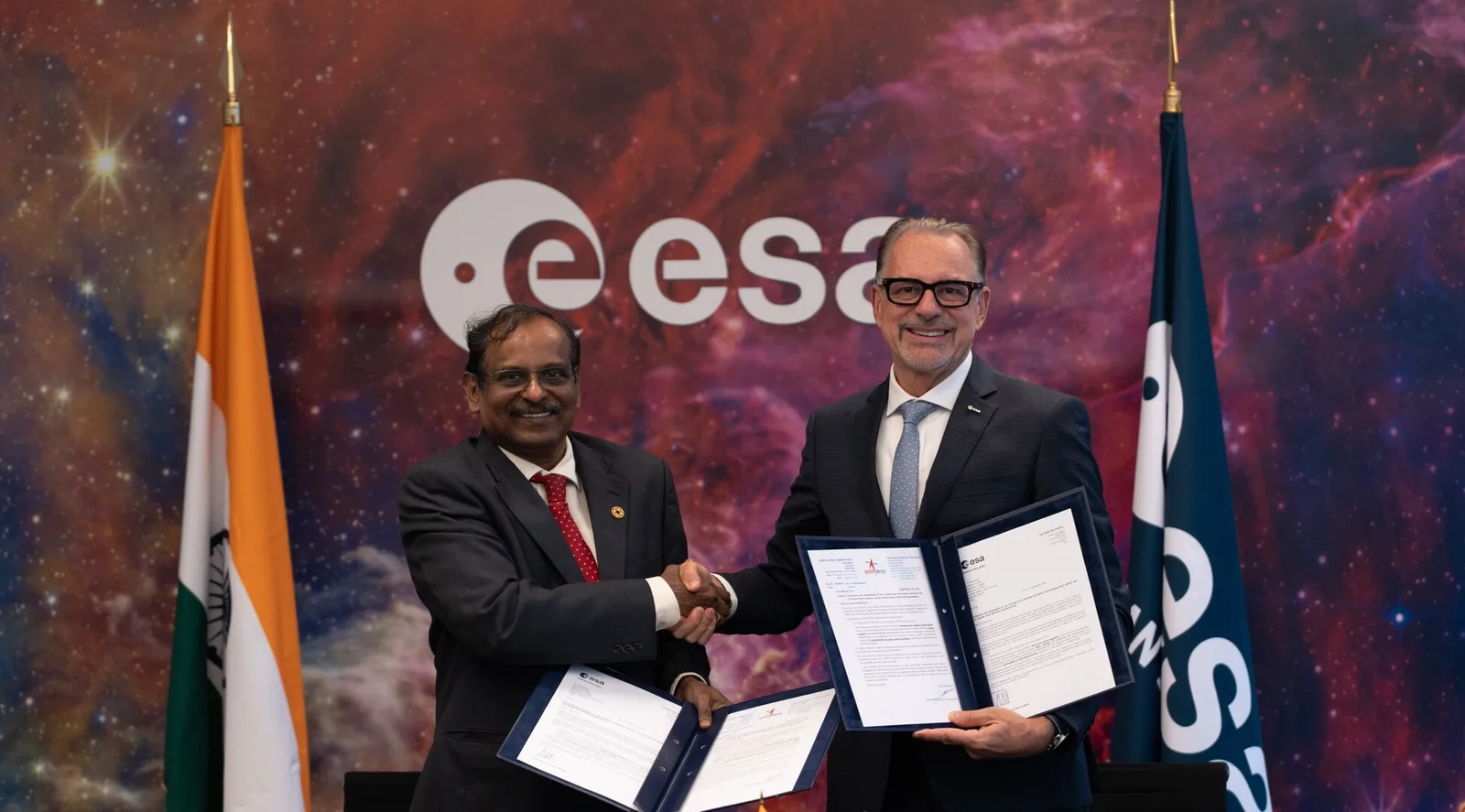
The European Space Agency and Mistral have signed a letter of intent to deepen their work on artificial intelligence. ESA announced the agreement on September 23 after the two organizations signed it in Paris on September 16. It lays out areas to explore, from Earth observation to engineering support and European infrastructure. It does not announce a new operational tool, procurement contract or funding figure.
Data and decisions
ESA manages large volumes of satellite and mission information. The agencies say Mistral’s models and cloud capabilities could be used to help people search that information, automate repetitive work and support technical decisions. Earth observation is one potential area, where finding patterns in imagery and measurements can be laborious. Mission design and engineering analysis are others.
The wording is deliberately exploratory. A letter of intent creates a framework for collaboration, but individual projects would still need to show that a model can handle specialized data accurately. In space engineering, a plausible answer is not enough. Mistakes can be expensive, hard to diagnose or impossible to fix after launch. ESA says the goal is to support human-led decisions, a meaningful qualification when considering the role of AI in mission operations.
Europe’s control question
The announcement emphasizes trusted and sovereign AI. ESA and Mistral say they will examine deployment on European infrastructure with safeguards for security, resilience, traceability, auditability and sensitive information. Those are requirements to investigate, not evidence that a particular deployment has passed them. The challenge is more specific than where a server sits: institutions need to know what data a system saw, how it generated an output and whether humans can challenge it.
ESA points to two existing initiatives as context. Orbit is described as a secure assistant for engineering activity, while EVE, the Earth Virtual Expert, was developed with European partners to help users work with Earth observation and Earth science. The new letter could broaden this kind of collaboration, but the release gives no timetable for a next product or a list of missions adopting one.
What to watch next
The document reflects a wider push to bring AI into scientific and industrial workflows. Mistral offers customizable models and infrastructure; ESA offers highly specialized data and operational problems. Their combination may be useful, but the measure of progress will be specific pilots, independent evaluations and clear rules for human review.
For now, the most concrete fact is the signed framework. Readers should distinguish it from a finished system that can autonomously run space missions. ESA’s own language centers on practical applications and human-led technical decisions, leaving both the benefits and the performance of any future deployment open.
Sources
- ESA and Mistral strengthen cooperation on artificial intelligenceEuropean Space Agencyprimary source