EU Kids Act would ban social media under 13 and delay teen accounts to 15
The European Commission proposed the EU KIDS Act on 17 September 2026, barring social media under 13 and setting 15 as the minimum age for an own account. Ages 13 to 14 would use parent-managed mini accounts with a one-hour daily cap. Very large platforms would have to prove safe-by-design compliance before Parliament and member-state talks finish.
OddBrief EditorialAI-assisted, human-reviewed
 Society
Key facts
- Path
- Under 13 accounts are barred; ages 13–14 use parent-supervised mini accounts with limited contacts and a one-hour daily cap; independent accounts begin at 15.
- Coverage
- The proposal applies to social media, video-sharing platforms, online games, and AI companions for under-18s, with exemptions for encyclopaedias, education, and digital news.
- Safety
- Very large platforms must prove safe-by-design compliance; addictive patterns, harmful rabbit holes, unsolicited stranger contact, and relationship-simulating AI companions face restrictions.
- Age assurance
- Privacy-preserving tools and an EU age-verification app would verify new accounts and estimate ages for existing ones without retaining identity documents or biometric data.
- Enforcement
- Platforms with 45 million or more EU monthly users would submit audited compliance plans; investigations target 90 days and fines can reach 6 percent of worldwide annual turnover.
- Status
- The EU KIDS Act is a proposal that Parliament and the Council can still amend.
Europe just proposed treating teenage social media less like an open playground and more like a learner licence. On 17 September 2026 in Strasbourg, the European Commission adopted the EU KIDS Act, a draft that would ban social media under 13, delay independent accounts until 15, and force the biggest platforms to prove they are safe by design before they keep serving kids.
A graduated path instead of a free-for-all
Under the proposal, children younger than 13 would be locked out of social media accounts. They could still use child-friendly video-sharing services through a guardian-managed account, with exposure capped at one hour per day. For ages 13 through under 15, guardians could create parent-supervised mini accounts under the adult account, again with limited contacts and up to
That one-hour daily limit for the supervised teenage path appears in the Commission press release and news summary, not only in secondary blogs. The Commission says the rules would cover social media, video-sharing platforms, online games, and AI companions and chatbots used by people under 18, while carving out encyclopaedias, educational platforms, and digital news.
Platforms must prove safety, not wait to be caught
Age assurance is meant to make the gates real. Online services and app stores would use privacy-preserving tools, including an EU age verification app that, the Commission says, does not retain identity documents or biometric data. Social media and video-sharing providers would verify age for new accounts and estimate ages for existing ones using reasonable proxies.
Enforcement built on DSA muscle, still only a draft
Very large platforms with 45 million or more monthly active EU users would submit compliance plans for new services or features, assessed with independent auditors and subject to Commission review. Enforcement would build on Digital Services Act and AI Act structures, with investigations aimed at concluding within 90 days. Commission FAQ material says fines can reach 6 percent of worldwide annual turnover.
None of this is law yet. Parliament and the Council can still amend the text. The shift on paper is already clear: Europe wants teen social media to arrive later, run cooler by default, and prove its safety before it claims another hour of a child’s day.
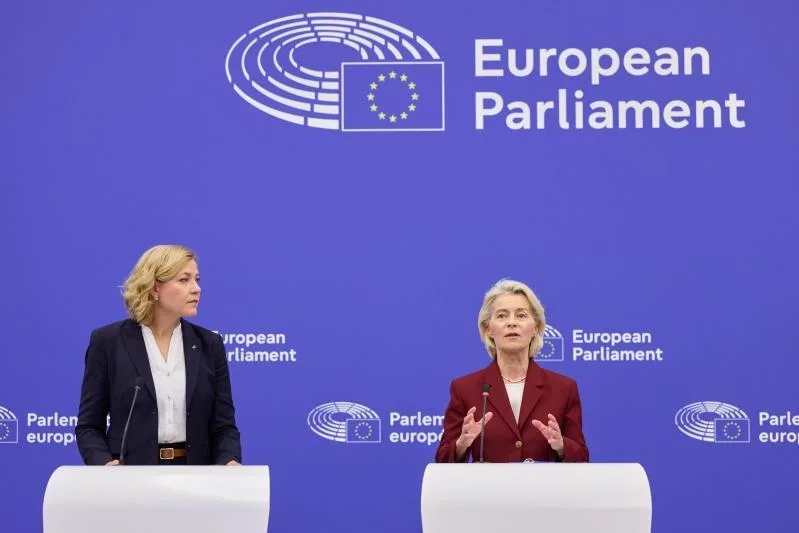
The political punch line is a reversed burden of proof. Providers of very large online platforms would have to show their services are age-appropriate and safe by design, rather than waiting for regulators or parents to document harm later. President Ursula von der Leyen framed the package as putting parents back in the driving seat while making platforms prove their products were built with child wellbeing in mind.
Safety-by-design rules would ban addictive patterns aimed at minors, including infinite scroll without stopping points, reward tricks, night-time push notifications, and unsolicited stranger contact. Profiling-based feeds that drag minors into harmful rabbit holes would be restricted. Profiles for minors would be private by default, with geolocation, camera, and microphone access off. AI companions and chatbots would be off by default and could not simulate relationships that create emotional dependency. one hour a day. From 15 upward, minors could open their own accounts inside a mandatory safe-by-design environment.
Sources
- EU Kids Act would ban social media under 13 and delay teen accounts to 15European Commissionprimary source
- EU Kids Act helping children navigate a safer online worldEuropean Commission