Duke can run data-center backup generators past emissions limits during the heat
A federal emergency order lets Duke Energy use generators at hyperscalers and other large customers as a last-resort grid resource through September 21.
OddBrief EditorialAI-assisted, human-reviewed
 Society
Key facts
- Authority
- US Department of Energy Section 202(c) emergency order
- Utility
- Duke Energy in the Carolinas
- Period
- September 18 through September 21, 2026
- Forecast load
- About 20,102 MW
- Scope
- Includes backup generation at data centers and other large customers
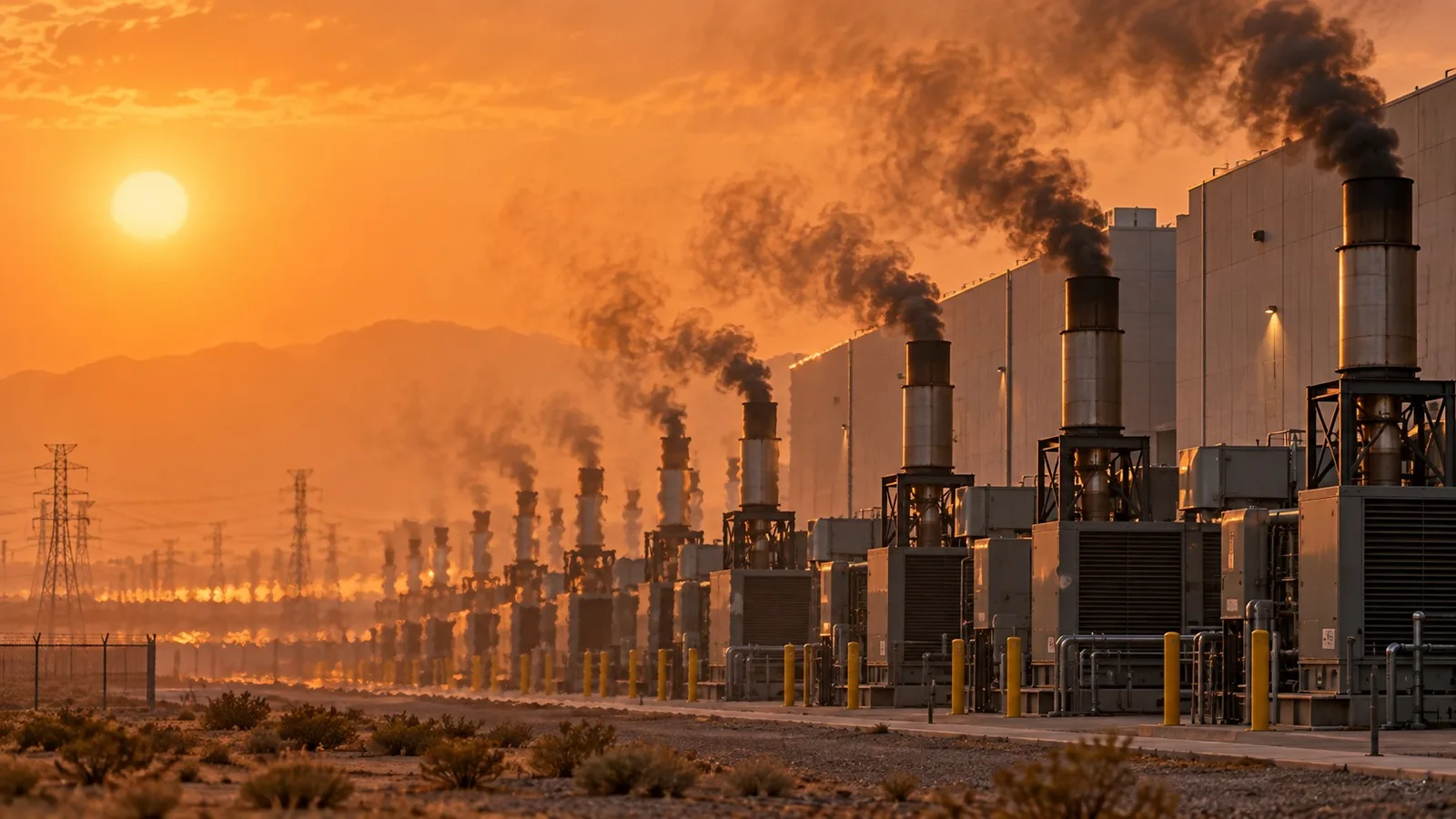
The US Department of Energy has given Duke Energy temporary authority to run certain generators beyond normal emissions or permit limits as extreme heat pushes electricity demand toward an emergency. The order explicitly includes backup power at data centers and other large commercial sites.
The authorization runs from September 18 through September 21. Duke forecast demand of about 20,102 megawatts as temperatures across its Carolinas territory reached 93 to 94 degrees Fahrenheit, roughly nine to ten degrees above normal.
Data centers become emergency power plants
Backup generators are usually installed to protect a facility when the grid fails. Duke asked to treat those machines as a grid resource before or during an Energy Emergency Alert level 3, the stage associated with imminent or active load shedding.
The request covers auxiliary, standby, directly connected and battery resources at hyperscale data centers and other large industrial or commercial customers. The Department's order allows specified units to operate as needed for reliability even when doing so would exceed environmental or operating limits.
That does not mean every generator will run continuously. The order frames the measure as a last resort under defined emergency conditions. Duke must first use available generation, demand-response programs, large-load curtailments and other mitigation steps.
Heat exposes the load behind the cloud
Data centers have become a growing source of electricity demand, especially in regions serving large AI and cloud campuses. Their backup fleets can add capacity during a crisis, but many units burn diesel or gas and were permitted for limited operation.
Using them for grid support shifts some resilience from the utility system to equipment purchased by private customers. It can prevent outages in a narrow emergency while increasing local emissions near the facilities that run.
The order's inclusion of hyperscalers makes the trade-off unusually visible. The same data centers contributing to rising load may also provide the generators used to stabilize the system during a peak.
Temporary authority, longer argument
The authorization ends September 21 unless extended. It does not permanently change emissions permits or establish a standing market for backup generation.
Still, the event may influence how utilities plan around large computing loads. Regulators will have to decide whether backup units should remain emergency tools, participate in demand-response programs or be replaced by cleaner storage and generation.
The immediate objective is reliability during a short heat event. The longer question is who should build and pay for the capacity required when industrial-scale computing and extreme weather arrive at the same time.
Sources
- DOE Order No. 202-26-48US Department of Energyprimary source