Stoke Space raises $1 billion for a fully reusable rocket that has never flown
Stoke Space has raised $1 billion in Series E funding as it prepares the first orbital flight of Nova Pathfinder and develops a larger rocket designed for full and rapid reusability.
OddBrief EditorialAI-assisted, human-reviewed
 Science
Stoke Space has raised $1 billion for one of the most ambitious bets in commercial spaceflight: making an orbital rocket fully and rapidly reusable.
The Series E round brings the US launch startup's total funding to $2.3 billion.
There is one unusual detail.
Stoke has not yet launched a rocket to orbit.
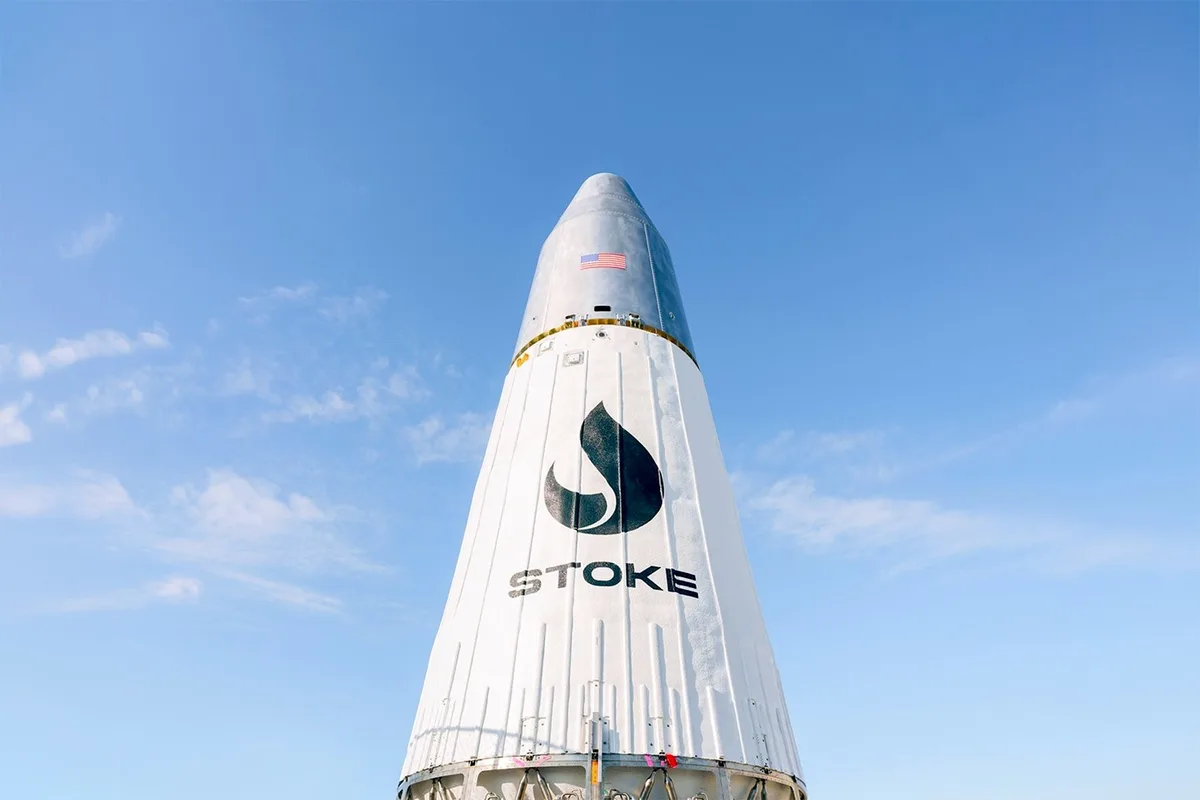
Its first orbital vehicle, Nova Pathfinder, is currently targeting its first flight in early 2027.
The company says Pathfinder is designed to carry customer payloads while demonstrating the technology needed to recover and reuse both stages of the rocket.
Full reusability is one of the hardest engineering goals in modern launch systems.
SpaceX's Falcon 9 regularly recovers and reuses its first stage, but the rocket's second stage is still expendable.
SpaceX is developing Starship around full reusability, but the system has not yet reached routine operational reuse of both stages.
Stoke wants Nova to reach that same end state with a different architecture.
Its upper stage uses an actively cooled metallic heat shield and a reusable engine system designed to survive atmospheric reentry.
The new funding will also support Nova Block 2, a larger vehicle capable of carrying 15 metric tons to low Earth orbit.
Stoke is targeting 2029 for the first Block 2 launch.
The company says the Series E will allow it to expand manufacturing, testing, production capacity and launch infrastructure.
Reports on the round citing people familiar with the transaction put Stoke's valuation at roughly $10 billion.
That is a striking valuation for a launch company that has not yet reached orbit, but it reflects how much investor attention has shifted toward reusable space infrastructure.
The economic argument is simple.
If rockets can fly repeatedly with limited refurbishment, launch costs can be spread across many missions instead of requiring large amounts of new hardware every time.
The engineering challenge is considerably harder.
Stoke now has another $1 billion to prove it can make the idea work in flight.
Sources
- Stoke Space Raises $1 Billion to Accelerate Fully Reusable LaunchStoke Spaceprimary source
- Scaling NovaStoke Space