One surgeon, two humanoids: Samsung Medical Center’s staffing bet in the OR
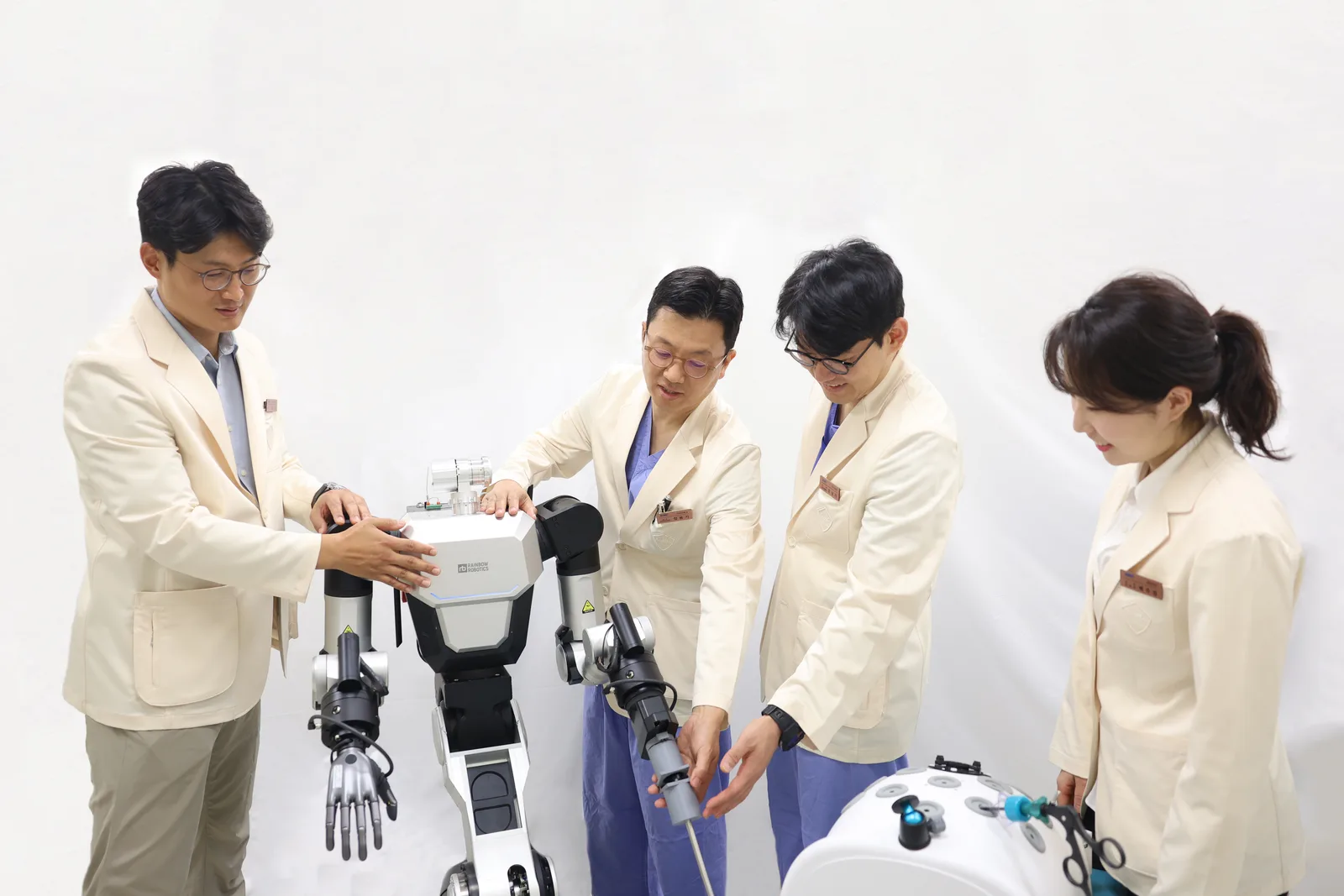
At Samsung Medical Center, a human surgeon and two humanoid assistants ran a simulated gallbladder procedure with voice-command instrument handoffs, endoscope holding, and tissue retraction. Lab grip hit 100 percent and delivery 98.7 percent; clinical trials are aimed at 2029 under Korea’s ORchestra ARPA-H consortium.
OddBrief EditorialAI-assisted, human-reviewed
 Science
Key facts
- Demo
- Wed Sep 16 at SMC; simulated cholecystectomy on goat liver; 1 surgeon + 2 assisting humanoids
- Consortium
- ORchestra includes SMC, Rainbow Robotics, AIDIN Robotics, SNU, SKKU, NCC and Jeonbuk NU Hospital
- Lab metrics
- grip 100%, delivery 98.7%; motion within ~2 seconds; ambiguous voice commands re-confirmed
- Path
- first clinical trial goal 2029; low-risk endoscopic assistance; class III device track
The future-of-surgery headline usually promises a robot that operates alone. Samsung Medical Center demoed something less cinematic and more urgent: one human surgeon, two humanoid assistants, and no scrubbed-in human helper. On Wednesday at the Seoul hospital, the team ran a simulated cholecystectomy on goat liver. The robots handed instruments on voice command, held the endoscope, and retracted tissue. The story the principal investigator keeps telling is not sci-fi autonomy. It is the staffing math of regional operating rooms.
Solo surgery with a metal scrub team
Korea Biomedical Review’s on-scene report describes two demonstration modes. In one, a surgeon teleoperates a robot to cut, dissect, and suture. In the other, labeled solo surgery, a clinician runs the case with two assisting humanoids and no human assistant at the table. Transplant surgery professor Oh Nam-kee was among those shown working the setup. Project lead Jung Yong-gi, a head and neck surgeon, framed the target as relief for hospitals that cannot hire enough skilled assistants to hold scopes and retract tissue around the clock.
Lab numbers are early but specific. Across five instruments, gripping hit 100 percent and delivery 98.7 percent. Motion began within two seconds of a command, with a sub-one-second target. Ambiguous or possibly misheard voice orders are re-confirmed before the robot moves. The endoscope arm uses visual servoing to keep tools in view and a remote center of motion so the entry port stays fixed while instruments pivot, reducing tear risk at the incision.
Anticipate the next move, not clone one surgeon
Jung’s AI pitch centers on action-triplet data: labeled sets that pair the surgical scene, the instrument, and the action. Trained that way, he said, the model can predict the next step from a single scene almost perfectly, so a humanoid can prepare without being told every time. The longer goal is a foundation model of the surgical scene, not a personality clone of surgeon A or surgeon B. Nine specialists are participating, and four hospitals are collecting standardized, de-identified surgical data after review-board approval so the system does not overfit one center’s habits. Jung called the OR a “surgical data factory,” not only a place where you operate.
The work sits inside ORchestra, an ARPA-H consortium led by SMC with Rainbow Robotics, AIDIN Robotics, Seoul National University, Sungkyunkwan University, the National Cancer Center, and Jeonbuk National University Hospital. Government funding is about 13.84 billion won, roughly $10 million, over five years. The project is in year two at proof-of-concept stage, with a competitive review later this year for a possible second phase. Role names in the stack include OR-Scrub, OR-Scope, and OR-TeleOp. AIDIN showed a multi-joint hand with tactile sensing on each finger joint, sampling contact dozens of times per second.
2029 trials, class III path, ROI in headcount
SMC is aiming for a first clinical trial in 2029, starting with lower-risk endoscopic assistance and walking a class III device path through large-animal GLP studies, GMP, Ministry of Food and Drug Safety approval, and IRB review. Jung was frank that today’s robots are slower than people, but he expects parity by project end if the full tool cycle (request, delivery, use, retrieval, cleanup) can match a human assistant. Staffing one position around the clock, he noted, takes about five people. If a robot can fully cover one role, purchase or lease pricing that stays under that labor load could make the investment viable if the robot works, without raising patient costs. Commercialization would come through the robotics partners.
The odd angle is demographic, not dystopian. Humanoid OR help is being sold as a response to assistant shortages, not as a replacement for the surgeon’s judgment. Whether 2029 trials vindicate the goat-liver demo will depend on boring metrics: replacement rate, cycle time, and whether nurses and residents trust a machine that asks them to repeat a mumbled request.
Sources
- [On the Scene] 1 surgeon, 2 humanoid robots: Samsung tests the future of the operating roomKorea Biomedical Reviewprimary source
- Samsung Medical Center demonstrates humanoid surgical assistantsThe Asia Business Daily
- Samsung Medical Center Held Symposium on Humanoid Surgical Assistant RobotSamsung Medical Center