Chemify wins £22M in grants to scale its robotic chemistry “hyperscaler”
Glasgow-based Chemify received £22 million in grants from Scottish Enterprise and the UK Government to expand a second-generation Chemifarm and push Chemify Genesis, its chemistry world-model system. With a Series B extension to £51.9 million, total funding is about £110 million, and the Scottish workforce is set to grow from 152 toward around 450.
OddBrief EditorialAI-assisted, human-reviewed
 Science
Key facts
- Grants
- £22M total (£16M Scottish Enterprise + £6M UK Government); company expansion project £89.9M including Chemify’s £67.9M
- Funding stack
- Series B extended to £51.9M; total funding secured more than £110M (~$150M)
- Scale
- Scottish workforce from 152 toward ~450 over three years; up to 300 jobs created, 100 safeguarded
- Tech
- Chemputation (AI + robotic synthesis); Chemify Genesis as chemistry world model; next-gen Chemifarm expected online later in 2026
Chemify is trying to industrialize molecule making the way cloud companies industrialize compute. On September 16, 2026, the Glasgow deep-tech firm said via Business Wire that it had received £22 million ($29.7 million) in grants from Scottish Enterprise and the UK Government to expand digital chemistry capacity through a new second-generation Chemifarm. The company calls the push “chemistry hyperscaling”: AI paired with robotic synthesis so partners in pharmaceuticals, specialty chemicals, and advanced materials get closed-loop discovery at higher throughput.
Grants, Series B extension, and job plans
The grant package splits into £16 million ($21.6 million) from Scottish Enterprise and £6 million ($8.1 million) from the UK Government. Chemify’s previously announced Series B has been extended to £51.9 million ($70 million), taking total funding secured to more than £110 million ($150 million). Separately, Scottish Enterprise described a company expansion project totaling £89.9 million, with Chemify contributing £67.9 million alongside the £22 million of public support.
Workforce plans are concrete. Chemify said the expansion will grow its Scottish headcount from 152 employees to around 450 over the next three years, creating up to 300 jobs and safeguarding a further 100. Founder and CEO Lee Cronin, a University of Glasgow spinout founder, said the first Chemifarm in Glasgow proved that “Chemputation” works by grounding AI-enabled discovery in physical synthesis. The new money, he said, will hyperscale chemistry, expand the next-generation Chemifarm, and advance Chemify Genesis so the company can create more molecules, materials, medicines, and bespoke datasets.
Chemputation and the Genesis world model
Chemify describes Chemputation as an end-to-end approach that combines AI with robotic synthesis for molecular and materials discovery. The platform translates target molecules into executable chemical code that runs on robotic systems designed in Chemify’s engineering lab, forming a digital Design-Make-Test-Analyze cycle.
Chemify Genesis is the newly highlighted engine. The company says it integrates Chemputation with AI for closed-loop discovery, synthesis, and scale-up, and calls it the first world model for chemistry. Genesis builds a continuously evolving map of molecules, reactions, conditions, and the boundaries of what is makeable, learning from successes, failures, and partial outcomes. For partners, world-model-guided design is meant to make each iteration more informed. Genesis also offers secure remote access to Chemify’s systems without exposing partner intellectual property, according to the release.
Next Chemifarm later this year
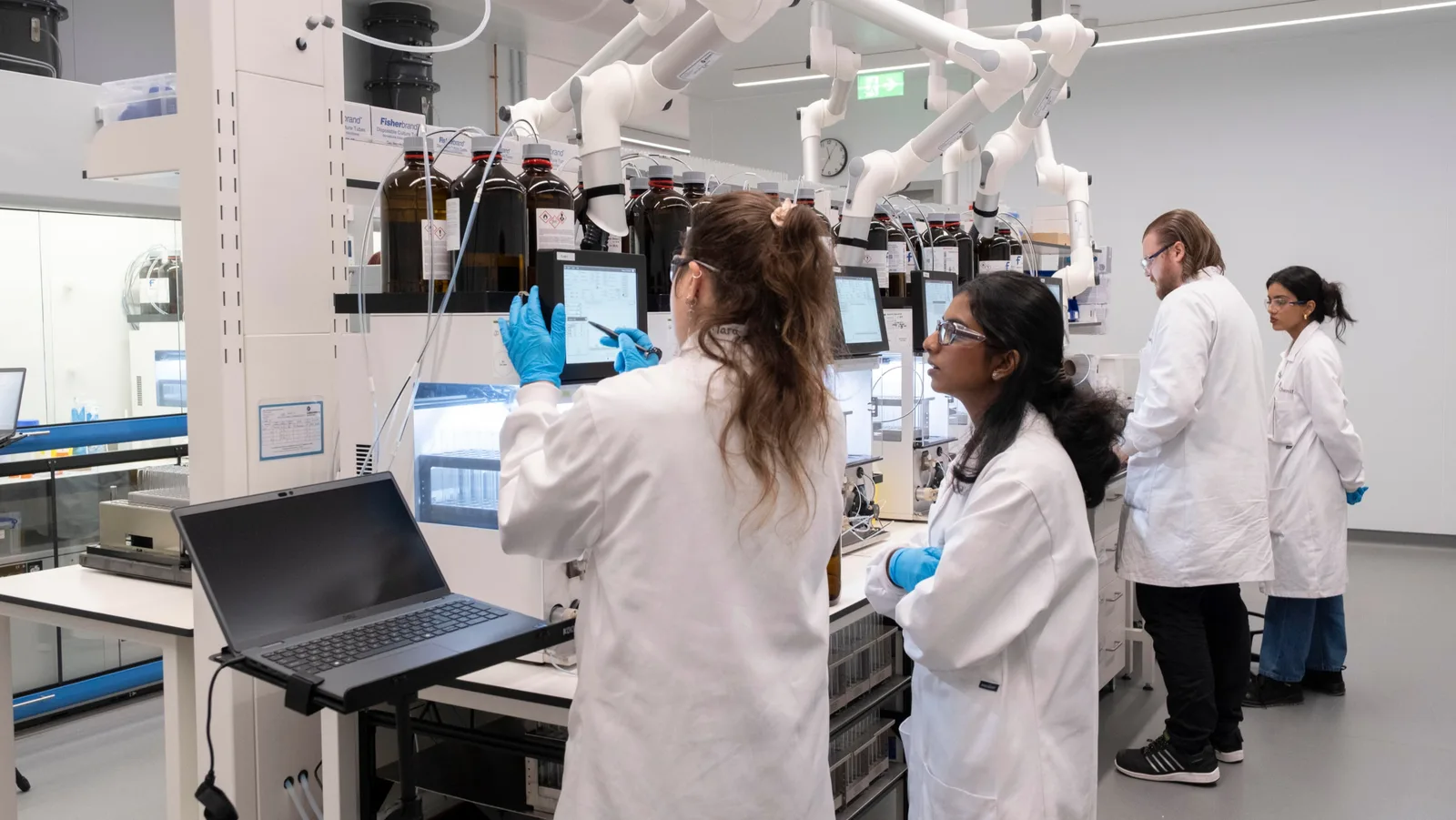
The first Chemifarm launched last year in Maryhill, Glasgow, and has run around the clock under partner demand, Chemify said. The next-generation facility, expected online later this year, adds a larger footprint of automated systems, streamlined workflows, higher throughput, and new design and synthesis capabilities so Chemify can build exclusive molecular models for partners. The company also said it plans additional Chemifarms in other countries, including the United States, over coming years.
Chemify’s new headquarters sits in the Health Innovation Hub in Govan, an 87,000-square-foot site in the Glasgow Riverside Innovation District that opened in March. Officials from Scottish Enterprise and the UK Government framed the investment as keeping life-sciences commercialization in Britain rather than shipping discoveries overseas. The odd claim is the branding itself: calling a chemistry lab a “hyperscaler” puts robotic molecule factories in the same language as cloud regions, with Genesis as the world model and Chemifarms as the capacity layer.