NYU is training AI to refit broken artifacts, where ceramic refits succeed about 1% of the time
A Schmidt Sciences-funded NYU project will build a 100,000-object dataset of real and simulated fragments and release the models openly.
OddBrief EditorialAI-assisted, human-reviewed
 AI
AIKey facts
- Who
- Chen Feng (NYU Tandon) with NYU anthropologists Radu Iovita and Scott Williams
- What
- open-source AI to refit and complete broken stone tools, pottery and bones
- Numbers
- at least 100,000 objects in the dataset; manual refit success about 1% for ceramics
- Funding
- three-year Schmidt Sciences HAVI grant, amount not disclosed
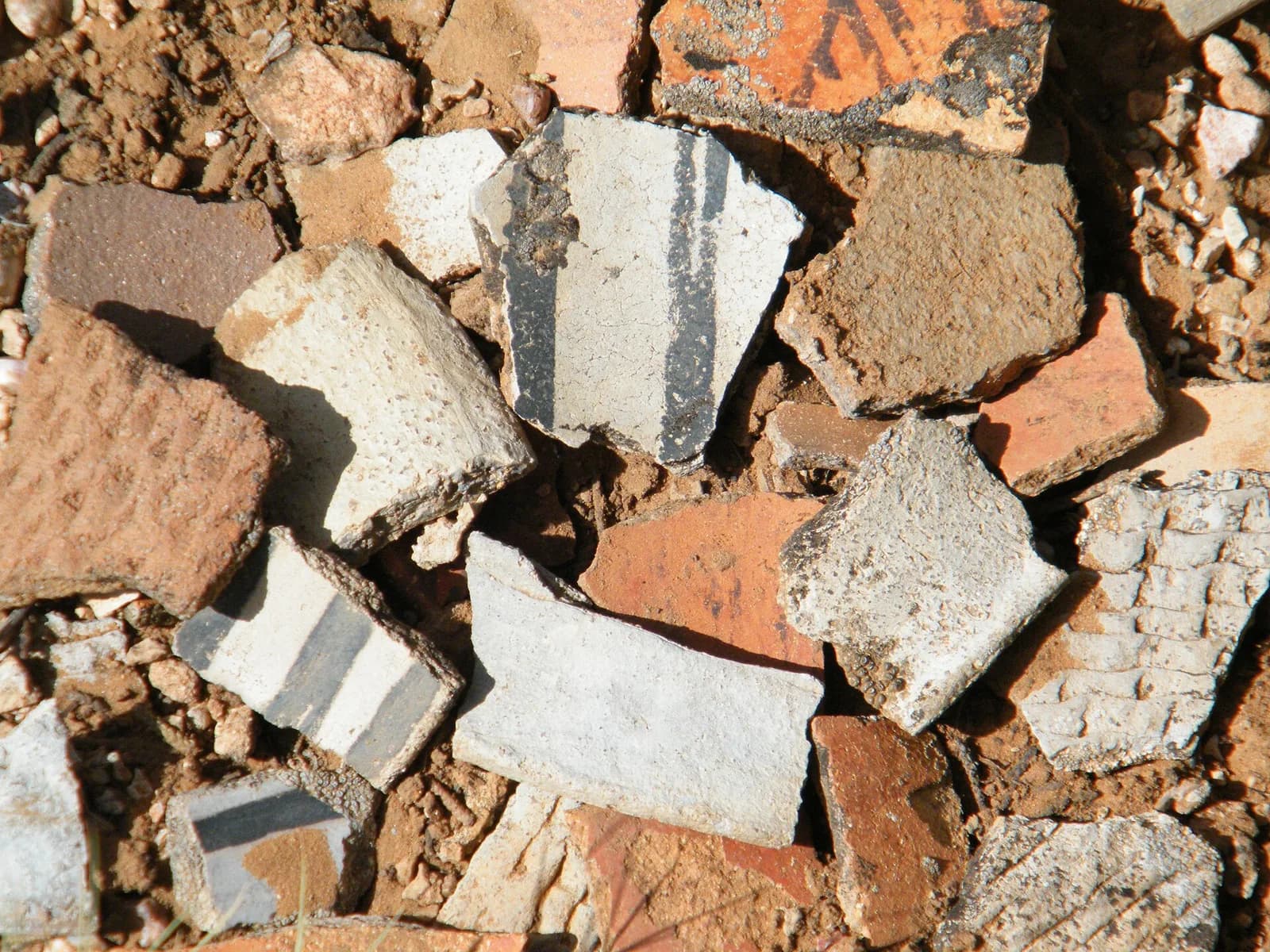
NYU Tandon engineers and NYU anthropologists are building open-source AI tools that try to put broken stone tools, pottery and bones back together, the university announced on October 15. The problem is stubborn: according to the team, attempts to refit fragments succeed about 1% of the time for ceramics and 4% to 26% for bones.
The three-year project, called Fragmented Legacy, is funded by Schmidt Sciences as one of 19 projects selected this year for its Humanities and AI Virtual Institute awards. The grant amount was not disclosed.
A dataset of 100,000 broken things
The core of the plan is data. The team wants a collection of no fewer than 100,000 fragmented objects, some excavated and some broken digitally, each linking a 3D model to photos, descriptions and catalog records.
The digital breakage is designed to mimic the way each material really cracks, so the models learn from realistic damage rather than random cuts. On top of that, the AI is supposed to decide where each fragment belongs, propose a plausible complete object and reason across shape, images and text.
Archaeologists stay in the loop. They will review competing reconstructions, and their judgments feed back into which answers the system learns to trust. Team member Jing Zhang compares the tool to a "Watson" assisting the archaeologist's Sherlock Holmes.
Matching pieces between sites
The most ambitious goal is refitting across excavations. "Refitting objects between sites to show direct relationships between them has only ever been done twice," said NYU anthropologist Radu Iovita.
A join between two sites is strong evidence that people, objects or debris moved between them, which is why it matters for reconstructing how ancient groups lived and traveled. Doing it at scale is close to impossible by hand.
Built on earlier lab tools
The project is led by Chen Feng of NYU Tandon, with Zhang, Iovita and anthropologist Scott Williams, plus Raiko Krauß of the University of Tübingen. Leiden University, Arizona State University and the Max Planck Institute for Evolutionary Anthropology are collaborating.
It grows out of earlier work by the same group: LUWA, which classifies microscopic wear on stone tools, and the GARF and CRAG models for reassembling objects and filling in missing pieces.
The team plans to release the datasets, model weights and benchmarks under permissive licenses for universities and cultural resource management firms. The announcement does not name the archaeological sites or collections the first data will come from.
Sources
- NYU researchers are building AI to piece together broken archaeological findsNYU Tandon School of Engineering via EurekAlertprimary source
- Humanities and AI Virtual InstituteSchmidt Sciences