Huawei built a memory tier for agents that are supposed to keep learning
Its new Agentic Infra stack combines AI clusters, Context Memory Storage and thousands of MCP assets, with global commercial availability beginning in November.
OddBrief EditorialAI-assisted, human-reviewed
 AI
AIKey facts
- Stack
- Huawei Cloud Agentic Infra
- New component
- Context Memory Storage
- Compute
- Latest AI Cluster Service launched globally
- Availability
- Outside-China commercial availability planned for November 30
- Scale claim
- More than 5,000 general and 1,000 industry MCP assets
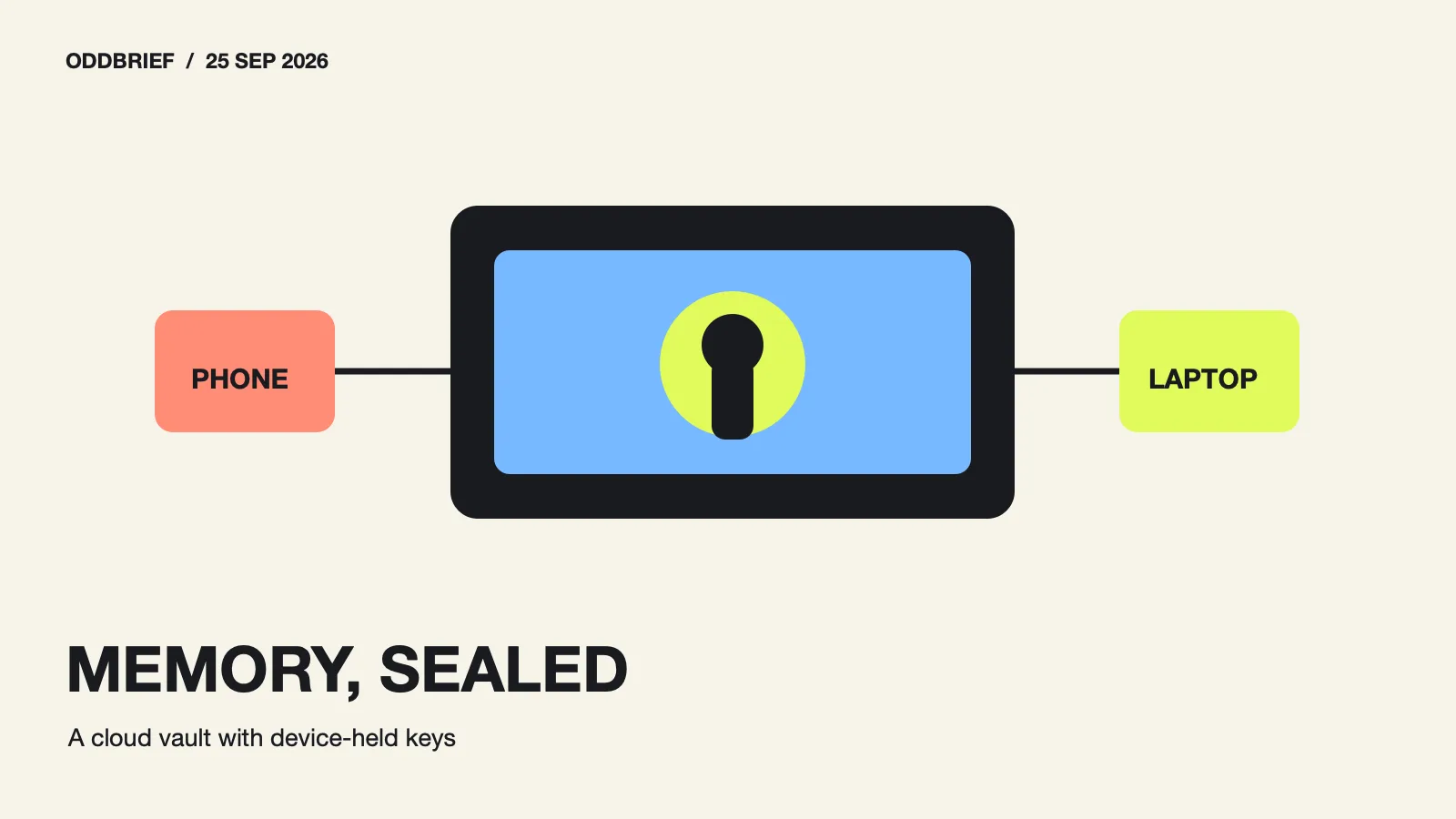
Huawei Cloud is adding a dedicated memory layer to its infrastructure for AI agents. The company introduced Context Memory Storage alongside a globally launched AI Cluster Service, arguing that agents need persistent context and secure autonomy rather than compute alone.
The products were announced at HUAWEI CONNECT 2026 in Shanghai. Huawei calls the broader design “Agentic Infra,” a stack intended to coordinate general computing, AI accelerators, memory and production controls around long-running agents.
Memory becomes infrastructure
A conventional cloud workload reads data, performs a job and writes a result. An agent may need to remember earlier interactions, retrieve tools, maintain task state and continue learning across a much longer process.
Huawei's Context Memory Storage is positioned as a system for that persistent context. The company has not published enough technical detail to compare its latency, capacity or retrieval quality with vector databases and memory services already used by developers. The announcement is therefore a roadmap claim more than an independent performance result.
The latest AI Cluster Service is the compute foundation. Huawei says it has launched globally and will be commercially available in China on September 30 and outside China on November 30. Its Agentic Model as a Service layer lets developers call models from multiple providers without deploying each one themselves.
Thousands of tools, one platform
Huawei's enterprise agent platform comes in a commercial edition called AgentArts and an open-source edition called openJiuwen. The company says the pair exposes more than 5,000 general Model Context Protocol assets and over 1,000 assets tailored to industries.
MCP assets can give agents structured access to APIs, databases and business systems. A large catalog lowers integration work, but every new tool also expands the permissions an agent may receive. Secure identity, approval gates and auditing become as important as the number of connections.
Huawei reports that its Industry AI Foundry contains more than 1,000 industry assets and supports more than 1,000 deployed projects. It added Smart Government and AI Hardware zones to existing areas for healthcare, manufacturing, finance, embodied AI and science.
The cloud is selling continuity
Cloud providers once competed mainly on how quickly they could supply processors. Agent platforms are shifting the contest toward continuity: which system can preserve context, coordinate tools and keep a process running safely over time.
Huawei's announcement bundles those layers into one architecture, but the most important questions remain operational. Customers will need evidence about isolation, data control, failure recovery and the cost of storing long-lived context.
An agent that remembers more can be more useful. It can also retain the wrong information for longer. The memory tier will need deletion, provenance and permission controls as carefully designed as its retrieval speed.
Sources
- Huawei Cloud rolls out enterprise AI products across the boardHuaweiprimary source