Googlebook turns the cursor into a Gemini trigger, starting at $899
Google’s new laptop asks users to wiggle the cursor for Gemini help, dictate structured notes and describe custom widgets.
OddBrief EditorialAI-assisted, human-reviewed
 Tech
TechKey facts
- Product
- Googlebook with Gemini built into the interface
- Feature
- Magic Pointer invokes assistance around selected context
- Price
- From $899, with preorders open
- Availability
- October 4 in the US; October 5 in six other countries
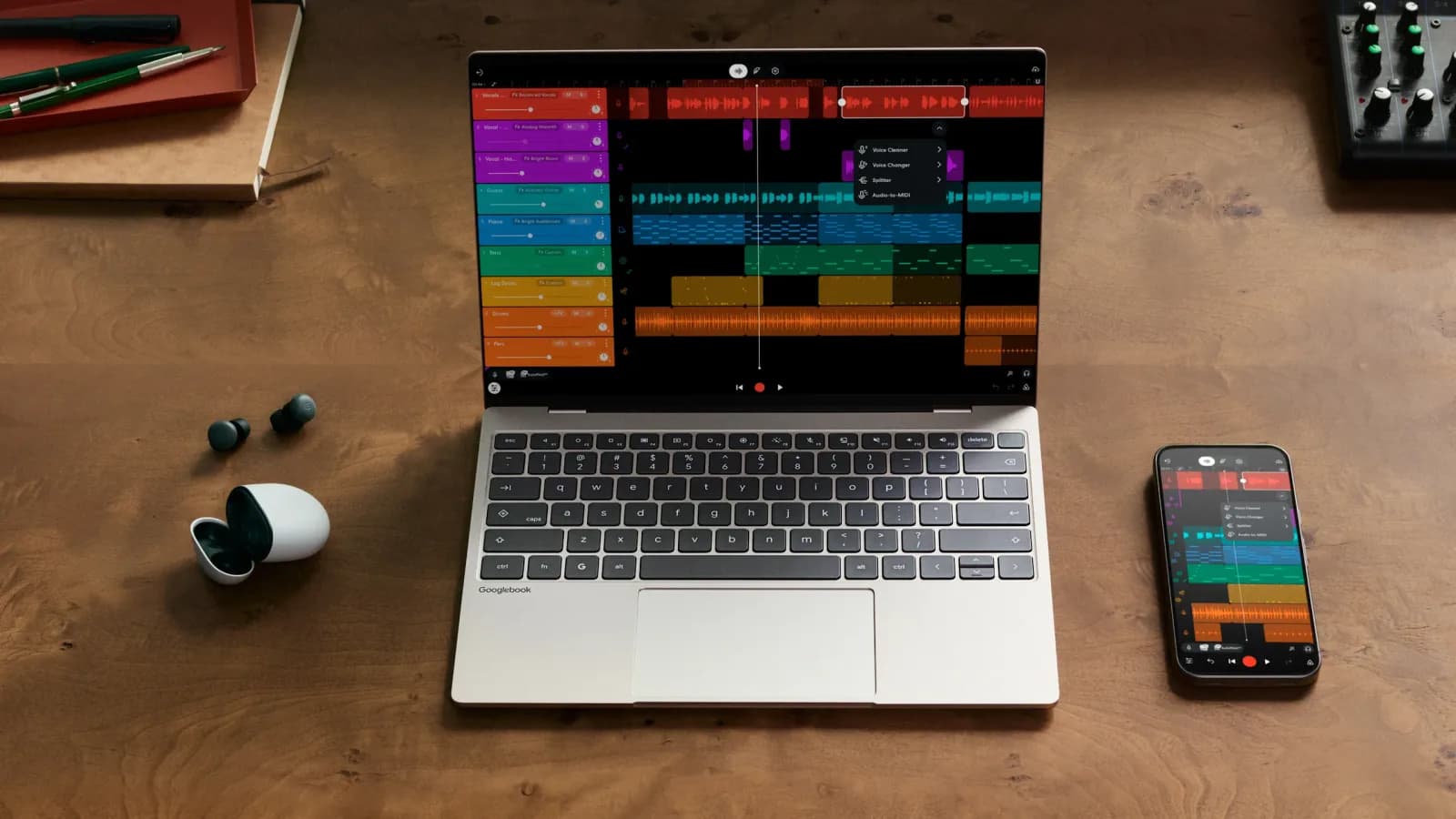
Google unveiled Googlebook on September 21 as a laptop built around Gemini rather than an AI button added to a familiar desktop. The company says its Magic Pointer can use the item under a cursor to act on a calendar, examine a suspicious message or combine selected images. Preorders are open from $899, with US sales scheduled for October 4.
The unusual bet is that pointing, speaking and describing a widget become regular ways to operate a computer. Google has announced the features, but their usefulness and privacy behavior in everyday use still need independent testing.
A cursor that asks for help
According to Google's product announcement, Magic Pointer wakes when the user wiggles the cursor. It then brings Gemini to the text or image in focus. Google's examples include selecting a marathon training plan on a web page and turning the runs into calendar entries, or hovering over an email to ask whether it looks suspicious.
Google says the pointer stays inactive until summoned. That is an important design claim for a feature that needs context from the screen, though the announcement does not establish how well it will distinguish a malicious message from a legitimate one. Users should treat such a judgment as assistance, not as a security guarantee.
Rambler, a separate voice tool, turns a spoken brain dump into cleaned-up notes and action items. Google says it can handle mid-sentence language changes. These are more ambitious tasks than ordinary dictation, because the software must infer what the speaker meant to keep and how to organize it.
The laptop as a small app studio
Googlebook also includes Create My Widget, which lets users describe a custom widget instead of writing one. Google's examples are a sports score tracker and a family countdown. For more involved projects, it says Antigravity is included, alongside a Linux terminal for developer tools.
This makes the device a meeting point for two approaches to AI computing. One gives a consumer a shortcut in the interface; the other gives a developer an environment to build and run software locally. Whether they work smoothly together will depend on the machines' actual performance and the boundaries between local and cloud processing, which this launch article does not quantify.
Google says Chrome and Gemini features, including task automation and Gemini Live, arrive out of the box. It also claims Gemini Spark can continue complex work while the laptop is closed. That should be evaluated as a product claim until the shipping devices can be tested.
What buyers can verify now
The starting price is $899. Google says each purchase includes 12 months of Google AI Pro with 5 TB of storage and that Googlebook OS will receive updates for up to 10 years. The launch date is October 4 in the United States and October 5 in Canada, the United Kingdom, Ireland, France, Germany and Australia.
The first test is simple: once Googlebook ships, can its cursor and voice features save more time than they demand in correction and supervision? Google has set a date for that answer, not supplied the answer itself.
Sources
- Googlebook’s built-in intelligence reinvents the way you use your laptopGoogleprimary source