A pressurized wind tunnel gets closer to real turbine behavior
MIT and collaborators say a high-pressure laboratory setup can test turbine controls under more realistic flow conditions. The revenue upside is a model estimate, not a field result.
OddBrief EditorialAI-assisted, human-reviewed
 Science
Key facts
- Method
- high-pressure wind tunnel
- Variables
- yaw, blade pitch and tip-speed ratio
- Claimed upside
- projected, not measured farm revenue
- Paper
- PNAS Nexus
- Limit
- commercial field benefit remains unverified
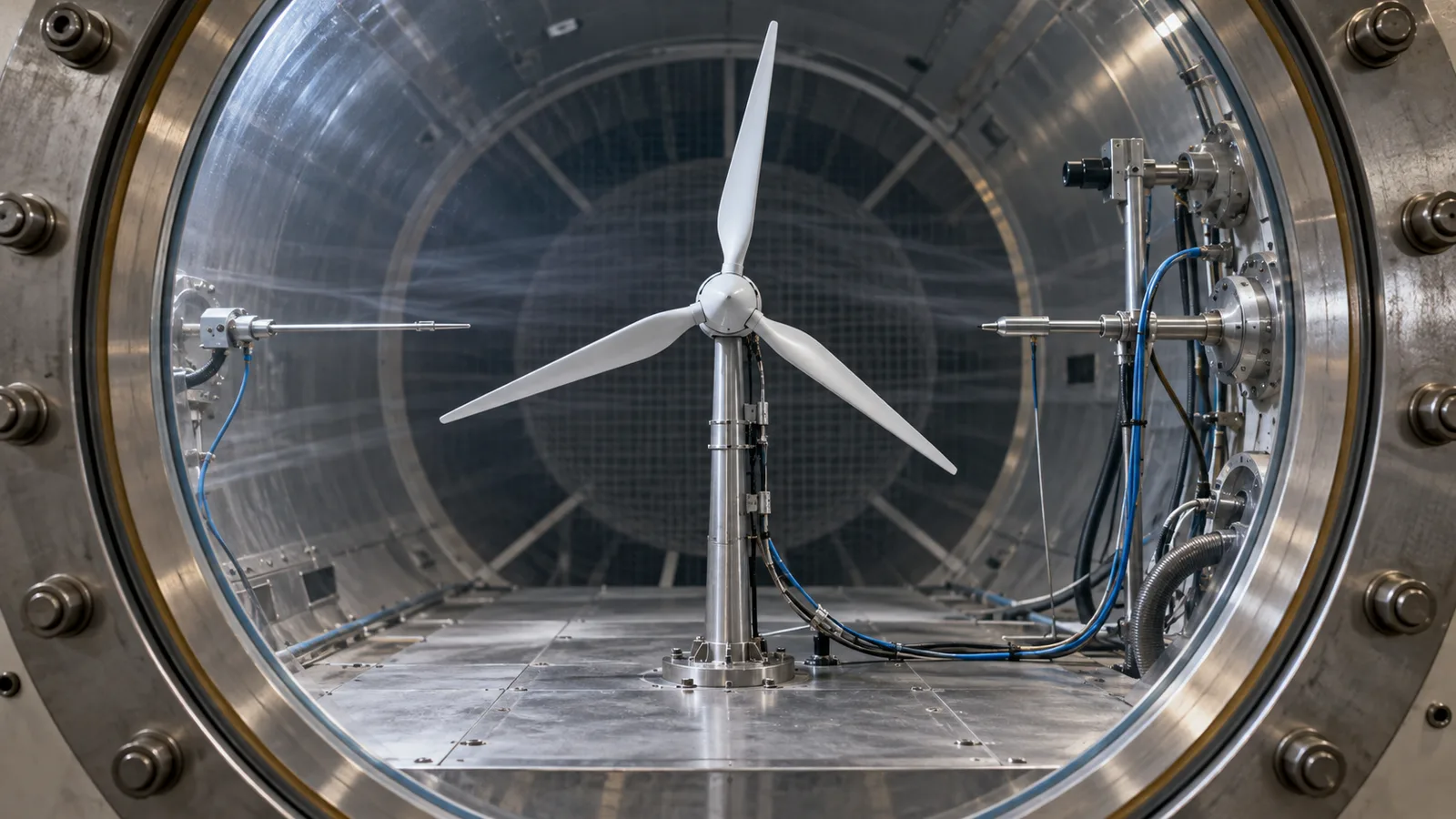
A model wind turbine in an ordinary wind tunnel is much smaller than the machine it is meant to represent. That difference can make the airflow around its blades misleading. Researchers working with MIT say a pressurized tunnel brings the miniature experiment closer to the physics of a full-size turbine and makes some control questions easier to test.
Pressure as a bridge between scales
A full-size wind turbine meets turbulent air on a scale that is difficult to recreate indoors. The team used unusually high pressure in a wind tunnel to adjust the flow conditions around smaller machines. They compared the resulting measurements with predictions from computational models. The goal was not to reproduce a whole wind farm in a room, but to make controlled experiments more useful for real turbines.
The setup let the researchers examine yaw, the angle between a turbine and the incoming wind, alongside blade pitch and the speed of blade tips relative to the air. These variables are routinely adjusted by control systems, yet changing winds and the wake from neighboring turbines complicate their effects.
The value is still an estimate
The team says its results help validate a relatively lightweight model for turbine design and control. MIT's September 28 account says optimizing alignment, pitch and tip-speed settings could potentially add tens of thousands of dollars in yearly revenue per turbine. That figure is a projected opportunity. The new paper does not show that a commercial wind farm earned that money after adopting a new controller.
Field testing remains important because weather, maintenance limits and interactions among many turbines can frustrate a promising laboratory setting. A pressurized tunnel can narrow the number of ideas worth trying outside, which is valuable when full-scale experiments consume time and energy.
Why this is a useful advance
The team's PNAS Nexus paper was available before MIT's September 28 announcement. What is newly being presented is a practical account of how the laboratory method could accelerate wind-farm experimentation. Better experiments could improve existing equipment as well as inform future designs, but any gain must be confirmed at working farms. The more interesting story is the test bed: a way to ask more precise questions of a giant machine without first interrupting a giant power plant.
Sources
- MIT News, September 28, 2026MIT Newsprimary source
- PNAS Nexus research paperPNAS Nexus