Google.org puts $4 million behind free AI training for educators
Digital Promise will expand teacher and community-college training, then publish guidance on what helps faculty use AI well.
OddBrief EditorialAI-assisted, human-reviewed
 AI
AIKey facts
- Funding
- $4 million from Google.org
- Partner
- Digital Promise
- Program
- Free Google AI Educator Series
- Next
- Faculty research and public guide over two years
Google.org says it is committing $4 million to Digital Promise to expand free AI training for teachers and college faculty. Announced on September 21 during United Nations General Assembly week in New York, the funding is intended to help the nonprofit bring practical professional development to schools, districts and community colleges.
The new money supports the Google AI Educator Series, a free program Google built with ISTE. Google's larger stated ambition is to make training available to the roughly six million K-12 teachers and higher-education faculty in the United States. That is a reach target for access, not evidence that six million people have enrolled or completed a course.
From badges to classroom judgment
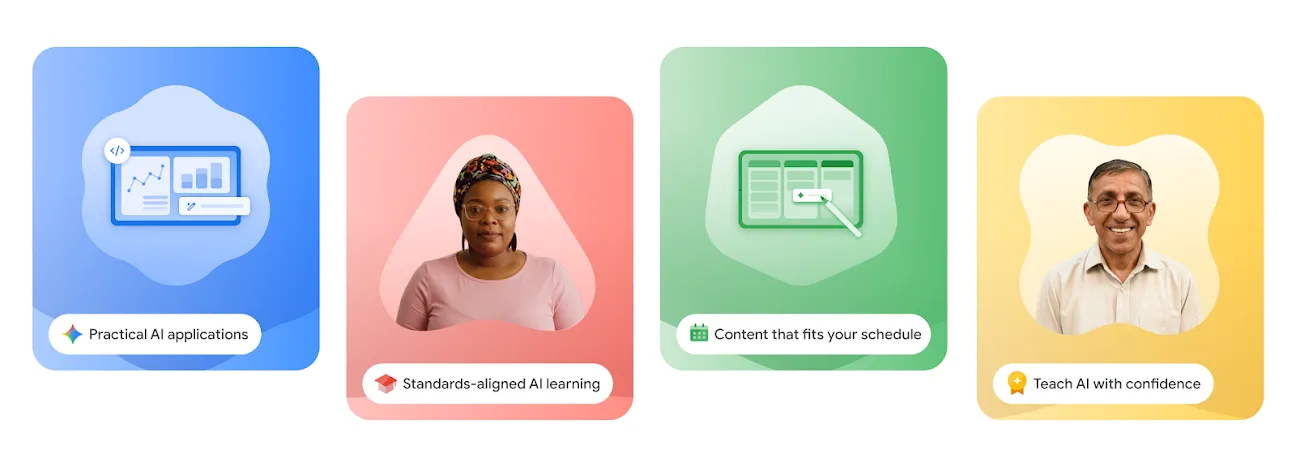
The series uses self-paced modules and digital badges. Google says the lessons cover foundational AI skills, instructional judgment and practical tasks such as lesson planning and productivity. On its program page, it describes sessions of about 15 to 45 minutes and a path that educators can fit around existing work.
The emphasis on judgment is significant. Learning to generate a worksheet or summarize a document is only part of using AI in a classroom. Teachers still have to decide whether a response is accurate, suitable for a student and consistent with their school's rules. The September announcement describes a training expansion, not a study demonstrating better learning outcomes from the tools.
Because Google both funds the program and supplies some of its examples, educators should ask how much training transfers to other tools. Google describes the skills as transferable across AI products, even while Gemini provides hands-on examples. The practical test is whether a participant can recognize limitations and make an informed choice beyond one vendor's interface.
What Digital Promise will build
Digital Promise plans to work with state education agencies and districts on tailored support and teacher networks, according to Google's announcement. At community colleges, it will partner with systems to help faculty use AI in daily work and teaching. Those settings may have different needs from K-12 schools, including workplace training and a wider range of student ages.
The nonprofit also plans to study what helps college faculty use AI effectively and publish a free guide over the next two years. That research and guide are future deliverables. The announcement does not give a number of districts, campuses or faculty who will participate, nor does it provide a timeline for measuring educational impact.
The funding announcement came at an event discussing how AI can support education while keeping teachers central to learning. Google says its existing educator training is already available at no cost, so this grant appears aimed at the systems that help people find, complete and apply it rather than at making a newly priced course free.
The measure after the launch
A grant amount and a large potential audience make for a prominent announcement. The harder questions are how many educators finish useful training, whether it changes practice responsibly and whether students benefit. Those outcomes require evidence beyond badges issued or links opened.
For now, teachers can explore the free modules, and Digital Promise has a funded remit to expand access and publish what it learns. The meaningful follow-up will be its public findings and the extent to which districts and colleges can adapt the lessons to their own students.
Sources
- Expanding free AI training for educatorsGoogle.orgprimary source